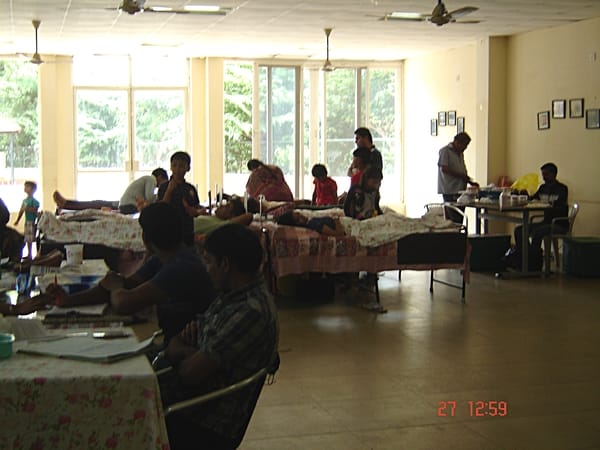
Blood donation camp at SJR Park Vista. Pic: Indira PC
A voluntary blood donation camp was organised at SJR Park Vista, one of the 300+ residential communities on Sarjapur road, on June 27th. Held for the first time, the camp was initiated and organised by a resident, Indira PC, with support from the Residential Welfare Association and club-house management.
The NIMHANS blood bank team, under the supervision of coordinator Beena Jayson and Dr Sukanya, conducted the camp. A total of 31 units of blood were collected from 31 donors (including donors from SJR Redwoods), which would go to the NIMHANS Blood Bank.
Prior to the camp, residents from the community were apprised of the benefits related to blood donation and eligibility criteria. Mandatory medical checks and blood safety measures were followed during the blood donation process. A certificate of appreciation and refreshments were given by the NIMHANS staff to all blood donors.
Overall, the event was successful. Few residents who couldn’t donate blood this time requested that another camp be organised. The NIMHANS staff were treated to tea and snacks as a welcome gesture by the RWA. Banners were put up at the camp, as well as at the entrance to the apartment complex. Drinking water was served in steel cups and food on porcelain plates to promote a clean environment, free from disposables; disposables only add to the existing environmental hazards. The donors appreciated the arrangements made at the camp.
Indira PC said that it was great to see the commitment, interest and enthusiasm from the RWA and fellow residents, and that the blood collection count from future camps on campus would be much better since this was just the beginning. One of the motivations for her to initiate this camp was the increasing need for blood to cater to various unfortunate circumstances in our daily lives that can lead to loss of life.
She also said, “It’s a special feeling to have donated blood for the first time in life and that too, in the camp that you have organised”. While it can be a bit unnerving for first time blood donors, once they know how easy and painless the complete process is, and the blood safety measures followed, donors would enroll themselves for voluntary blood donation in the future, without thinking twice. One of the donors at the camp said that he had voluntarily donated blood about 25 times earlier. It’s a proud feeling to know that there are such good Samaritans within the community.
Indira also stated that she planned to initiate more camps on campus in the future and that she hopes that more RWAs come forward to host blood donations camp on their campus, and help in spreading awareness on voluntary blood donation and its benefits to the society. Needless to say, blood donation is noblest of all donations.
References
Below websites were referred to for better understanding of voluntary blood donation and blood safety, rules and guidelines listed out by the govt.
1. www.ksaps.gov.in/FAQ’s.htm
2. http://naco.gov.in/NACO/Divisions/Blood_Safety/
3. http://naco.gov.in/upload/Blood%20Saftey/guidelines.pdf
4. http://www.naco.gov.in/upload/2014%20mslns/BTS/National%20Blood%20Policy.pdf
Related Articles
Bloodbanks and donors in Bangalore
Want to donate blood? Here’s a quick guide for you!