Bengaluru lets its sewage into valleys, rivers and lakes. Little sewage is processed, while much of it is unprocessed in nature.
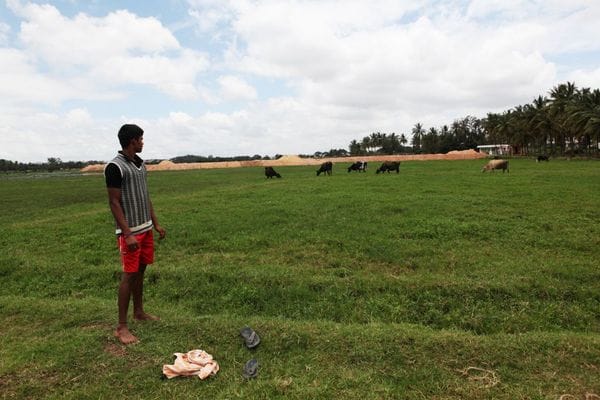
Navin, a villager from K Channasandra, believes that the Maragondanahalli Lake is the savior for the villagers and their animals. Pic: Perumal Venkatesan
Rampura Valley is one of the valley systems of Bengaluru in the north east of the city. This valley gets a mix of treated and untreated water from the raja kaluve (storm water drain) sewage treatment plant, which has 40 MLD capacity and uses Extended Aeration Process. The wastewater from north-eastern parts of Bangalore flows into this plant.
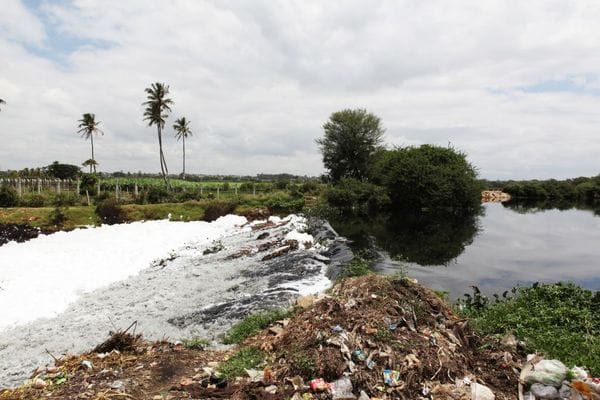
The Kodi (end of the lake where it flows downstream) of Maragondanahalli Lake overflows with sewage water and foam from Chemical waste. Pic: Perumal Venkatesan
The water from the sewage treatment plant passes through the canal, fills Maragondanahalli lake, overflows into Yella Mallappa Shetty Lake before the water is pumped to Dodda Kere of Hoskote.
This semi-treated water is the life line of Rampura and the other villages around. People use this raw water mainly for agriculture. They pump this water from the lake bund even to places which are couple of kilometers away, using a diesel engine or a motor.
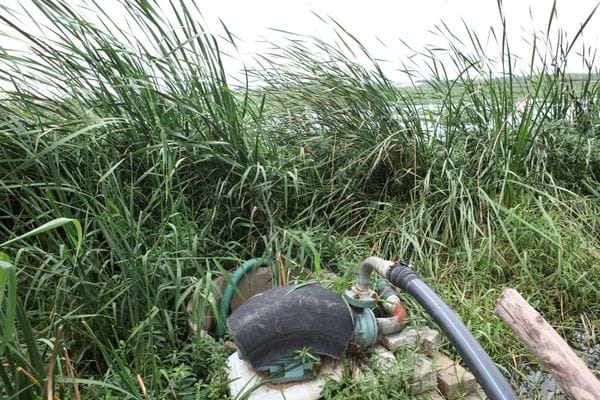
Raju’s pumpset on the banks of the Maragondanahalli Lake, which he uses to irrigate his fields with raw water from the lake to cultivate vegetables and greens. Pic: Perumal Venkatesan
There are many open wells here in the lakes vicinity, that are not potable. The well water is used in the construction purposes. The well owners sell the water from these wells and make their living. Cattle and other domestic animals drink water from the same lake to a larger extent.
The water in the lake and the underground water table is the lifeline of the valley, which supports more than 20 villages in the vicinity. Raju, a villager from Rampura says: Over 5 million people are benefitted by this water, as this water further goes into Kelavarapalli Dam and Krishnagiri Dam of TamilNadu in the downstream.
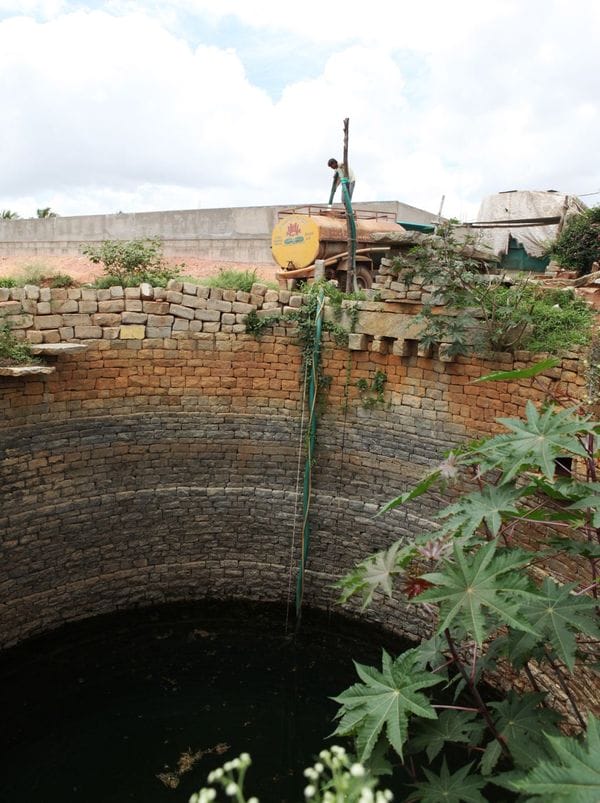
An open well near Maragondanahalli Lake, which supplies 3 lakh litres of water every day through water tankers for construction usage, as the water is not potable. Pic: Perumal Venkatesan
A variety of vegetables and greens cultivated in these fields are the only crops for these farmers to earn their living. The vegetables are sold to the markets in Bengaluru.
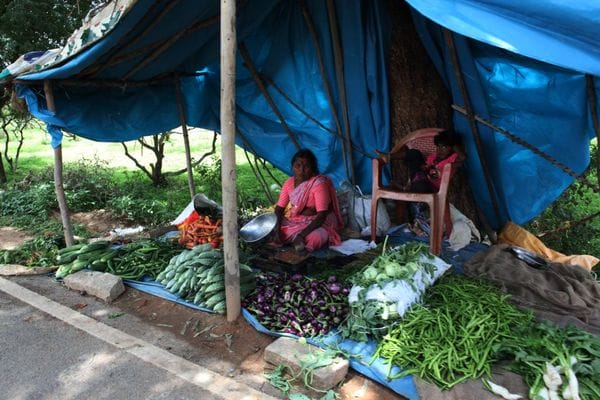
A vegetable vendor on the roadside near Maragondanahalli Lake sells vegetables grown in the village. Pic: Perumal Venkatesan
Related Articles
When the BMTC bus stops to buy vegetables and vadas
Where does Bengaluru get its vegetables from?
Want to grow root veggies? Here are some tips!
There are so many loose ends in the water cycle. Some are real instances of concern, The raw water being used for the growing agri crops is one of the important one, The raw water carries so many effluent on its way, which are sure to carry lot of industrial and domestic wastes. These get recycled to the citizens through the food that is consumed. The wells that are mentioned are suppose to be selling water for construction but there will definitely no board or instructions to keep animals and humans away from consuming.