On February 8th, I had the pleasure of watching Beedhi Nataka (street theatre) at Jayanagar 4th Block, performed beautifully by the PG Commerce students of NMKRV College for Women. The team performed at Maiyas, Cool Joint, Ganesh Darshan and the 4th Block bus stand. At first glance, the performance looked like a discourse with nature, which then transformed into an ensemble of natures parade against the atrocities of man.
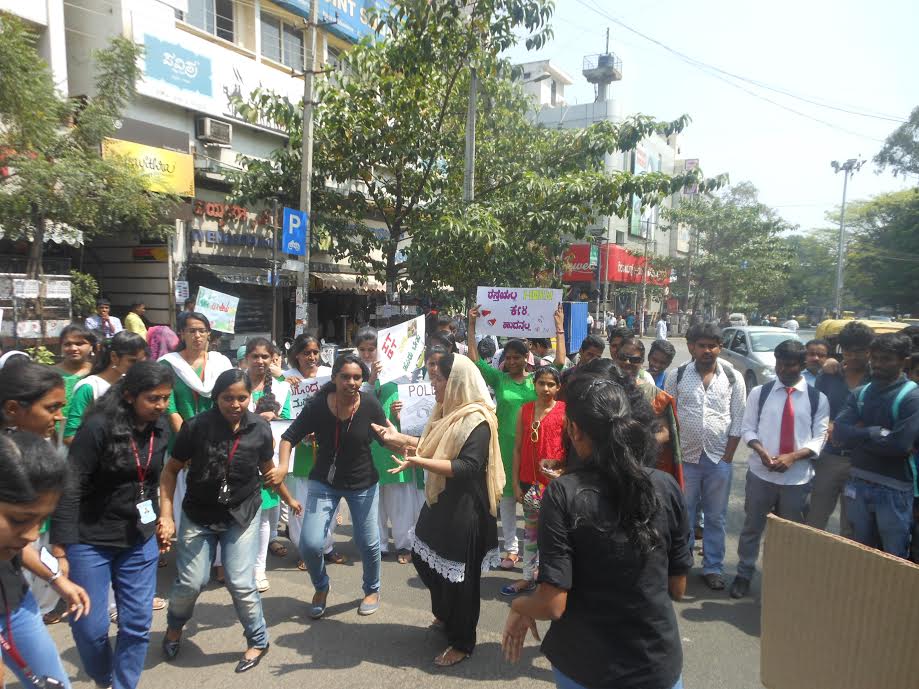
Snapshots from the street play. Pic: Madhuri Subbarao
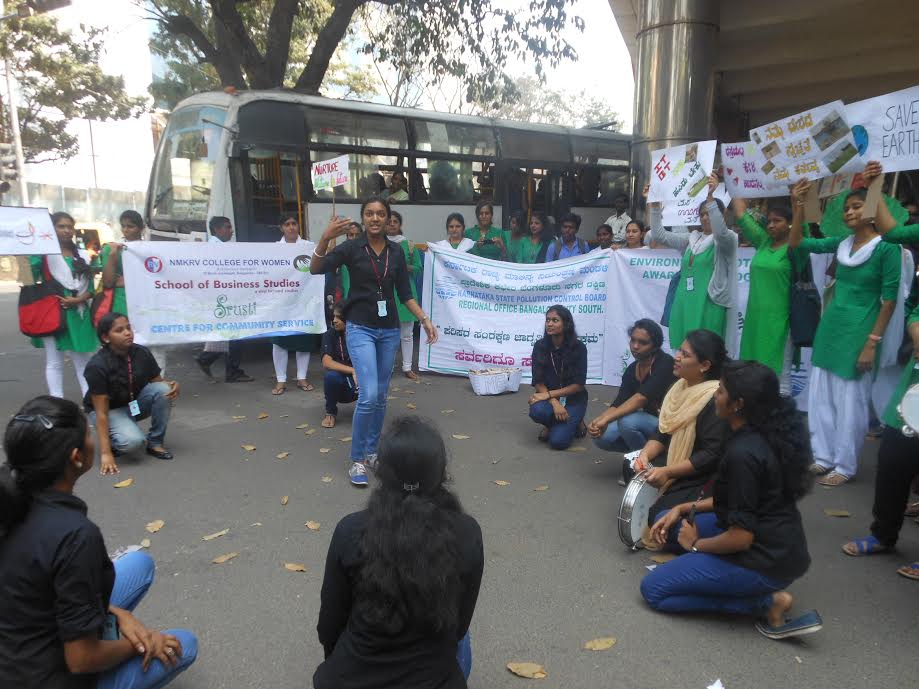
Snapshots from the street play. Pic: Madhuri Subbarao
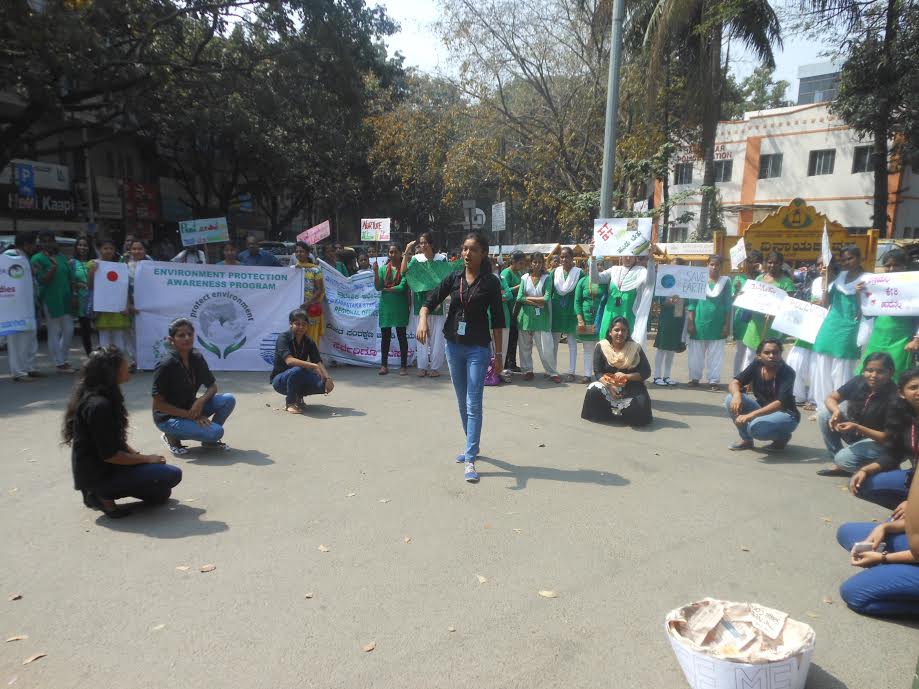
Snapshots from the street play. Pic: Madhuri Subbarao

Snapshots from the street play. Pic: Madhuri Subbarao
$(document).ready(function(){ $(‘.carousel .carousel-inner .item’).first().attr(‘class’, ‘active item’);});
Click on the left and right arrows to view the slide show
Each actor was worth noting, each spoken word was a showstopper and the timing of each was impeccable, with an amazing show of smooth scene and topic changes; a clear focus on the matter of concern. Everything complemented each other and displayed an activists outrage against the unsustainable practices of humans.
The program was crafted by Madhuri Subbarao of My Bhumi in conjunction with the State Pollution Control Board, South Zone. Air and noise pollution in the city is unimaginably high. The program conveyed that those who live in the city must soon act to bring about a change from the current state to a more livable state.
“We will keep trying to make residents more sensitive to what our part towards environmental protection is, and that a green, clean and healthy city is the best gifts we can give to our children,” said Madhuri Subbarao, Environmentalist, My Bhumi.
The NMKRV students with their teacher Uma Maheshwari, marched to each street shouting out slogans, “Save the environment, Save the future”. Their zeal astounded the public about how affected the youth are, and how they want to voice their thoughts on our part to save Mother Earth.
Soumya, a second year student of NMKRV said, “The shrill horn noise from two-wheelers is too much to tolerate. Our Environment Club has a promise to keep, which is to save as many trees from being axed and to push people to live a pollution free life”.
Raju, an Environment Officer from KSPCB, Bangalore South said, “We are doing such programs to bring awareness amongst people. It is high time that people acted to protect the environment we all live in. The girls have done a fabulous job through this street play”.
All in all, it seems as if the city still has hope to be the change. All her citizens need to do is commit to doing their part to see a better tomorrow.