All that you wanted to ask about Corona virus… and helplines for further guidance

You may have been inundated with information about the Corona virus by now. So, will summer really bring the spread to a halt? Till then, should you just wear masks and wait it out? Will turmeric and lemon help? Listen to leading infectious diseases specialist Dr Padma Srikanth as she answers some oft-asked questions.

India has seen 73 positive cases of novel Corona virus and one death thus far. The spread to many countries since its origin in China has prompted the World Health Organisation (WHO) to deem this a global pandemic. 

Since the human transmission is the primary reason for the spread of Corona virus, cities have taken various containment measures. With the closure of schools, colleges and public events in some parts of the country, preventive measures are on in full swing.

However, there is also plenty of misinformation out there on safeguards, cures and more. This has resulted in mass panic in some areas with shortage of masks and hand sanitizers.

There is also a section of the population that is flippant about the extent of spread of the virus and the potential human toll it could cause. 

So what are the myths around Corona virus spread? Can masks really be the saviour? Should you stock up on hand sanitizers? Should you stop eating Chinese food? Can the summer bring the pandemic to a halt?

Citizen Matters spoke to Dr Padma Srikanth, MBBS, MD, Professor of Microbiology, Sri Ramachandra Institute of Higher Education and Research (SRIHER) on how the virus spreads and what you can do to keep yourself and the community safe!

Also read: How to stay safe during COVID-19 outbreak, minus the panic

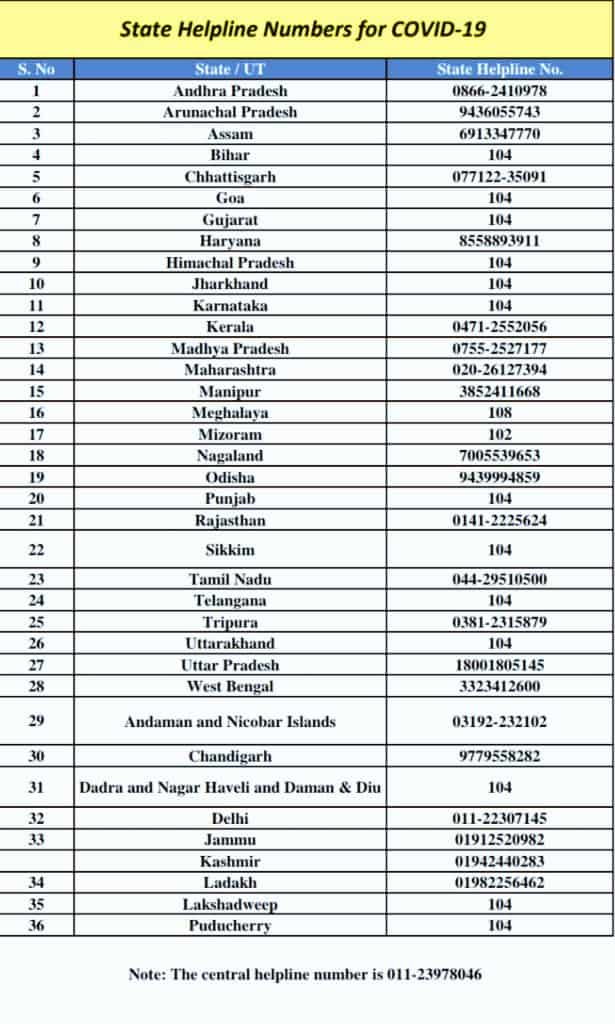
For more information, please contact the central helpline or your respective state helpline listed below:
Pic: Twitter/Doordarshan

Leave a Reply

Your email address will not be published. Required fields are marked *

Similar Story

Smart safeguard: Annual rabies antibody testing for workers

Animal activists urge the government to recommend RVNA, a simple, cost-effective way to protect animal welfare workers against rabies.

The street dogs issue continues to spark discussion across Indian cities, without a sustainable and humane solution in sight. While the problem of dog bites may be  real, it is also important to be pragmatic, preemptive and protect frontline workers in the animal welfare sector by dealing with its greatest potential downside, head on.   A simple, cost-effective intervention is to mandate or strongly encourage annual Rabies Virus Neutralising Antibody (RVNA) titre testing for all animal welfare workers. This not only protects them from rabies but it also enhances public health resilience against the fatal disease, at minimal expense. Bengaluru is…

Similar Story

Delhi’s air is toxic, but are South Indian cities really breathing safe?

South India’s AQI may look “satisfactory,” but long-term exposure to toxic air, weak monitoring, and rising emissions shape a public health crisis.

"Delhi’s Air Quality Index (AQI) remains poor." "Flights cancelled due to smog in Delhi."  The headlines mostly focus on Delhi’s toxic air, and the spotlight rarely shifts. However, another story often goes untold: the air in South Indian cities. The AQI readings in Bengaluru, Chennai, Hyderabad and others mostly fall in the “satisfactory” range. Yet, does that really mean the air is safe to breathe? On a busy road in HSR Layout, Kanmani runs a tiffin centre from a pushcart. One evening, she began wrapping up earlier than usual. Just beside her shop, the air was thick with smoke. Garbage…