Citizen lake groups have historically played an important role in protecting the city’s lakes. The erstwhile Bruhat Bengaluru Mahanagara Palike (BBMP) has a long history of engaging with citizen groups. Citizen-led lake groups have long played a crucial role in acting as “watchdogs” of Bangalore’s lakes. They are often the “first responders” to problems that emerge in water bodies. They have raised alarm bells around illegal encroachments and often help coordinate between agencies to monitor rejuvenation efforts. They foster community awareness on lakes and are often able to innovate new solutions.
The most recent version is the Kere Mitra (Lake‑Friend) programme in Bengaluru, launched by the BBMP, now the Greater Bengaluru Authority (GBA), in October 2023. It is a citizen‑volunteer initiative to involve local residents in the upkeep and monitoring of corporation lakes within their ward. Currently there are around 600 registered Kere Mitras serving across various lakes, each rotating after a three-month term.
What citizen engagement must not look like
However, concerns have emerged in recent months about the nature and scope of citizen engagement and the misuse of power by certain groups:
- Some citizen groups have registered as NGOs and taken over some of the functions typically done by the municipal corporation, such as hiring of private security guards. Unfortunately, these guards have then excluded the general public from accessing the lake. Effectively, a public water body has become private to the gated community.
- There are many examples of lake rejuvenation gone wrong. In several cases, CSR funds were raised by NGOs to rejuvenate a lake. Either the water quality interventions were inadequate or the lake bunds were not properly strengthened and they breached during the monsoon. Local residents suffered the consequences of flooding.
- Some NGOs are raising funds in the name of the lake, but without complete transparency and accountability as to how these funds are being used. Ultimately a lake is a socio-ecological space that is the result of compromises within the community. There is no one perfect way to design the space. However, the implementing NGO sometimes follows their own logic and overrides what the majority of the community wants.
- Some lakes have multiple registered lake groups, sometimes even supported by opposing political parties. They have very different imaginations of what the lake should be and they work at cross-purposes. Sometimes one group is dominant and might even exclude certain legitimate stakeholders.
The ultimate stakeholders and watchdogs
Finally, GBA engineers often get caught in the politics and conflicts between citizen groups, some even going to the extent of filing lawsuits and counter suits. At the end of the day, the engineers are responsible and answerable to elected officials and courts. Often, they feel that the “credit and glory” is claimed by the citizen groups, but their pain and hard work goes unnoticed.
It is not surprising that the civic body is increasingly skeptical about engaging citizens. These concerns are legitimate but citizen groups continue to be important stakeholders and watchdogs. The city’s residents are the ultimate stakeholders. The question is how do we create a framework for citizen engagement without the downsides.
We need a set of principles to engage citizens but with full transparency and accountability. Citizens in Bengaluru have played a very important role in preserving and maintaining the city’s lakes. But one continuing point of confusion is what is a “citizen lake group”?
Read more: Saving Bengaluru’s lakes: Why BBMP should institutionalise community participation
Non-governmental vs community-based
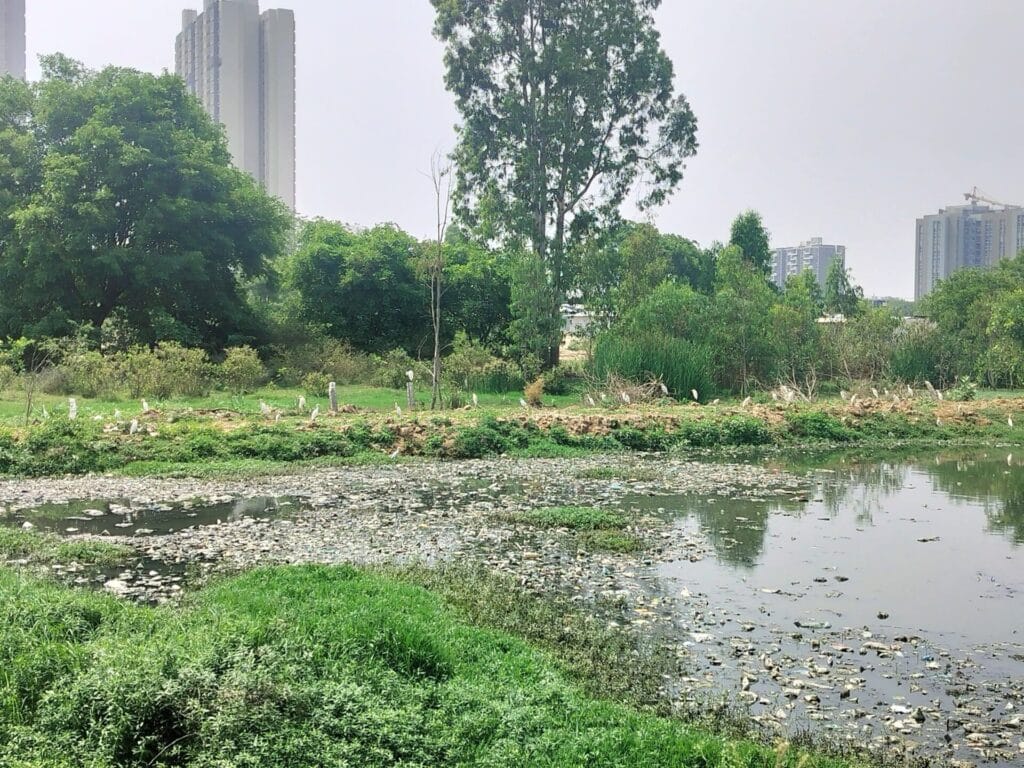
To define this, we need to distinguish between NGOs: non-governmental organisations, and citizen lake groups or CBOs: community based organisations. Both are important stakeholders but they play distinct roles.
NGOs have domain expertise and execution capacity. They operate on a project basis. Because they execute these activities at many lakes, over time they develop expertise and experience to do them well. They understand water chemistry, limnology and hydrology. But once the project is over, they leave.
In contrast, CBOs represent the neighbourhood. They are “beneficiaries” if the lake is well maintained. They represent the “affected community” if the lake breaches or is unsafe. They may lack technical expertise in managing lakes, but they do not leave; CBOs have a permanent stake and will remain engaged in the long run.
Why citizen lake groups are crucial
We occasionally hear the argument that CBOs are unnecessary and all citizen action is best directed through ward committees. But this is not always feasible. Ward committees do have a formal role through the 74th Amendment. But in cities like Bengaluru, these are often non-functional and politicised. Besides, lake jurisdictions often do not overlap with ward boundaries.
If the CBOs or citizen lake groups claim to represent a place, they need to fulfill certain roles and functions as an “owner of that place”. But they also need to be transparent, inclusive and accountable.
It is high time that Bengaluru’s lake groups become mature and take their true place in the city’s future.
There is plenty of precedent for this in Resident Welfare Associations (RWA). But then a citizen lake group must be a registered society akin to an RWA, not a trust. The membership must be open to anyone residing within some specified radius. The GBA may choose to define it as a 3 km walkable radius of the lake or even all residents of wards that share a boundary with the lake. This will ensure that a lake cannot become the fiefdom of one individual.
The lake group must have bye-laws, minute meetings publicly and publish accounts. The leadership will have fixed terms and can be voted out by the members. Ideally, they should sustain most activities through membership fees. Their primary role would be to sustain and engage citizens around lake issues through awareness programmes, kere habbas (lake festivals), etc.
A blueprint for effective lake management
Once we define and recognise the proper role of citizen lake groups, it becomes clear that their role is to develop consensus and advocate for the future of the lake. One way that this can be done effectively is through a “Lake Vision Document” which lays out what citizens want from the lake, akin to a local Master Plan or Development Plan. Ideally, the Lake Vision would be developed through a consensus process, and updated every ten years. If this is done through public consultation, then it becomes the official document that BBMP can use to create DPRs, tender contracts etc.
They might also enter into partnerships with NGOs who might raise funds through CSR, but it would be the citizen lake group that would be responsible to secure permissions and ensure funds are well spent. Thus a GBA MoU would be with a single entity that has the legitimacy. Such a properly recognised citizen lake group can then play the important role of acting as watchdog. They would have the legitimacy to challenge builders who encroach. They would be able to ensure that lake rejuvenations by NGOs meet codes and standards.
Let us recognise and celebrate the roles that NGOs, citizen groups and the civic body have each played. Let us strengthen rather than eliminate or politicise the ‘Kere Mitra’ programme.