She stands with folded hands near the dam. Ponnaiyar, Thenpennai, Dakshina Pinakini…. these are the names she personifies.
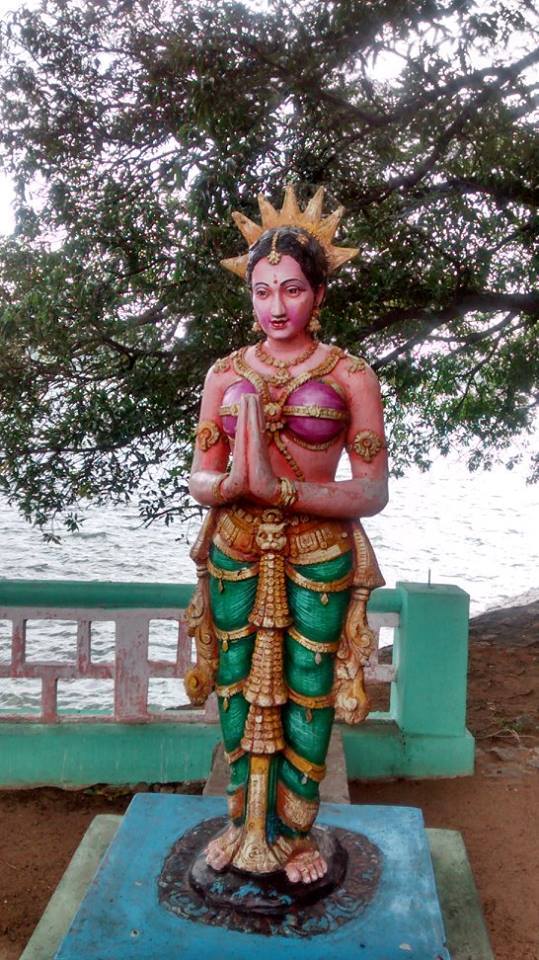
Statue of Dakshina Pinakini in Bhoganandeeshwara temple. Pic: Vishwanath Srikantaiah
At the ancient Bhoganandeeswara Temple, children listen to their teacher narrating the story of a spring that comes and fills the step-well. Here is where it all begins. In Kannada there is a saying—never ask about the origins of a sage and a river.
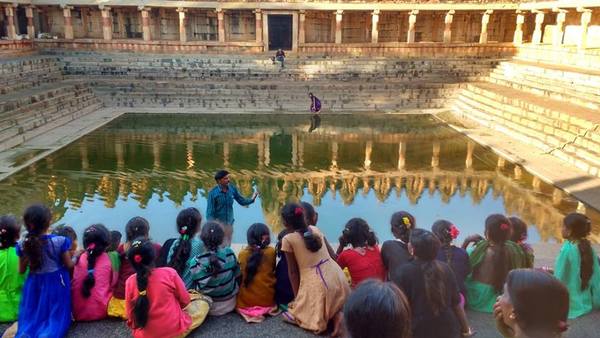
Children listening to the story at the Bhoganandeeshwara temple premises. Pic: Vishwanath
The city of Bengaluru has made it to international news because two of its lakes started to foam and even caught fire. Here is where the foam and the fire ends up for now. In the dam at Kaveripattinam.
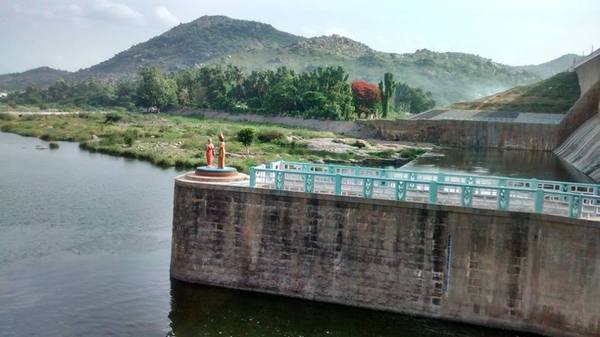
Kaveripattinam dam is constructed on a river formed from the lake chains from Bengaluru. Pic: Vishwanath
Vast areas of agricultural land are irrigated by the waste waters of a metropolis. In nature there is no waste—just a misplaced resource. And for the liquid component, it is the river which is the carrier.
What is a river? A river is what we tell stories about and blog about. A river is what we pour into or take out of. A river is what we experience sitting on its banks. A river is what we dam. A river is what we use the waters for irrigation and agriculture. A river, is where we swim.
A river, is where a monkey takes a walkabout. A river, is where we build statues of buxom goddesses. A river, is what we fight about. A river is an ecosystem.
What is a river to you? For, in the end, a river is what you think and feel about it.
********
The Jakkur lake initiative
Here is a work in progress which can be an example to others, provided the authorities listen. Fisheries and a wetland could enhance the water body as an asset.
Recharging groundwater would mean additional water becomes available form the city’s need. If wastewater is managed well, they can become an asset for keeping urban lakes alive and recharging groundwater.
One of the clear models emerging for managing tanks is to embed them in new paradigms. The tanks in the pre-industrialisation era were meant only for irrigation purpose. Now that urbanisation has swallowed the rice paddy fields of the command areas, the tanks are no longer relevant.
In the new paradigm of what is called Integrated Urban Water Management, tanks have the following roles:
- recreational
- ecological
- wastewater managers
- flood managers
- rechargers of groundwater
- places of learning and more.
The Friends of lakes idea
If you connect many lakes in a chain, and if you begin to clean one tank at a time to fill it with treated waste-water, a river will be reborn. This is the assumption being tested out by Friends of Lakes, a group interested in rejuvenating lakes.
The key here is ownership. In the absence of an Institution that can own and be held accountable, citizen groups (like Jalaposhan in the case of Jakkur lake) have to come forward and own the tank as a common pool resource. They then have to persuade all the institutional actors such as the BBMP, the BWSSB, the LDA, the Pollution Control Board to do their legally obligated stuff. This could be a solution to the problem of waste water that haunts our cities.