For the first time in Bengaluru, the Walk to School (W2S) program was conducted successfully in Sanjaynagar. 1,500 children from six schools participated in the program by walking to school from their homes on Saturday November 5th. Those living further away and typically travelling by bus or other vehicles, were dropped off at common points a few kilometres away, and walked to school in groups.
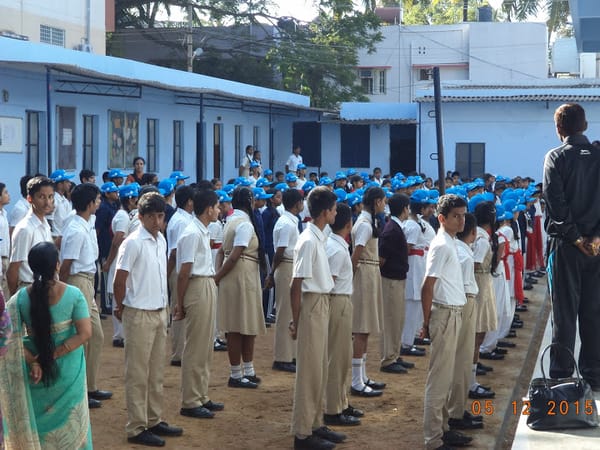
Pic: Manju George
It was surprising to see that instead of complaining that they had to wake up early and walk to school on a cold morning, the children were excited and happy to walk. Their enthusiasm was infectious. All the children walking wore caps with the message “Let’s walk for a better Bengaluru.” And as a result, the roads of Sanjaynagar witnessed a sea of blue on Saturday morning.
The following schools participated in the program:
- Akai Public School
- Daffodils English School
- Pavithra VIdyanikethana
- Sandeepani Niketan
- Shikshasagar High school
- SYA High School
CiFoS executed this event in partnership with ESAF Bangalore, with supported from B.PAC, Directorate of Urban Land Transport (DULT), Bangalore Traffic Police (BTP) and BCOS.
The W2S program met the following objectives:
- Reduction in pollution
- Reduction in traffic congestion
- Walking has lot of health benefits. Children can benefit as they get enough physical activity as per WHO recommendation to avoid life style diseases.
- Along with the children, parents are also sensitised regarding walking short distances.
- When parents walk with the children, it gives them an opportunity to interact with them and spend quality time with them.
- Children observe their neighbourhood when they walk and they get a feel of what is good and what needs to be improved.
- When children are conscious about the good and bad in their neighbourhood, at a later stage, they may take interest in involving themselves in the upkeep of their neighborhood.
Snapshots from the event
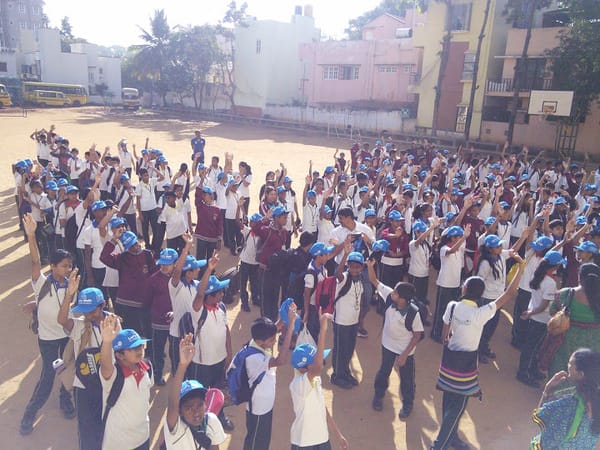

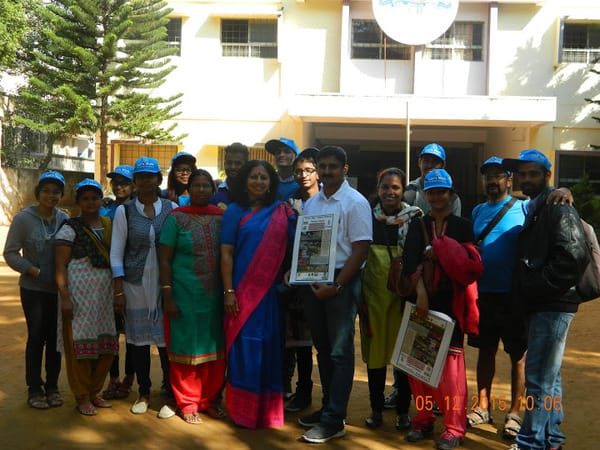
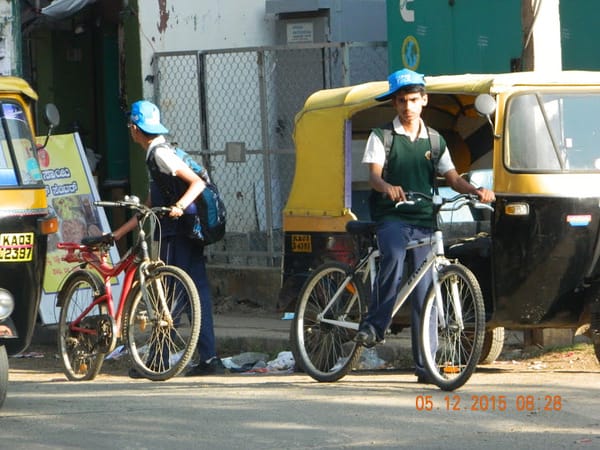
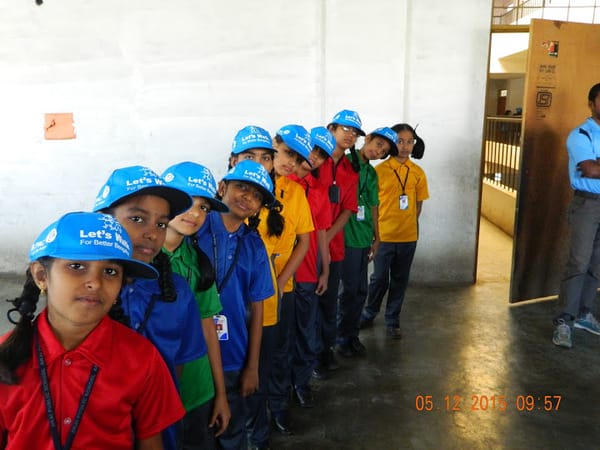
Pictures courtesy: Manju George
People speak
“I walked from RT Nagar to Sanjaynagar. I felt very good, walking is such fun. Walking with my parents was really very good. I would like to walk every week to school.” – Balaji, 6th standard student
“I was very happy my daughter got up early by herself and wanted to walk to school. Saved me a lot of headache of screaming and getting them ready to go to school.” – Roopa Naik, mother of a 6th standard student.
Related Articles