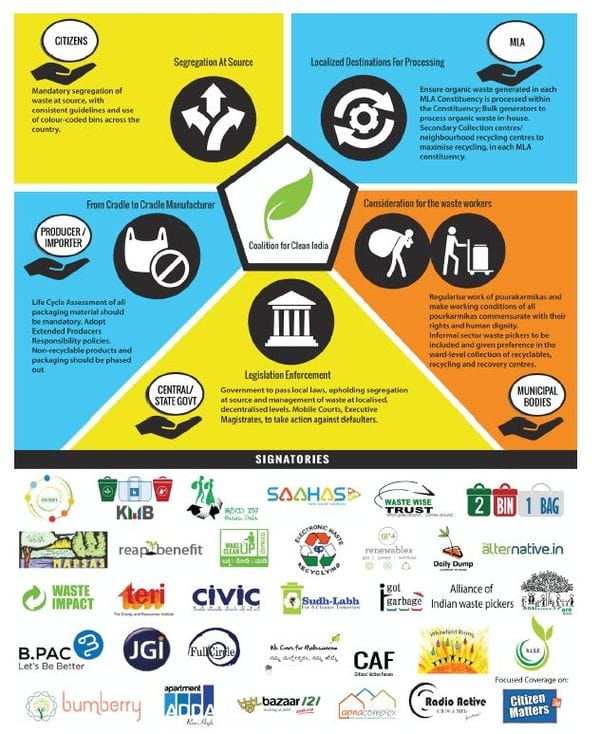
The Coalition for Clean India, a network of organisations working on solid waste management presented a five-point Charter to the Karnataka Chief Minister Siddaramaiah, on World Environment Day on May 6th 2015, at the Parisara Habba held at Kanteerava Indoor Stadium.
Here is the letter that was shared:
“We, citizens groups, organisations and individuals working on Solid Waste Management have come together, as Coalition for Clean India, to highlight a clear and common agenda, for sustainable practices in Municipal Solid Waste Management both in the State of Karnataka and at the national level. The Agenda of the Coalition for Clean India recognises sustainable Municipal Solid Waste Management practices, as the single largest broad based activity that touches every household in the State and the Country, which is key in achieving the goals of health, environment, quality of life of its citizens.
The rationale for the Agenda points which have been identified, is the resultant outcome of a pragmatic, well researched approach supported by countless man hours of time given by the signatory organisations and the volunteer communities that they have worked with since 2008, for implementation of these sustainable practices starting at the household level right upto the Ward and City level.
It is the earnest request of the Coalition members, who have gathered here today on the occasion of the ‘ Parisara Habba ‘ to celebrate the World Environment Day 2014-15, that these Agenda points, therefore, be considered and included in the State Policy for Municipal Solid Waste Management and implementation takes place accordingly.
Sir, we are very hopeful that you will seriously consider our representations and will provide the leadership to implement the measures that are needed to bring a sustainable permanent solution for Solid waste Management and make Bengaluru and the State of Karnataka a model in environmentally friendly, socially inclusive , economically efficient Solid Waste Management practices.”
Related Articles
KSPCB, Eco-warriors celebrate Parisara Habba
Hundreds of crores spent on garbage, what does BBMP have to show?