Day-Long Cleaning Drive and Tree Planting at Horamavu Agara Kere

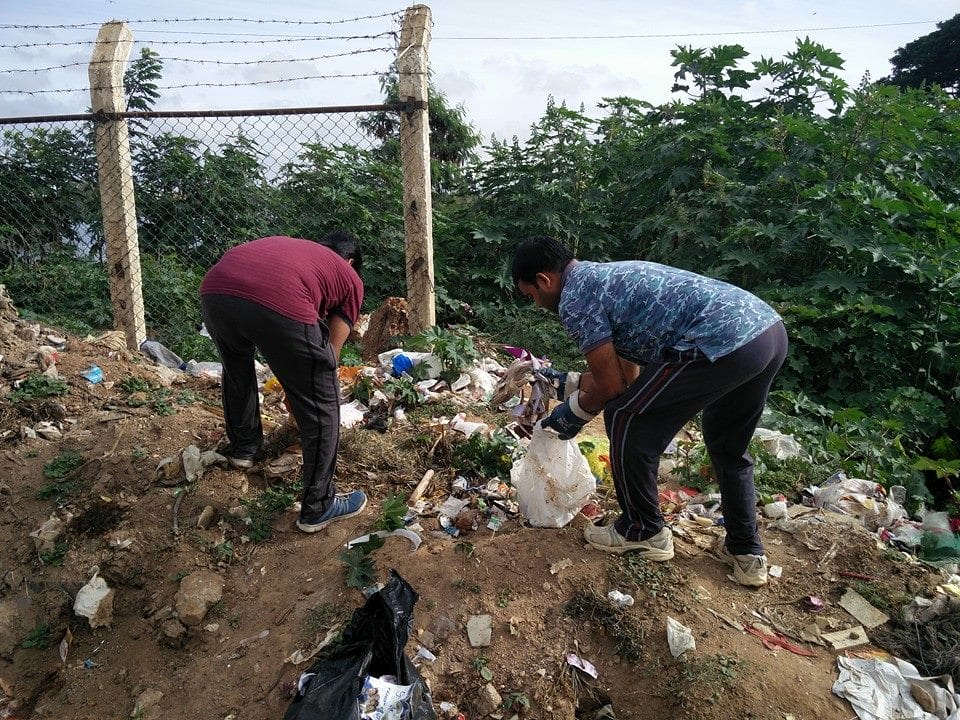
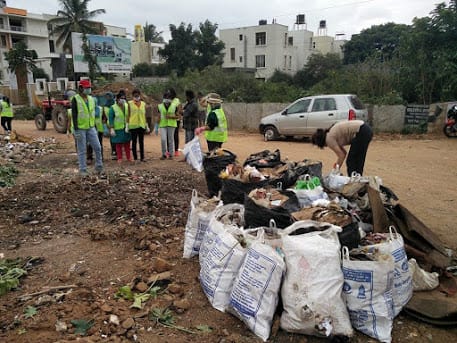
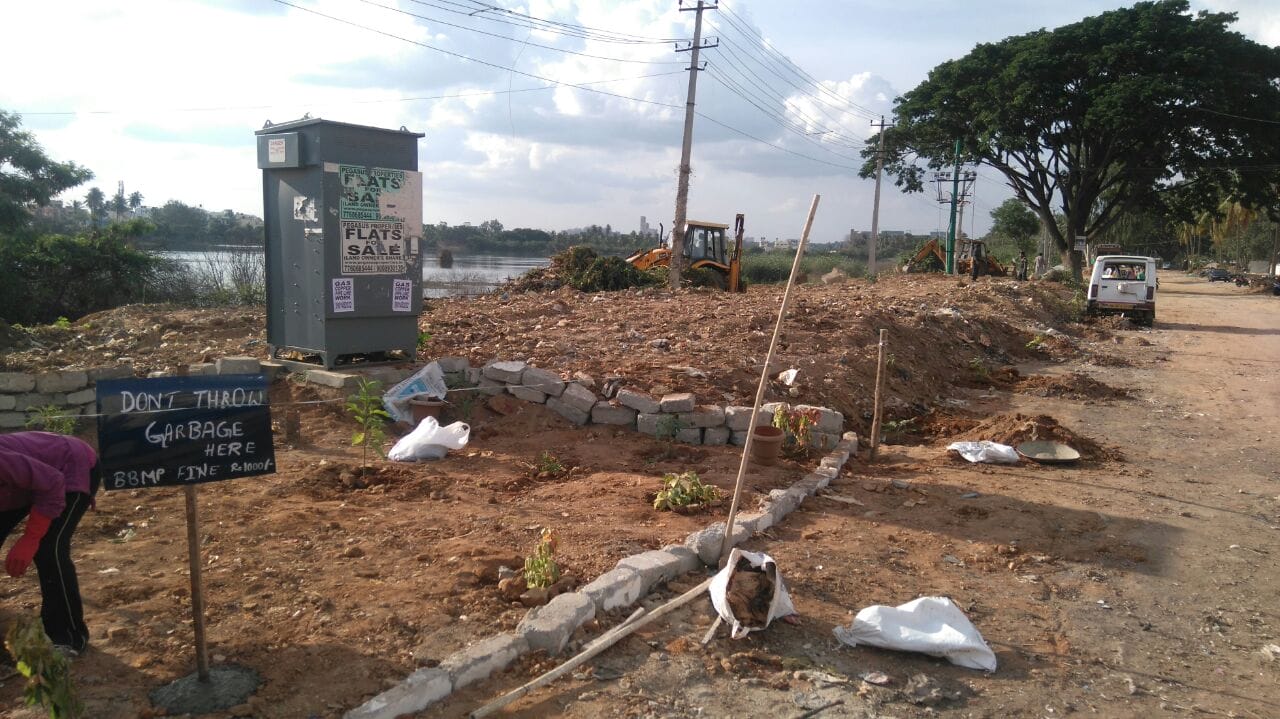
On Saturday, 16-July-2016, Horamavu Parisara Abhivruddhi Samiti (HPAS) organised an intensive day-long lake cleaning and beautification event at the Horamavu Agara Kere. More than 100 people participated in the event. In addition to local residents, students from Mount Carmel College’s Eco Club enthusiastically joined in picking up litter strewn around the lake, segregating waste, removing weeds from the lake’s fence, levelling the ground where needed, planting tree saplings, and making the place aesthetically pleasing enough to dissuade people from littering and dirtying the place in future.

This 50-acre lake in north-east Bengaluru has been a prime location for local residents to toss their unsegregated garbage in plastic bags, for the local BBMP contractors to transfer garbage from tempos into trash compactor trucks, and for people eager to encroach upon lake land by dumping construction debris. In addition, raw, untreated sewage flowing into the lake via two rajakaluves creates a perfect cocktail for disease causing vectors and for the unbearable stench that hangs in the air.

Dr. Ted K. Dass, HPAS managing trustee, said on the occasion that “The government must take very seriously the implementation of orders and rulings by various courts, including the recent orders on Bengaluru’s lakes by the National Green Tribunal. Further, the newly formed KLCDA must be well funded and provided with adequate staff to undertake lake rejuvenation activities on a war footing. People will fall in line when consequences for damaging or destroying lakes and their catchment areas are severe and predictable.

More photos of the cleaning event can be accessed here.

For more information on Horamavu Lakes, please contact Ted K. Dass, Managing Trustee, HPAS Trust

[+91-9900-56-9955 | hpas.trust@gmail.com | www.facebook.com/SaveHoramavuLakes]

Leave a Reply

Your email address will not be published. Required fields are marked *

Similar Story

The wild in the city: What citizen scientists tell us about Bengaluru’s biodiversity

Spatial and temporal biodiversity patterns, as observed by citizen scientists in the city during 2016-2025, were studied at a datajam in December 2025.

Imagine you’re out on a morning walk, phone in hand, when you spot a butterfly you’ve never seen before. You snap a photo, log it into a citizen science app, and voila! You’ve just contributed to crucial biodiversity monitoring. This isn’t just a hobby; it’s part of a global movement where ordinary people collect, record, and sometimes analyse data about plants, animals, and ecosystems. Citizen science stretches the reach of ecological research. Every observation adds to unique longitudinal datasets that reveal phenology — periodic events in the life cycle of a species — along with species distribution shifts and population…

Similar Story

Air quality management is a governance problem, not just an environmental one

Despite massive funding, Indian cities face weak governance, poor data, and limited capacity, as air pollution continues to worsen.

Indian cities are struggling to breathe. Air pollution is a year-round governance challenge. In 2024, 35 of the 50 most polluted cities globally were in India, with PM2.5 concentrations above 66.4 μg/m3. This is at least 13 times the World Health Organization (WHO) guidelines and at least 1.6 times the National Ambient Air Quality Standards (NAAQS) in India. Citizens continue to bear the brunt of worsening air quality, and urban local governments (ULGs) are at the forefront of the problem, being primarily accountable for their citizens' first mile. While they do have a role to play in addressing this threat,…