
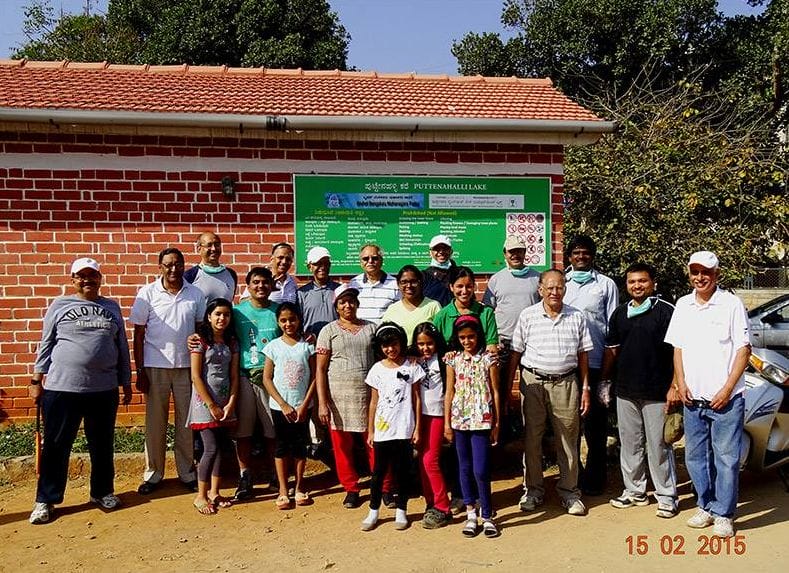
 Sincere thanks to our neighbourhood clean-up crew at Puttenahalli Lake, 15th Feb 2015 (Pic: Vishnupriya)
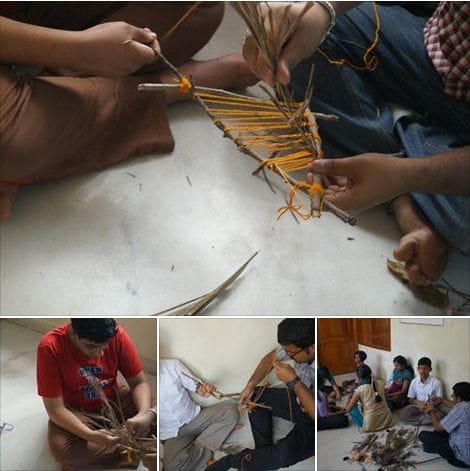 A glimpse of Snehadhara Foundation’s work in progress – getting ready for its role at Puttenahalli Kere Habba.
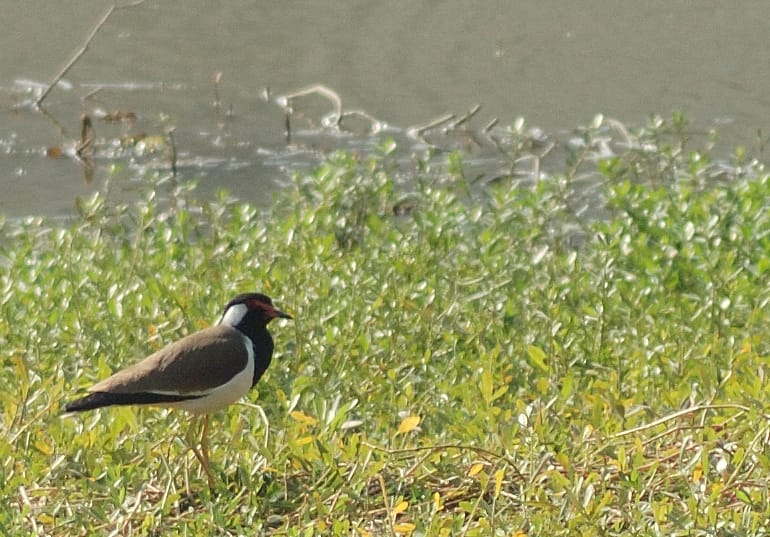 A few enthusiasts did the bird count at our lake during the Bangalore Bird Count last weekend. Despite the several constraints, natural and man made, we are happy to report that as many as 28 species were spotted at our lake. If you would like to spot these birds and/learn basics of photography, please join the exclusive session for beginners at the Puttenahalli Kere Habba 3:30 to 4:00 p.m. Nature walks also scheduled. No charge. (Red-wattled Lapwing, Pic: Sowmya Basker)
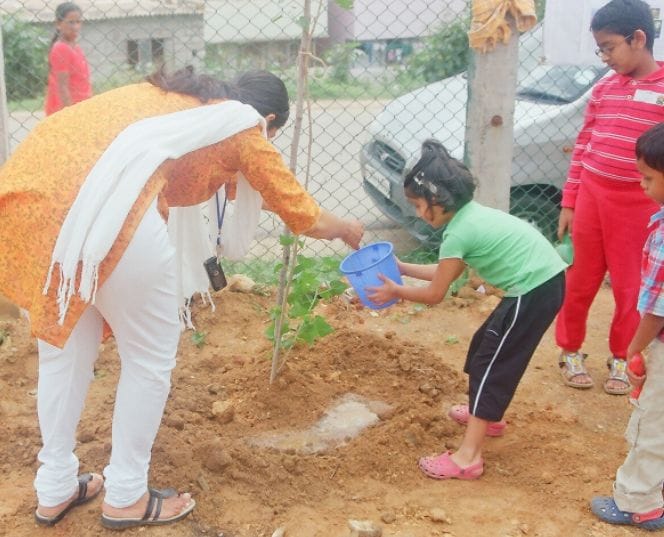 Children, if allowed, would love to squish in soil! Let them do just this at the Puttenahalli Kere Habba. They will learn the basics of gardening in “Pot a Plant.” The seedling they plant will be theirs to keep. To nurture, water and see it grow. No charge. (Pic: taken on 17th July 2010 at the first tree planting day at Puttenahalli Lake).
Other no-charge events at the Habba include Free Wheel, Fly a Kite, Sail a Boat, Craft Making, Drip Drop – help install an irrigation system, Film Show, Live Music. Some events may be more appropriate for certain age groups.
Food will be on sale – yummy varieties of chat, gulab jamuns, kulfis, juice, peanuts and more!
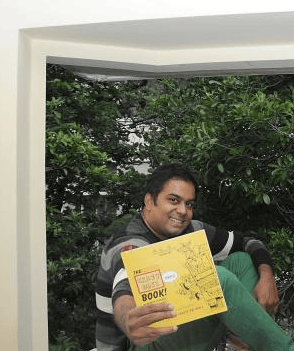 See cartoonist Ananth Shankar in action, and get a chance to buy a personalised illustration at a special rate.
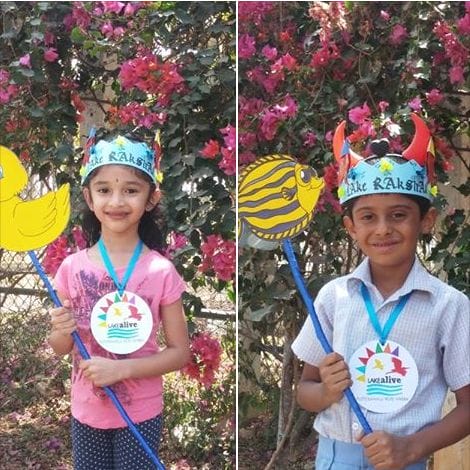 Make your child a Lake Rakshak. Charge inclusive of photo in an exquisite limited edition “Lake Alive” photo frame specially created for Puttenahalli Lake by cartoonist Ananth Shankar.
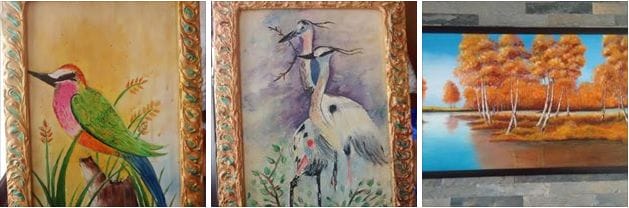 Brighten up your home or office with a painting for a cause! AUCTION AT KERE HABBA. Two talented amateur artists from our locality, Shrishti and Shana, have donated a few of their pieces to be auctioned at the Puttenahalli Kere Habba 2015. The amount raised will go towards PNLIT’s efforts at maintaining the lake, and other neighbourhood activities. The money will be most welcome since PNLIT is dependent on donations from individual well wishers. NINE art pieces can be yours to keep. Make your best offer on the spot and help the lake.
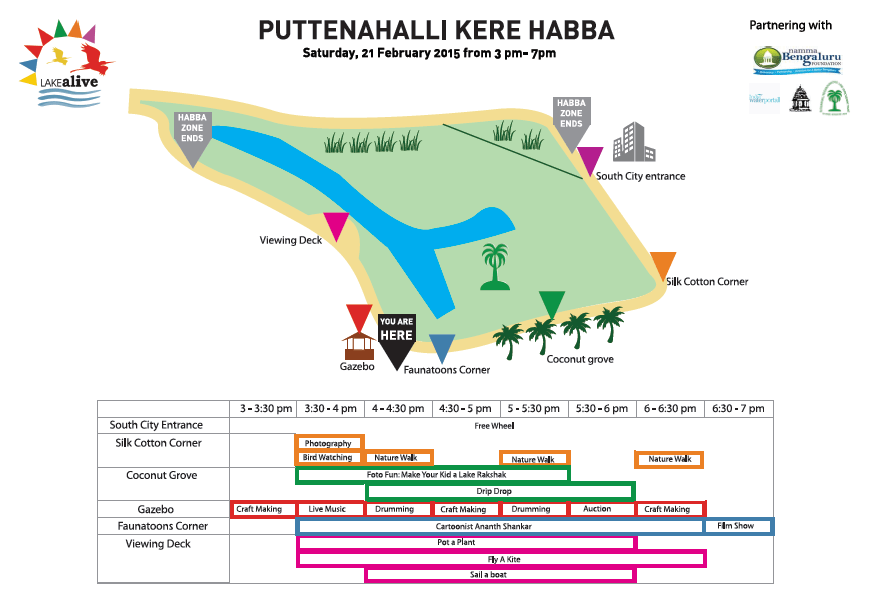 Puttenahalli Lake map and schedule for the Kere Habba
Now that you know what you’re going to miss, be there! 3 p.m. onwards. More details here.