Hope and Colours at Puttenahalli Lake

In this season of colours, our lake bed may seem drab, devoid of water but for us at PNLIT, it is a sign of hope. The brown piles of drying Salvinia is the final leg of a battle we’ve been fighting since Aug. last year to remove the invasive fern Salvinia Molesta and to infuse new life into the lake. The way the BBMP’s JCB and the men are working, we are hopeful that the last of the Salvinia will be removed by the end of the week. THEN we can welcome the rain to fill up the lake.

In spite of our preoccupation with the lake bed, we did not miss the riot of colours on the embankment. Some of the trees we’d planted in July 2010 have begun flowering and how lovely they look! A selection of photos of trees that began flowering this year are attached. A few like the tall Markhamia Lutea have been showering yellow flowers on the walking track for a year or more. The Bougainvillea has been a blaze of scorching pink and violet while preventing miscreants from cutting through the fence.

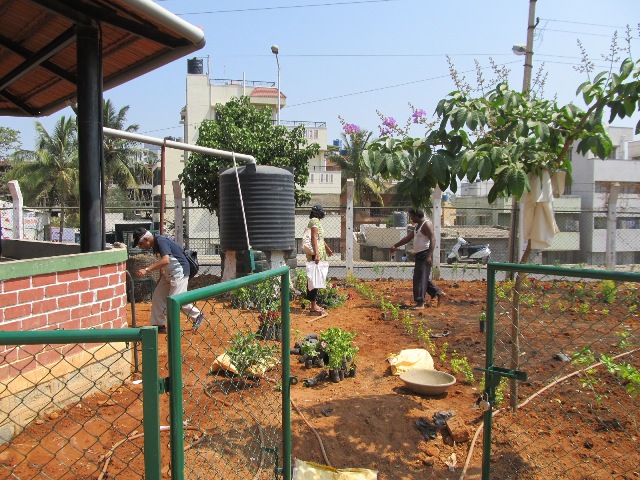
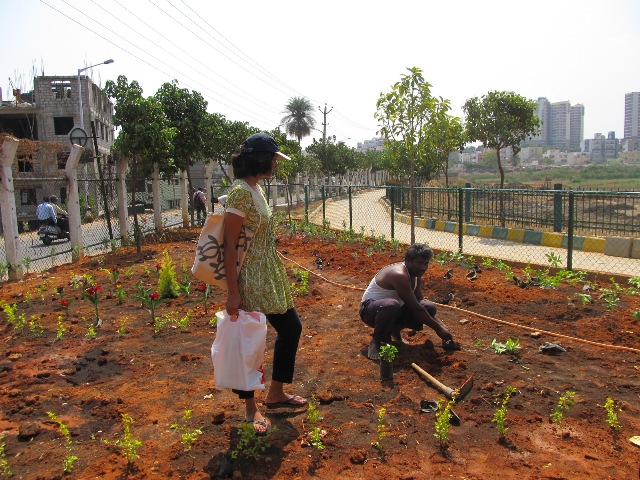
We are now setting up a small garden within an enclosure behind the Gazebo. Very soon there’ll be a burst of colours here as well since most of these are flowering plants such as Hibiscus, Canna (both in two colours), Nerium, Euphorbia and others.

This is our floral thank you to our donors! We are using your donations not only for the trees or to set up the garden but also to effect many other changes at our lake. Please keep donating to PNLIT and avail of IT exemption under 80G.
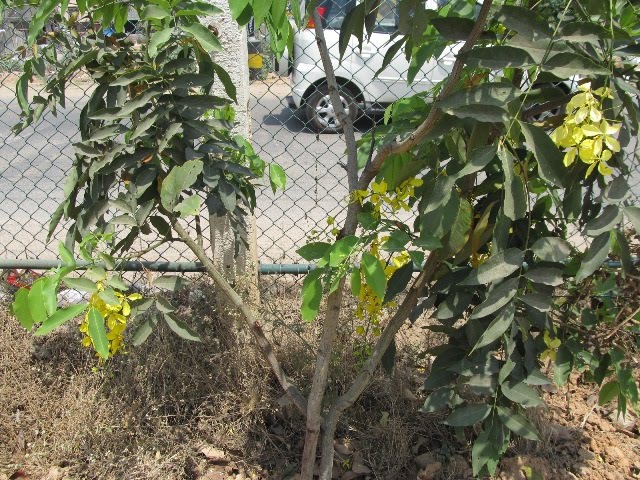
 
Golden Laburnum
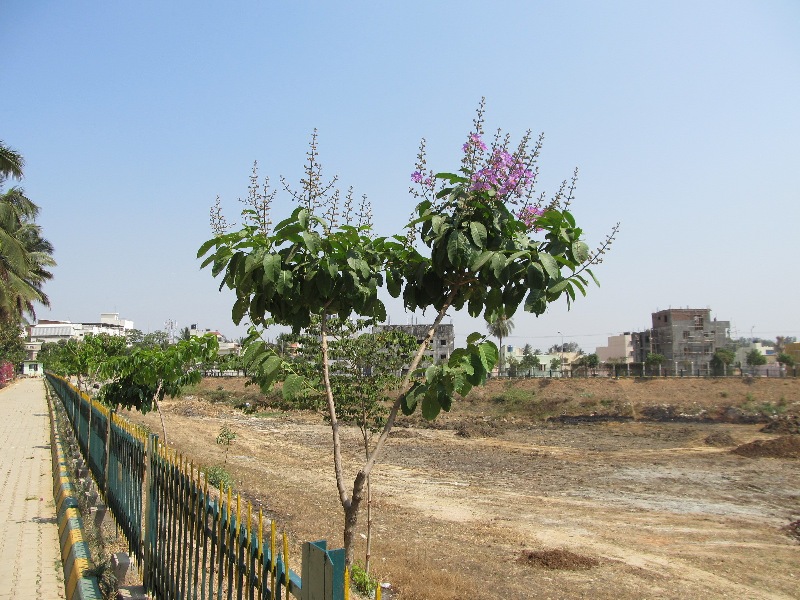

Crepe Flower
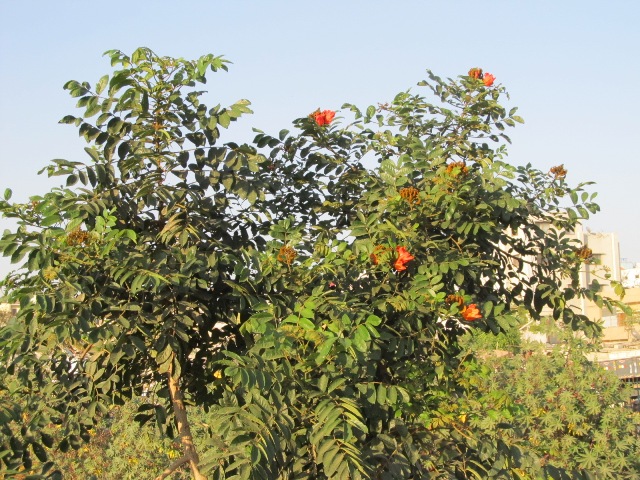

African Tulip
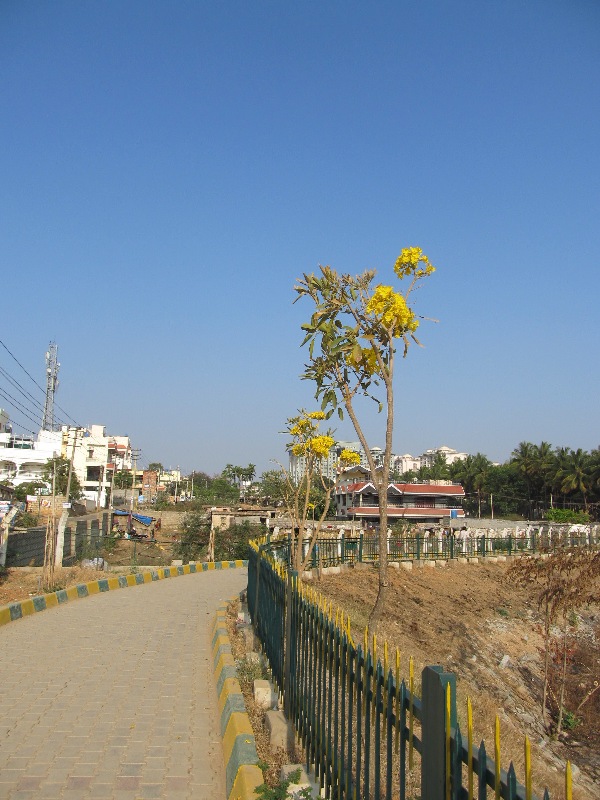
 
Tabebuia Argentia
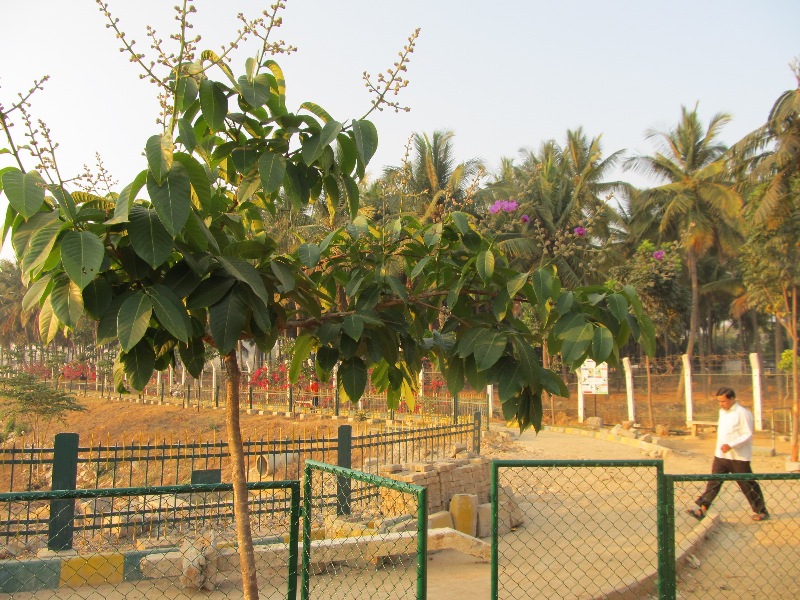

Crepe Flower, Bougainvillea in the background
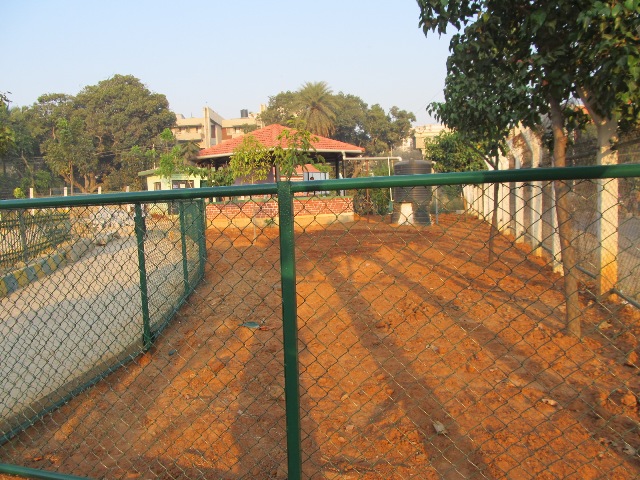

Garden enclosure
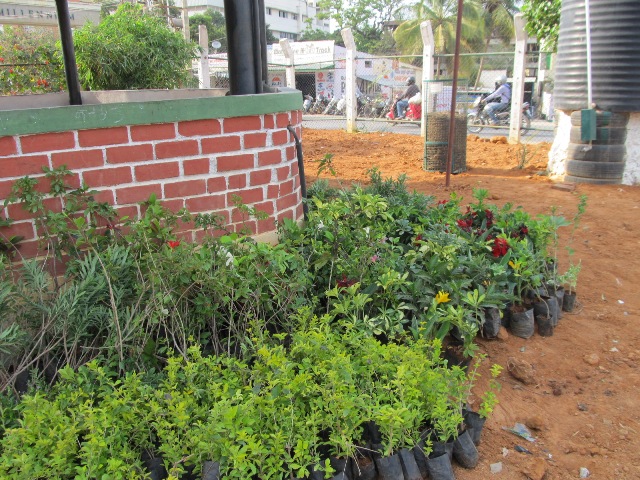

Garden plants

Pics: Usha Rajagopalan

Leave a Reply

Your email address will not be published. Required fields are marked *

Similar Story

Why concrete lakes are pushing away Bengaluru’s waterbirds

As natural shorelines vanish and extensive restoration destroys habitats, city lakes see a sharp decline in special wetland bird species.

Since Bengaluru’s lakes were formed by damming water flowing down valleys, they are typically wedge-shaped, with a gentle slope and a deep basin towards the embankment. This promotes the growth of diverse vegetation and animals, each adapted to a particular water depth. The result is a natural zonation – reedbeds and shoreline vegetation at the edges, floating and submerged vegetation in the middle, and open water at the deepest end. During the Open City biodiversity datajam held in December 2025, our group examined the ecological trends around Bengaluru’s lakes. In an earlier article, we examined how migrant and resident waterbirds…

Similar Story

Can cool roofs beat Chennai’s heatwaves? A look inside the state’s Green Schools push

Amid heatwaves, the cool roof initiative is being implemented across Chennai schools. But experts warn that it cannot be the single solution for urban heat.

Over the past few years, maths teacher Usha found her classroom sweltering during her usual 12.50–1.50 pm period, on the second floor of Perunthalaivar Kamarajar Government Girls Higher Secondary School. “It was so difficult to take class during the peak hours,” she says. But this year, she mentions that it feels slightly bearable, and attributes this to the shade of the trees, the wind blowing through the building, and the latest addition — solar-reflective paint on the roof. Data from a state government and UNEP Cooling pilot project at the Ambattur school shows that reflective coating brought the classroom’s internal…