The woes faced by resettlement colonies in the grips of COVID-19 and the impact of the lockdown has been immense. Issues highlighted in the past — such as shortfalls in adequate, livable housing for those evicted from their original settlements — have only been heightened by COVID-19, as our earlier article illustrated.
Yet another stark fact is that women, children and disabled individuals face added burdens as a result of the way such housing is designed.
The feminisation of poverty
COVID-19 and the lockdown has placed an enormous burden on the women in resettlement colonies. Managing the household, ensuring cleanliness and getting by on meagre finances has been a challenge.
“When the news of the spread of corona virus first broke, we didn’t realise how much it would affect us. Only after the lockdown were the effects felt. Cooking, cleaning and maintaining hygiene without water supply in the kitchen was difficult. We didn’t make trips to fetch extra water but had to ration it. Money was also an issue as both my husband and I were unable to work. So I had to borrow from my relatives,” says Karthiga R of Kannagi Nagar.
The messaging about handwashing and preventive measures for COVID-19 also had implications in that the responsibility of ensuring these would inevitably fall upon women.
Vanessa Peter of The Information and Resource Centre for the Deprived Urban Communities (IRCDUC) says, “The slum board is providing water inside the houses only now. In some cases people store water in drums outside and use motors to pump it up. Since this is not affordable by all, women face the burden of carrying the water up the floors. When you are forced to wash hands and the emphasis is on cleanliness, the burden is on the women.”
In addition to this, women are faced with loss of livelihoods and income that provided them some agency. “ I am a domestic worker. We had jobs in the apartments in the area but when the lockdown was imposed, we were not able to travel. After the lockdown my employers left the city, so I am currently looking for a job. The relief amount of Rs 1000 per family provided by the government was not enough to support my family of five for more than two months,” says Raji of Semmenchery.
The lack of adequate child care facilities in resettlement colonies has also been raised on many occasions. With COVID-19, the issue seems more crucial than ever. A report by IRCDUC found that three resettlement colonies of Navalur, PErubakkam and Gudapakkam, which should have 79 anganwadis, only had 11 centres in total.
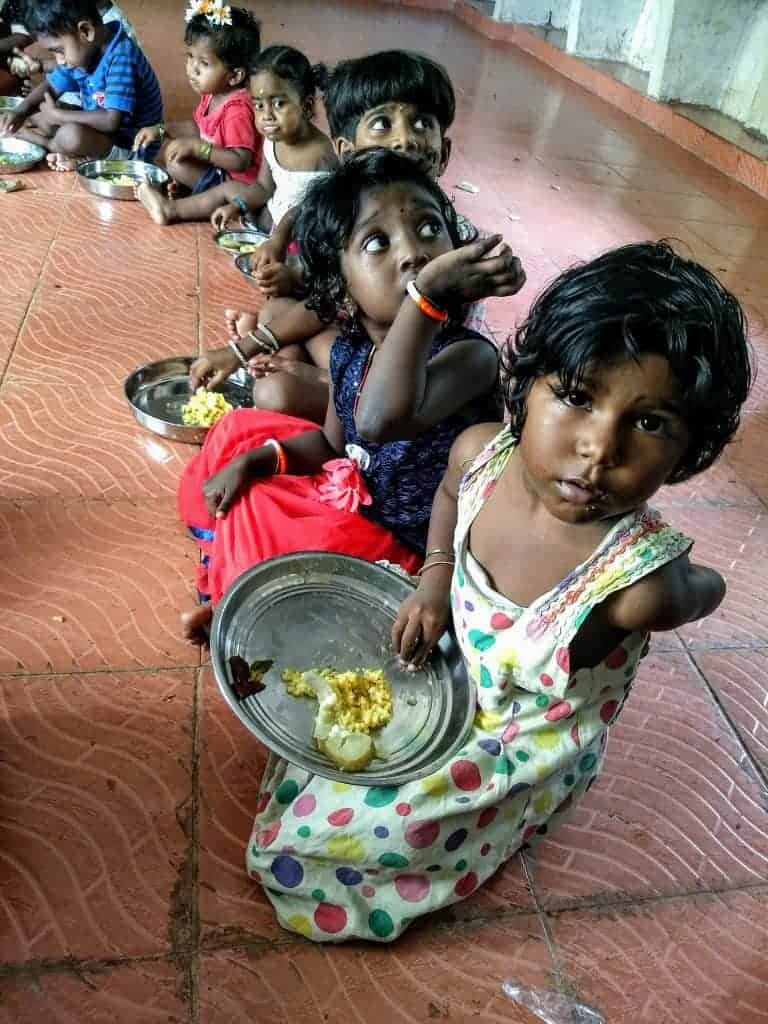
“You can take a walk through any resettlement colony and see for yourself that they do not have an adequate number of anganwadis as per population norms. The women in these communities who need it the most, since they travel far for work, do not have access to it”, says Vanessa.
Domestic violence
There has been a spike in the number of domestic violence cases across the state during the lockdown. But the stifling environment in the resettlement colonies has played a definite role.
“My husband is an alcoholic. While we used to have fights before, I was able to get away by going to my sister’s house. During the lockdown, he was unable to get alcohol and became physically violent. Having my daughter with me helped me get through this period,” says Anitha S.
A helpline set up by The Banyan and The Banyan Academy received hundreds of calls from the communities during the lockdown. “By April we knew domestic violence was snowballing into a huge issue. We set up a helpline and got calls from women and were able to direct them to our partners for support and assistance in dealing with domestic violence. Many of the women who called said they needed a space to vent but were not necessarily looking to take any legal action,” says Dr Archana Padmakar, Deputy Director.
Children affected by lockdown
With schools shut, children have had very little respite from the long hours of lockdown. Playgrounds and green spaces are in short supply in the resettlement tenements that house lakhs.
“We were very tired of being cooped up in a room in the initial months of the lockdown. Our parents were not comfortable letting us out to play and the playgrounds were closed. It was tough to be indoors for so long. I played mobile games and watched TV. Not seeing my friends has also been tough,” says Prasanth S, 11, of Perumbakkam.
In exercises with IRCDUC, when children of the community were asked what kind of housing they would like, many drew gardens and parks and trees but these were the elements that were absent from their surroundings.
The communities also pointed out that the lack of streetlights and safety concerns prevented children from being able to use the parks and playground in the evenings, confining them indoors.
Infrastructure not disabled friendly
The issue of accessibility has also been a problem for disabled individuals in the community. Vidya Mohan Kumar, architect and urban designer says,” We have been working with the Disability Rights Alliance (DRA) to identify issues faced by those with disabilities in resettlement colonies. Most of the infrastructure is not wheel-chair accessible. The houses themselves are too small for those in wheelchairs to navigate.”
Mental health woes
Apart from the physical and economic toll that the resettled communities have undergone due to COVID-19, mental health has become a flashpoint. “The location of the tenements has affected people. Many have come to us with very anxious thoughts on how their families have been uprooted.”
The city has seen fresh eviction drives where many residents in the heart of the city have been moved to the resettlement colonies.
“Relocating people to spaces that are beyond the city causes issues with building a support system that they had in places they lived in for decades. Finding jobs and schools for children becomes a challenge. The mental health implication is that there is a lot of anxiety as this move takes away their sense of belonging,” says Dr Archana. She calls for more sensitivity to the location of resettlement colonies and the process by which evictions take place.
“We have seen many rough times but the past few months have been the hardest. Our savings have been used up and the future is scary. I hope we will be able to adapt and overcome this just as we have survived difficulties in the past,” says Raji.