Residents of Mumbai are complaining about potholes via social media platforms like Twitter to the local civic authorities. This monsoon, it seems to have made some difference.
Every year in the rainy season, BMC receives major complaints regarding potholes on roads via the control room helpline (1916) and mobile app. But now to reach out faster, the residents of various areas in the city are tagging BMC local wards’ Twitter handles and sometimes the Assistant Municipal Commissioners, local Municipal Corporators of the wards to report potholes in the area.
Many times, a before and after photo of potholes complaints are uploaded by the Brihanmumbai Municipal Corporation (BMC)’s local ward offices Twitter handles to share details of the issue being addressed and resolved by the authority.
In a few cases, the authorities have taken note of the tweets as a formal complaint and resolved the issues overnight.
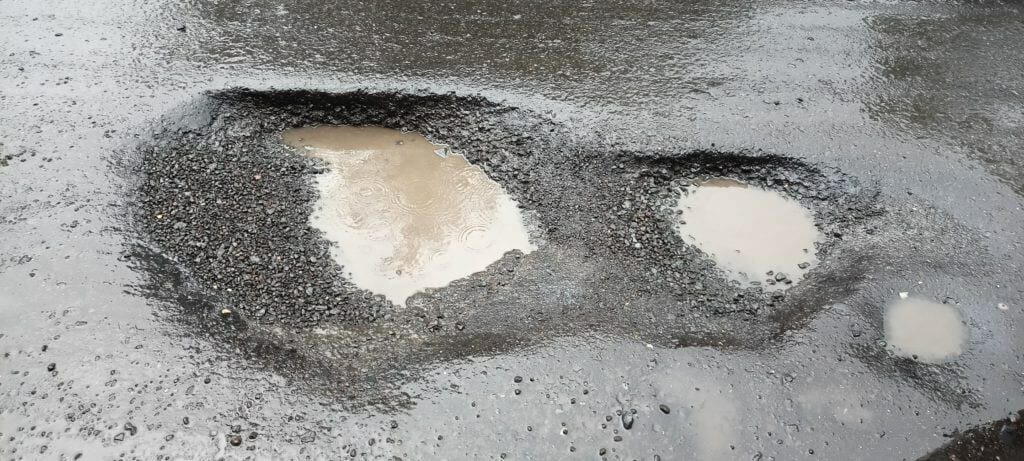
The handle @PotholeWarriors started by Mushtaq Ansari, a resident of Mahim, has been involved in complaining about the potholes issues for a few years. “While traveling by road if I notice potholes, I click pictures and tweet it to the concerned ward office,” said Ansari. “Roads in Dharavi, Bandra, Mahim, Matunga, Sion, Sewri, Mulund, Kandivali have major pothole issues. Unless the citizens don’t actively participate in complaining about the issue, it won’t be resolved,” he added.
In the past, citizens could email the BMC. However, that process took longer, said Ansari. “But now after tweeting the exact location and giving details, the authorities try to address the issue within one or two days, and tweet a photo back about the complaint being resolved.”
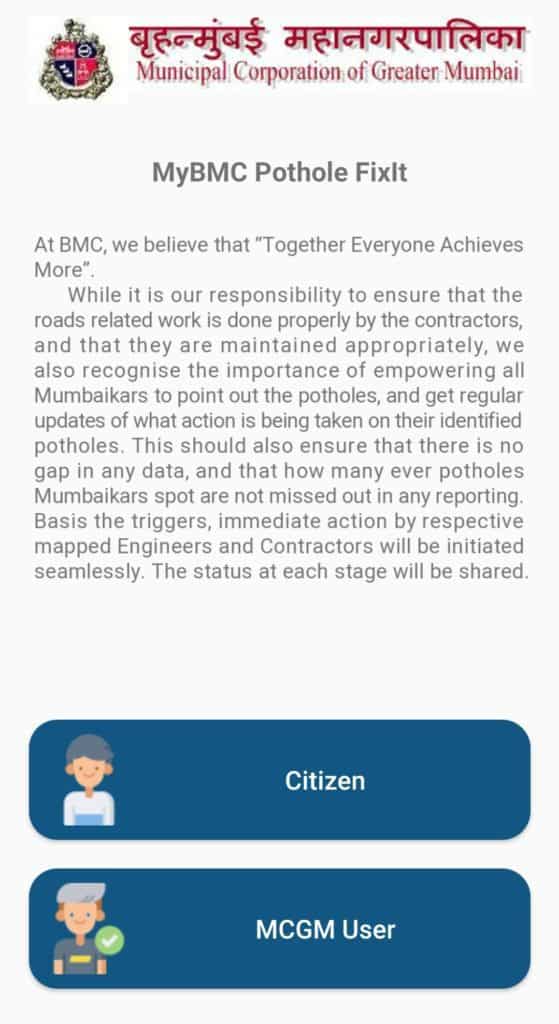
Chetan Kamble, who started Chakachak Dadar, an initiative to raise civic issues concerning Dadar, has been complaining about pothole issues since 2017 using different ways. “While earlier we were actively involved in reporting issues using the helpline number and ‘My BMC Pothole Fixit’ app, now we use Twitter. Using social media helps to amplify the concern issue and reach out to the authorities quickly.”
Speaking about the response time, he added, “But the civic authority does not always resolve the complaints raised. Many times a follow-up needs to be taken to resolve the issue.”
Arshad Shaikh, a resident of Dharavi, has been actively raising civic issues for two months. “I click photos of potholes from Dharavi’s 90 feet road and surrounding areas,” he said. “Many times, we need to amplify the tweets so that the concerned authorities address the issue. Few of the complaints go unnoticed. Sometimes, I also coordinate with the local corporator through phone calls to resolve the complaint,” he added.
Shaikh said that the app to report the complaint is time-consuming and lengthy as it takes time to load the photos and give location details.
Read more: Mumbai needs more BEST buses
Mumbai’s pothole data
The majority of potholes complaints are reported after the heavy downpour. Per the data from the ‘My BMC Pothole Fixit’ app, 559 potholes have been reported in the city this year from April 1 until July 24. Out of the total 559 complaints, 362 complaints have been attended to and 336 complaints have been closed.
In 2020-21, around 1292 potholes were reported in the city out of which 885 complaints were attended to and 877 complaints were closed. There has been around a 76% drop in the number of potholes being recorded in the city in the year 2020-2021 as compared with the data of 2019-2020.
A total of 5,390 complaints were reported between April 2019 and March 2020. Out of these, 3,811 complaints were attended and 3,806 have been closed.
As the number of people commuting daily reduced due to lockdown and working from home, there was a drop in the number of complaints since April 2020.
Shantanu Kulkarni, Director of Probity Soft, whose company has developed the app for the BMC said, “In 2019, as the BMC announced pothole challenge, the app got an overwhelming response but currently, as many citizens are working from home, the number of complaints have reduced.”
He also said that the focus of the civic authority is mainly on tackling the pandemic due to which complaints related to maintenance of roads are neglected and the process to address such issues has slowed down.
On July 23, a meeting was held in BMC about usage of the app to report the pothole which will help to maintain data.
This year, the BMC failed to publicize the app to report potholes. “Due to this, the number of complaints reported by citizens on the app has reduced. Every year, there should be an awareness created by the authority to report the pothole through the app so that the public can report and accountable data is maintained by the authority,” said Kulkarni.
Response from citizens on fixing potholes
Looking at the response of the BMC in some areas, other citizens tag each other and concerned authorities to increase the reach and bring it to the notice of the local authority.