The Bannerghata Nature Camp is ideal for a short break, especially if you don’t want to drive out too far from the city.

The pond in front of the Bannerghata Nature Camp
Long time Bangalore residents may remember this road past IIM Bangalore as a pot-holed drive into a fairly verdant area. Now it is a concrete mess right up-to the zoo. The resort is situated a few kilometres beyond the zoo, and we parked the car near the Jungle Lodges’ new restaurant and were driven inside in the camp’s vehicles.
The resort itself consists of a half a dozen tents, two log huts in addition to the dining area, office etc. Strategically placed hammocks tempt one to blissful afternoon naps.
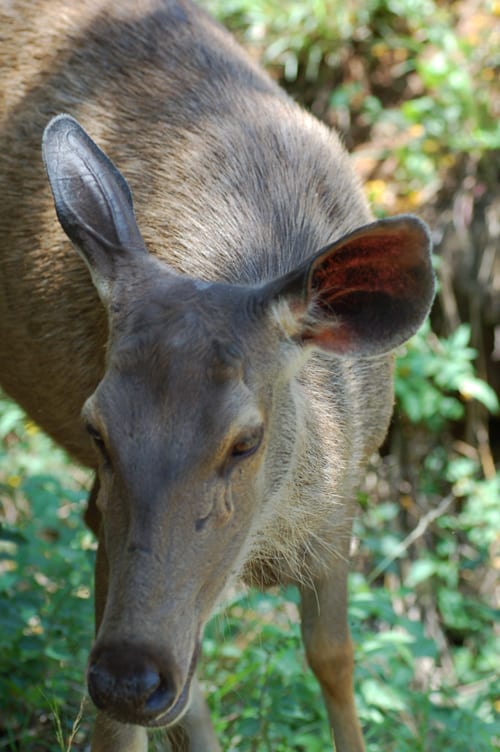
Minchu, the resident Sambhar
A walk through the resort introduced me to the resident antlers. Two spotted deer (survivors of a crocodile attack) and a rowdy sambhar named Minchu feel at home there. Minchu used to live in the premises of a local Bangalore women’s college, where he was apparently tortured by the students. So he is prone to attack women attired in green.
After a fairly unremarkable lunch, we were bundled into a safari bus which drove us through the tiger and bear sanctuary. We saw lion, deer, bear lounging slothfully in the afternoon heat. The observation point offered a panoramic view of the park. The drive ended with a visit to the zoo, which was full of the summer holiday crowd.
I was dragged around by my son for the rest of the hour. I was glad to get back to the resort where beer and a nice lunch served as a good preamble to a nice snooze.
Highlight of the trip
Next morning, we were woken up at 6:30 am for the trek through the jungle. Luckily none of the other guests seemed interested in exerting themselves so early in the day and it was a personalized tour. The two to three kilometre trek runs through the herbivore safari area.
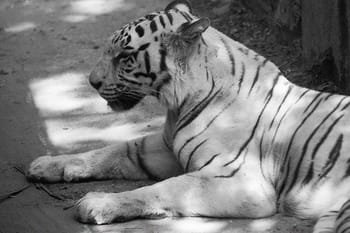
White tiger at the safari
We were treated to interesting wildlife gyan and anecdotes. What’s the difference between antelopes and antlers? Look at the dung/dropping and try to guess which animal was responsible…
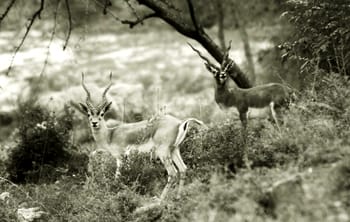
The first sight was of the last three surviving black bucks in the sanctuary. The sanctuary once boasted of 25 bucks, but with innumerable leopard attacks the number has dwindled to three. Thankfully there are no actors with penchant for hunting in this area.
Further down we were able to sight a herd of bisons. Birds of many a feather flew by, followed by a brief lecture on habits and habitats.
The carnivore safari numbers have been augmented significantly by circus animals. Regaled by stories of wild elephants, most notably the infamous Rowdy Ranga (which periodically comes to court the tame female elephants inside the sanctuary), we kept trudging through the forest area.
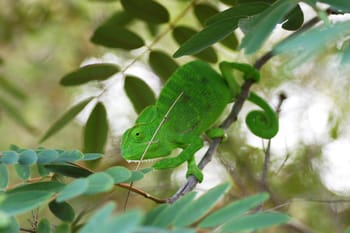
We finally spotted a disdainful chameleon hiding in the trees and got quite close enough much to the lizard’s consternation.
A final bend on the trail brought the camp in sight and we passed a muddy pond, which was the haunt of the crocodile that attacked the deer. The walking tour was a great way to end the holiday.
Though the program was complete, what strikes you is the thin membrane that separates the beautiful reserve forest from the din of civilization right outside. Refreshed, we drove out with a new chapter in the family album.⊕