The Salvinia Molesta covering the surface of our little Puttenahalli Lake has not deterred all the birds! Our regulars, the Purple Swamphens, Purple Heron, Pond Herons among others had refused to leave the lake even though the invasive aquatic fern was spreading on the water. They have now been joined by a Grey Heron, a couple of Cormorants and Kingfishers! The Kingfisher especially is good news. It means that the water below the Salvinia is still fresh and alive. These were just a few of the birds we spotted in the midst of what seems like a 1001 tasks we have to do at the lake. Not that we are complaining about the tasks since we mooted them ourselves. 🙂
These are exciting times for our lake. On our request the BBMP has issued a work order to execute a number of initiatives which will infuse new life into the lake.
The first of these is the Diversion Channel to draw surface rain water from the Brigade Millennium avenue road into the lake. The Channel will be laid from the BM arch to the lake. According to a Total Station survey done in Sept 2011 to assess the feasibility of diverting this water, the quantum entering through this new feeder channel will be quite substantial. The first of the massive (45 inches inner diameter) pipes have been unloaded and will be kept in place soon. The channel will be put to test during the next monsoon.

Pipes for the Diversion Channel
The contractor has also been entrusted with de-weeding the lake. Getting rid of the Salvinia Molesta is not going to be easy. It has to be removed manually from the water, dried and then disposed appropriately. The contractor’s men are clearing another lake and once that is done, they will start de-weeding ours. We had only heard of Salvinia Molesta but not seen it at close quarters before. It is a beautiful aquatic fern, so decorative that it is sometimes used in home aquariums. However, the smallest fragment of the fern can double its dry weight in about two days, spread like a blanket over large water bodies and is known to have killed lakes across the world. We have learned our lesson with Salvinia Molesta. Any time in future that we spot a piece in our lake, we will pluck it out of the water. We have geared ourselves very well for this with a variety of rakes to snatch out the smallest bit of this hateful fern.

Gardeners at work clearing the slopes
While waiting for the Diversion Channel pipes to arrive, the contractor got his men to start digging a trench and laying an Irrigation Pipeline all around the lake to facilitate watering the plants. At present we get water tankers to fill the tanks and the gardeners use the wheel barrow to ferry filled buckets to water our 320 trees, many shrubs and other plants. A laborious task to say the least not to mention an expensive one. The bore wells around the lake are recharged thanks to the lake but the well operators do not reduce their charge one bit! The Irrigation Pipeline will enable us to plant two more rows of trees on the slope, countless small flowering plants between trees on the embankment, shrubs, creepers, climbers and what have you to give ourselves a green nice cover in the neighbourhood.
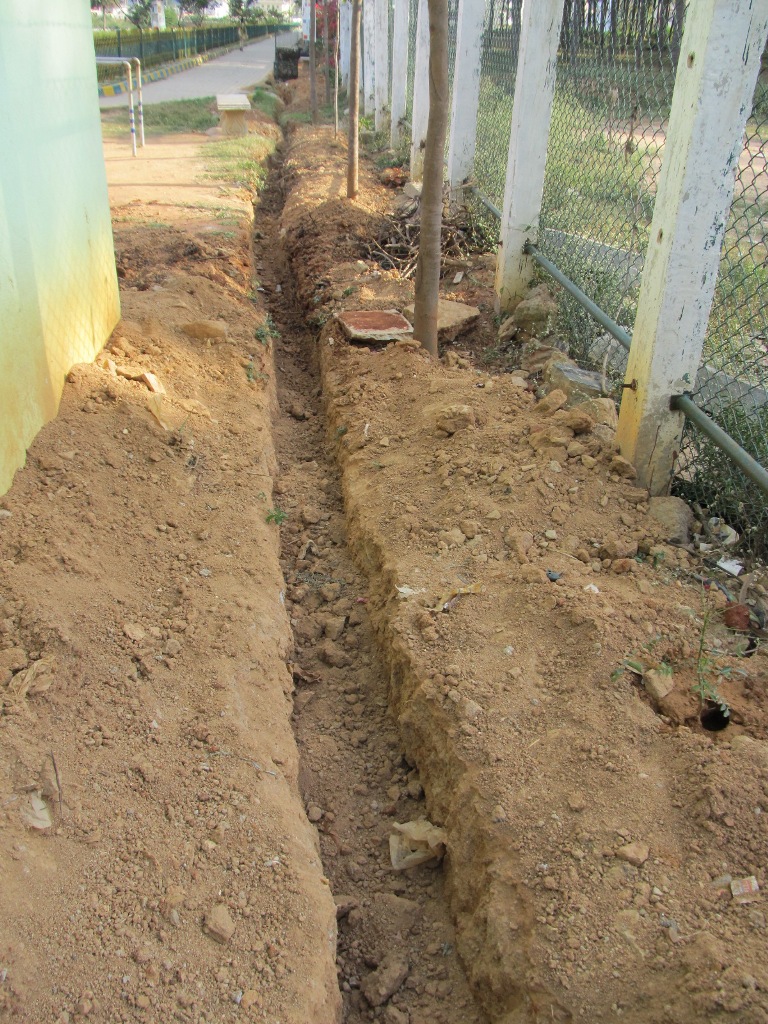
 Irrigation Pipeline trenches
If you think these are just pipe dreams, please visit the lake and see the work happening. Perhaps you can supervise the workers and relieve us of that chore? Perhaps you may like to join us in our effort to maintain, or rather, transform a lake with people power?
⊕