In 2011, I moved back to Bangalore from Seattle. I was conscious that I was not moving back to the city that I knew.
For starters, I was moving to a part of the city that I needed getting used to. I had spent all my earlier Bangalore life around Chamarajpet and Srinagar, bang in the middle of the city.
But now I had to negotiate Mallathahalli (which gets increasingly confused with the more famous Marathahalli), near Nagarabhavi. And it lay on the wrong side of Mysore Road and far off from anything and everything that mattered.
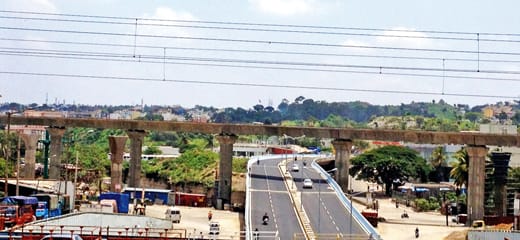
Around 2005-2007 there was a road being constructed to link Tumkur Road to Mysore Road, right from the point where the Outer Ring Road from Banashankari met Mysore Road. By the time I returned, the road was well in commission and there was the huge mess of Nayandahalli.
There are now flyover(s) being constructed and the Metro hovering above. It is a gigantic battlefield of work – tall cranes, noisy trucks, angry buses, potholes, dust, gravel and smoke.
There are days when BMTC plays truant and I have to hitch on to whatever is available and try to somehow get home. Once you got into something you’d climb up the slope from the signal on ORR after PESIT praying that the bus would not stop anywhere before the petrol pump on the way down. It invariably would.
Fly over, under passed, over time
It is a gigantic battlefield of work – tall cranes, noisy trucks, angry buses, potholes, dust, gravel and smoke.
Sometimes you could see the traffic piled up right near the entrance to the NICE road clover leaf. The wait would last anywhere from 30 to 45 minutes. Painful time considering that you’d be hungry and tired after a long day’s work.
There you would see a brightly lit minefield of activity with the metro above, the flyovers’ construction below, sweaty and stressed out policemen directing traffic. We would wait, cursing the state of roads and the time it was taking for the flyover to be finished.
The flyovers across Mysore road are a marvel by themselves. It is an 18-ft high construction from the road across Mysore road linking the two sides of the Outer Ring Roads. There is going to be another 36-ft high one built over it for through traffic over Mysore Road, with the metro adjacent to it, hovering above all of them.
I would gaze out, predict that they can finish the ramp in a month and open traffic by March, and then April, and then May and then June. August ended without bringing any joy. Finally it opened in mid-September.
Let’s not even talk of the flyover at level two, along the other direction. They built pillars, one after the other until the Metro beat them to the spot and put up their own pillars where the flyover should have descended. Funny to read in fiction. Can’t decide whether to laugh or cry in real.
Of all the flyovers, grade separators that have been sanctioned, built or being constructed this is the one that was most necessary and it should have happened when the link road was connected to Mysore road.
It speaks volumes about the lack of planning or vision that neither the BDA nor BBMP foresaw this state of extreme congestion at the Nayandahalli junction and finished the job years ago!
Anyway, here’s hoping that the whole mess gets cleared soon and there can be some peace and respite along Mysore road. Of course, I haven’t started describing the other flyover near Bapujinagar or the road-widening mess. God save Mysore Road!