Birds leave the fashion to the males

Peacocks are prettier than peahens and male sparrows more handsome than the females. Why is this so?

Gender roles in our society is a much debated topic. How do other living beings handle this? Let’s take birds as an example.

It seems to be the general rule (with a few exceptions, of course) that the female of the species is always duller, and less brightly coloured than the male. Here’s a beautiful bird that can often be seen in Lalbagh…. the male Asian Paradise Flycatcher.
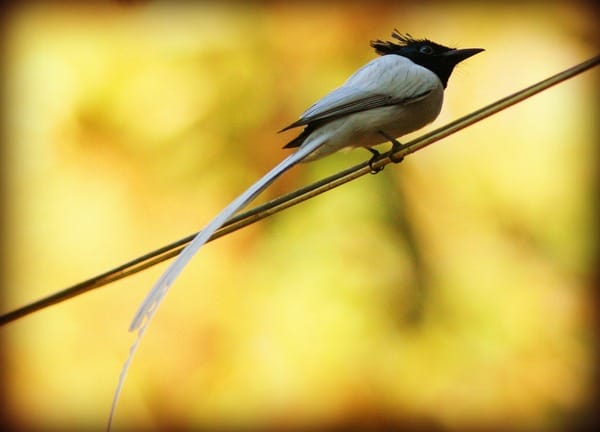
Male Asian Paradise Flycatcher. Pic: Deepa Mohan

As you can see, this is a spectacular bird, and it definitely catches the attention of the observer as it flies around, flaunting that ribbon of a tail! But here’s the far less dressy lady:
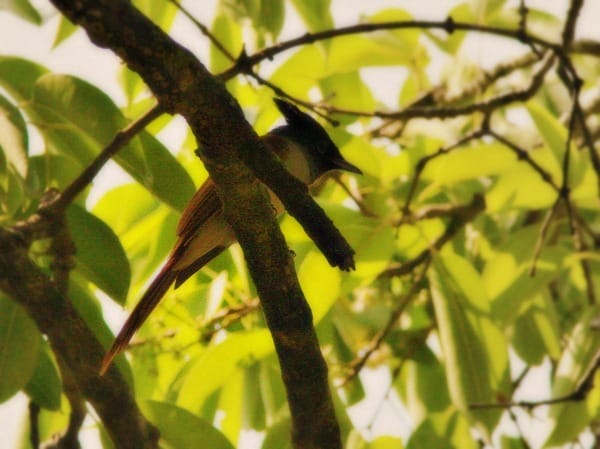
Female Asian Paradise Flycatcher. Pic: Deepa Mohan

We can see similar differences in another very colourful, and very common bird (look for them in all the gardens in your locality)…here are the bright colours of the male Purple-rumped Sunbird
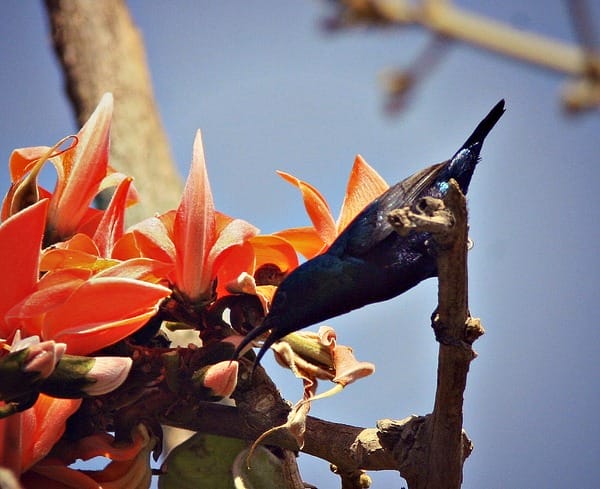
Male Purple-rumped Sunbird. Pic: Deepa Mohan

and his much duller mate:
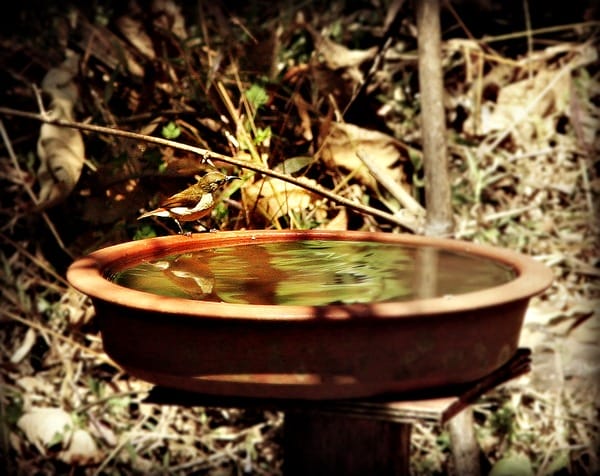
Female Purple-rumped Sunbird. Pic: Deepa Mohan

Perhaps you may not have noticed these two birds…but here’s a bird that’s making a strong comeback after once being very common in our city and then almost disappearing…the House Sparrow. Here are both the male and female, together.
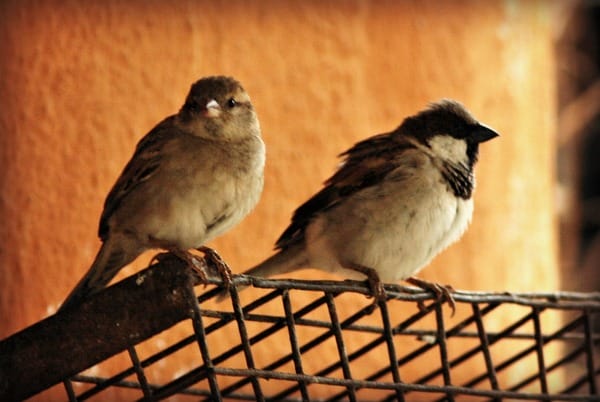
Male and Female House Sparrow. Pic: Deepa Mohan

The only exception to this, in the common birds of our city, is the Asian Koel, where the male is black, and the female is mottled black-and-white.

There are several theories as to the reasons for this; one is that the females prefer to look at bright plumage on the males rather than on themselves (contrast this with human beings!). Another is that when the females are flying to and from the nest, their dull feathers make it more difficult for predators to see them and raid the nests. There is also the school of thought that the brightness of the colours indicates, to both other males, and to the females, the health and vitality of the male, so that the offspring may be healthier, and better able to survive.

So, in the bird world, the ladies prefer not to be highly coloured, and leave the fashion and the flaunting to their menfolk!

Leave a Reply

Your email address will not be published. Required fields are marked *

Similar Story

Open letter to Chief Justice of India: Withdraw unjust remarks made against environmental groups

In the letter, conservationists, lawyers and civil society groups highlighted the constitutional right of citizens to demand the enforcement of environmental laws.

A collective of citizens, environmentalists, legal experts and civil society organisations from across India has demanded that the Supreme Court withdraw oral remarks made by the Chief Justice of India (CJI) during the Pipavav Port hearing on May 11, 2026. The group aims to ensure these comments are not misinterpreted as questioning the legitimacy of genuine environmental public-interest litigation, or the constitutional right of citizens and affected communities to demand the enforcement of environmental laws. In an open letter to the CJI, the coalition outlined urgent environmental concerns and the right of citizens to question irregularities in projects negatively impacting…

Similar Story

The trees we forget: What a city loses when the canopy disappears

Bengaluru's trees are more than shade; they are memory, identity, and resistance. Their loss leaves the city harsher and emptier.

Summer in India has been merciless this year, with many states recording temperatures above 42 degrees Celsius and rising reports of fatalities. Despite these harsh conditions, urban support continues for development projects that clear trees, wetlands, mangroves, and forests near cities. A recent Article 14 report provides data on thousands of trees that will soon be sacrificed nationally for infrastructure projects. Those opposing such unscientific large-scale tree felling are often labelled 'tree-huggers', 'anti-development' and 'anti-nationals'. While capitalism accelerates environmental degradation and the world faces a growing climate crisis, societal divisions deepen.  Yet, we give trees too little credit: Beings necessary…