A new waste management centre ‘Kasa Rasa’ was inaugurated at Koramangala 5th block on 9th June 2012. This is located in the parking lot next to Hotel Empire, under the high tension lines. KSPCB chairman A S Sadashivaiah, civic activists like Meenakshi Bharath, Sandhya Narayan, N S Ramakanth and local corporator Kokila Radhakrishnan also participated.
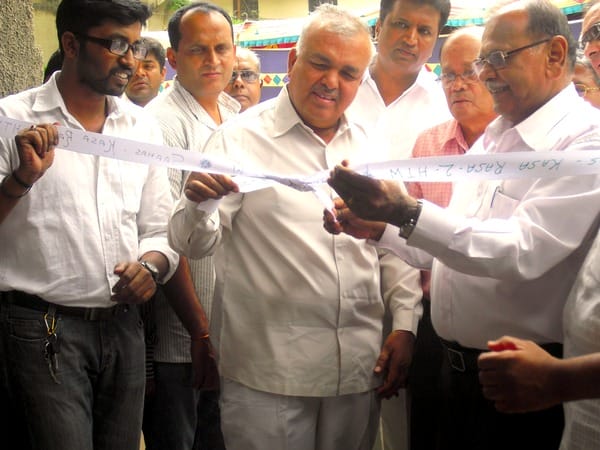
MLA Ramalinga Reddy inaugurating the newly built Kasa Rasa center at Koramangala. Pic: Sankar C G
The centre is an initiative of Saahas, an NGO working for effective waste management, supported by BBMP and KSPCB. The Centre has an organic waste converter (OWC) for composting food waste. There is also a shredder and curing tanks. The centre also aims to integrate waste pickers with the centre’s activities and improve their working conditions and income.
A S Sadashivaiah, KSPCB Chairman thinks decentralised waste management is the way to go. “Our way of managing wastes by centralised approach has some defects, like high cost, environmental problems, health issues etc.” he said.
The day to day activities of the plant will be managed by Saahas. It has a capacity of two tons per day. The centre will support waste collection from apartments and offices in Koramangala blocks I, III, VI and VII and Madiwala Market.
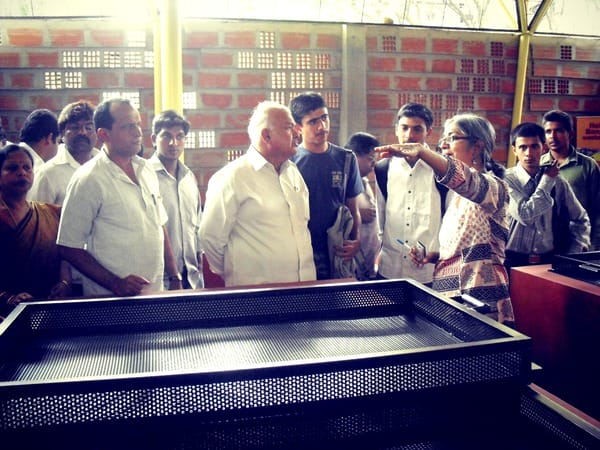
Wilma Rodrigues, Founder Member of Saahas, explaining the working of Kasa Rasa center to MLA Ramalinga Reddy. Pic: Sankar C G
The waste will be collected by BBMP pourakarmikas and the staff of Kasa Rasa. For residences or offices serviced directly by the staff, there is a nominal fee to cover transportation and labour costs. Residents can also bring in waste directly to the centre.
One such Kasa Rasa center has already been set up in Ejipura. The Koramangala centre cost Rs 40 lakhs rupees and was supported by organisations like CHF International, Center for Social Action, Caterpillar Foundation and Christ University and firms including organisations such as Robert Bosch Engineering Solutions and Tetrapak India. BBMP provided the land for the centre.