"Oota from your thota" is an initiative by Garden City Farmers Trust to promote better living by encouraging organic urban farming. The immense popularity of the first attempt at oota from your thota in August at BTM, led to this event. The event was this time held at UAS Alumni Association premises next to Veterinary College, Bellary Road, Hebbal on 27th November 2011. Citizen Matters was the media partner for the event.
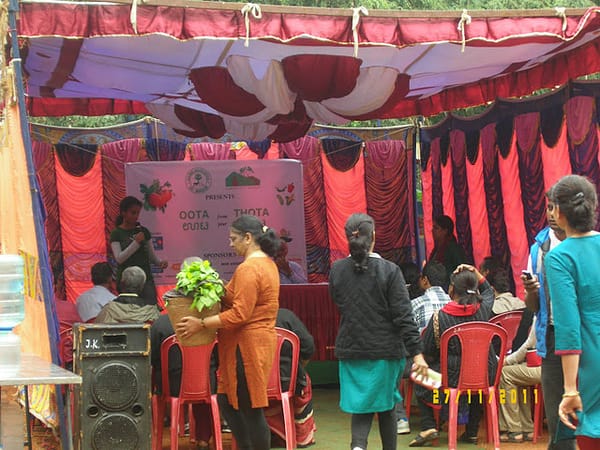
People attending a session on organic farming. Pic: Deepthi Sarma
Spearheaded by Dr Viswanath, the Garden City Farmers are a growing tribe of people who believe in greening the city by growing organic vegetables and fruits, wherever space permits. The idea is to grow more veggies instead of ornamental plants ota from thota is an initiative to create awareness for healthy living by encouraging citizens to grow their own vegetables", believes Jyothi N, Secretary Garden city Farmers. "Our mantra is to find ways and means of growing our own vegetables in urban spaces as nothing can be more organic than that" adds Jyothi who worked in an IT company previously.
The event had over 400 people visiting about 15 stalls despite rains. There were stalls pertaining to organic farming and compost making. Additionally, there were outlets which sold organic foods. A few visitors had brought happy memories from the first oota from your thota event. One such visitor was Shilpashree M R, a resident of Bannerghatta. Shilpa believes that events like these are necessary to educate people about the chemicals added in most of our produce today.
When asked what made her come all the way from south Bangalore on a rainy Sunday, she said it is a great place to meet like minded people and exchange ideas. It is also a learning ground for her 3 year old daughter Anvi.
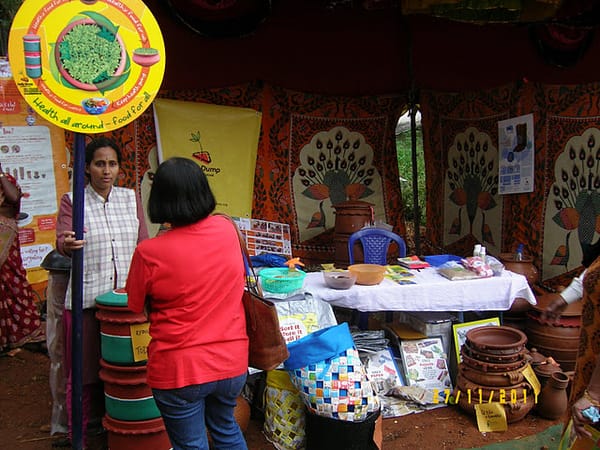
Daily Dump stall. Pic: Deepthi Sarma
Many parents brought their children to educate them about growing vegetables.
Hema Sali, a resident of dollar’s colony manages a kitchen garden next to her house and grows vegetables like chillies, tomatoes etc. Hema says she loves being amidst green and these initiatives provide her the opportunity for the same.
The event was also a platform for people to discuss their unique farming ideas with each other.
While on one hand stalls like those of garden city farmers help people ideate to grow organic vegetables, on the other hand organisations like daily dump, which provides a range of composting solutions, helps people manage their household waste and convert it to useful high-quality compost.
Anupama M of Daily dump thinks that people in cities feel they are losing connection with nature and thereby engage in activities like gardening which mainly draws them to events like this.
Tay Hallas, who is an owner of an organic grocery store in North Carolina, USA said she was quite startled to see the garbage system outside her current home in Sadashivanagar. She says using daily dump’s compost solution has brought her some relief and she is constantly looking out for organic solutions for her house.
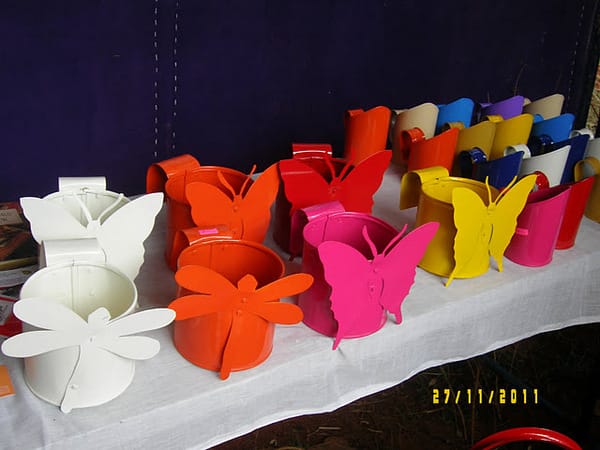
Products from Green Essence. Pic: Deepthi Sarma
Shilpa has also been using the compost from Daily dump and finds it very satisfying that she is able to contribute to a cleaner city.
Dr. Sumangla H P, a scientist at Indian institute of horticultural research feels this only the beginning. She believes these kind of workshops are necessary to educate our future generation about healthy food and how to lead a better life in a polluted city. Of the similar opinion is Dasarathi G V, a resident of Sadashivanagar. "I don’t want to poison myself. I buy only organic foods," he says.
Stalls like those of Green Essence, a garden concept store in Indiranagar support the concept of oota from your thota by displaying a range of beautiful plant holders and garden accessories.
The event also saw open sessions on organic kitchen gardening, composting and healthy eating. Most of the visitors were inspired and excited to grow pesticide free vegetables on their rooftops or balconies.
Other participants at the event were – Green Foundation, VMSRF, AME, Garden City Farmers, Daily Dump, Green Essence, My Sunny Balcony, Vanastree, Varsha Enterprises, BM school, Vaathsalya Foods, Janodaya, APOF 18 Herbs Organic Labs Pvt Ltd, SAAHAS Nothing is waste, The Green Path, IHA naturals, Tungabhadra Residents welfare association NGV Koramangala, Malini, Green Pastures, Bosch ( Lawn & Garden tools), Health Smart Kids Shramajeevi Agri films and BCIL Habitat.⊕