Official note sent by the Puttenahalli Lake Trust to members and citizen volunteers.
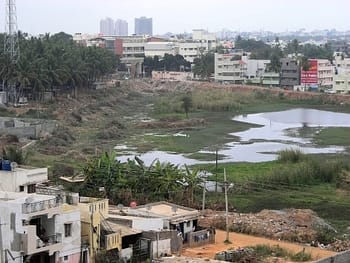
The lake then, as on Jan 2009. Pic courtesy: PNLIT
We are happy to tell you that our Puttenahalli Neighbourhood Lake Improvement Trust (PNLIT) has signed an MOU yesterday with the BBMP to maintain Puttenahalli Lake, JP Nagar. This gives official status to what most of you would know PNLIT has been doing ever since the BBMP began rejuvenating the lake from Feb. 2010.
Your donations helped us plant 300 trees, hire a gardener and a sweeper. We greatly appreciate your support to a citizens’ movement which began in a very small way to save the lake over three years ago (see photographs attached) to now reach this point of formal recognition of our effort.
You may also be interested to know that ours is the only lake in Bangalore to be managed by a residents’ group.
Ours being a people’s initiative, the challenge is even more formidable but not impossible. It only requires a little participation from you as residents in the locality to do your bit – go for walks around the lake. If you see someone throwing down rubbish or breaking off a sapling, stop them. If you are a regular walker, join us as a volunteer to supervise the sweeper, gardener and security guards.
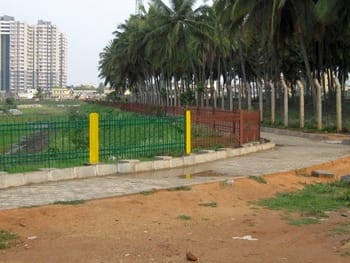
The lake now, as on May 2011. Pic courtesy: PNLIT
Individual contributions and corporate donations to PNLIT will go towards cleaning the lake and its surroundings, planting more saplings, maintaining the garden around, securing the lake, feeding inlets to drain water into the lake, upkeep of the toilets, providing drinking water and lots of other things… as we go along. We have received the status of Charitable Trust from the IT Dept and expect to get 80G exemption very soon.
At present, ours is a seven member team with individual personal and professional commitments and need all the help we can get from you to fully transform the once shrinking threatened lake, the only one in our locality, into a haven for birds, butterflies and fish. We have already come a long way, the rest of the journey will not be difficult with your help. ⊕
Way to go, PNLIT. very impressive. You know these kind of partnerships (BBMP with residents groups) is pretty rare. How do we get in touch with you?