Jayanagar General Hospital is soon to undergo a makeover in a bid to provide better care, better facilities and to have more people use its services. The 300-bed hospital, one of the biggest in the city, is currently underused. On an average, only 60-75 per cent of the beds in the wards are occupied and there are only 600-700 patients who visit the OPD (Out Patient Department) daily.
A development plan, spearheaded by a team consisting of Jayanagar MLA B N Vijaya Kumar, Principal Secretary (Health) Ramana Reddy, Health Commissioner D N Nayak, Associate Professor at IIM-B (Indian Institute of Management – Bangalore) Prof. G Ramesh and the hospital’s Superintendent Dr Nagraj, is hoping to change the situation.
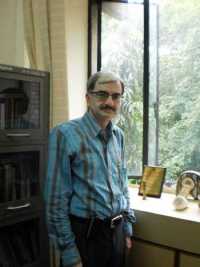
Under the PPP model, the private partner will bring in enough doctors, says Prof Ramesh.
Pic: Navya P K
The hospital was adopted by the Centre for Public Policy at IIM-B as part of their work helping government in policy making, and Prof. Ramesh, who was looking into the healthcare sector, proposed the idea of rejuvenating it. The government followed up on the team’s suggestions.
For its size, Jayanagar Hospital is not very crowded on an average day. Patients can go and meet doctors without a long wait. Prof Ramesh says, “The hospital has huge capacity for accommodating patients, good doctors and all necessary equipments. In a government hospital, generally, you would expect to find lot of patients as the cost is low. Here it is a contradiction as all facilities are present, but patients are low in number."

Jayanagar hospital.
pic:Navya P K
The team identified issues including shortage of doctors, lack of sufficient paramedics and technicians, poor maintenance of equipments and interruption in power supply.
Problem Areas
The team identified issues including shortage of doctors, lack of sufficient paramedics and technicians, poor maintenance of equipments and interruption in power supply. The most pressing of these is the shortage of junior doctors – all the 30 doctors in the hospital now are specialists. The specialists have to take care of all patients in the casualty, due to which not only are OPD (Out Patient Department) visitors small in number, but in-patients also do not get enough care. At least 10 more junior doctors and some specialists are required now.
The shortage of paramedics and technicians affects all departments. There is only one nurse for every 2-3 wards, which is insufficient as most patients in the ward will be in post-operative state and require good care. The five ventilators in the ICU (Intensive Care Unit) are in good condition, but have not been under use due to lack of trained technicians. The hospital has only two anaesthetists now. “There should be anaesthetists, technicians and nurses, who are trained specifically to handle the ICU, training these staff just for a month or so is not sufficient. There should be at least one specialist from each department – cardiology, gynaecology etc – dedicated to the ICU round-the-clock,” says Dr Rajkumar Nayak, General Surgeon at the hospital. The hospital will have its own dialysis unit within a month, but here too only one physician, one nurse and one technician have been trained.
PPP as the solution
The team believes that ideal solution to the problem is to introduce a Public Private Partnership (PPP) model. “Under this model, the private party will bring in enough doctors and paramedics. The specialists can then focus only on in-patient care and surgeries,” says Prof. Ramesh. The private partner is expected to be finalised by the state Health Ministry within a month. Some staff maybe directly appointed as well.
Computerisation of hospital records is also being planned. Currently only the number of in-patients and out-patients are being recorded. G R Pattar, the only Medical Record Officer at the hospital, says, “Ideally diagnostic statistics i.e. the diagnosis of the patients, medical history etc. should be recorded. For that, 3-4 more staff will be required in this section even after computerisation. Currently hospitals like Victoria, Vani Vilas and Bowring are doing this.” Kishore C Kumtakar, Resident Medical Officer, says that the vendors for developing the software for hospital records will be identified soon, and that the software will be ready in 2-3 months.
Jayadeva Institute of Cardiology has been adopted as the model for Jayanagar hospital’s renovation. S Muralimohan, Co-ordinator at MLA Vijaya Kumar’s office, says, “Even being a government hospital, Jayadeva Institute has been recognized for giving the best treatment at very low cost. We are trying to replicate that here.”
The hospital will start a blood storage facility within a month. There are infrastructure problems such as poor lighting in operation theatres and lack of elevators.
Currently the building is under renovation. There are plans to arrange uninterrupted power supply through talks with BESCOM (Bangalore Electricity Supply Company Limited) and to bring in high tech machinery. Dr Nagraj, Superintendent at the hospital, says that since 2004, programmes such as setting up an electric laundry and endoscopy unit, providing alternative power for diesel generator, and renovation of labour ward and labs were completed. The hospital has a Board of Visitors that looks into its affairs. There are plans to replace the existing board with members from diverse backgrounds.
Smart Cards to track patients
There are also plans to issue Smart Cards or IDs to patients, to track the demography that uses the hospital’s services. The frequency of a person’s visits, where they reside, and the services they use will be recorded. The vendors for issuing Smart Cards will be identified soon. “Jayanagar is a relatively better-off place, but there are migrant workers and poor in this area too. They don’t use the hospital often. Smart Cards will give information about the population that comes to the hospital, within a five-kilometer radius. Then we can identify groups that need to be informed about the hospital and have some volunteers talk to them,” says Prof. Ramesh. MLA Vijaya Kumar’s office identifies volunteers who can spread information in slums nearby.
Currently doctors refer very complicated cases to other hospitals, but with the renovation plans they believe this will no longer be necessary. The committee hopes more people will access the hospital once it becomes popular through word-of-mouth.
⊕