Yes, indeed! We need decisive action now, of deferring any and all non-essential activities (of little or no immediate economic repercussions) involving any kind of congregations in closed spaces, along with very strict blanket enforcement of COVID-appropriate protocol and behaviour in whatever socio-economic activities that may be permitted henceforth. Else, we are staring in the face at national distress with numbers already spinning out of control at over 2 lakh per day. Or even worse, a national disaster if we get more virulent strain(s) due to a much higher & longer second wave.
In my earlier article published in The Economic Times, (published December 2020), I had suggested a vaccination roadmap following all precautions and strict police action against rampant “Covidiocy”, to prevent future waves and outbreaks. Even today, the only way to control the speed and peak height of this raging second wave would be through precautions during work/travel and Testing-Tracing-Containment protocols. Simultaneously, a very fast and widespread vaccination would be vital for shortening the duration by preventing severe symptoms and adverse mutations, thus saving many lives. It is, however, a massive myth that mass vaccination alone, without simultaneous precaution, can control this surge within a month or so.
Read more: The second wave of COVID: The how and the why
Desperate times
History stands witness that the much more devastating and widespread second wave of the Spanish Flu was mutant driven, and we have already been seeing tell-tale signs of mutant strains wreaking havoc in Maharashtra and spreading fast to neighbouring states. KEM hospital, a nodal centre for COVID-Management in Mumbai is already reporting 30% of all Mumbai/Pune hospitalisations in the 12-30 age-group, while 35-55 is the age-group forming the largest chunk. Delhi which is now clocking 17000+ cases per day has similarly reported many infants and kids hospitalised, while lots of people in their 30s are in ICUs.
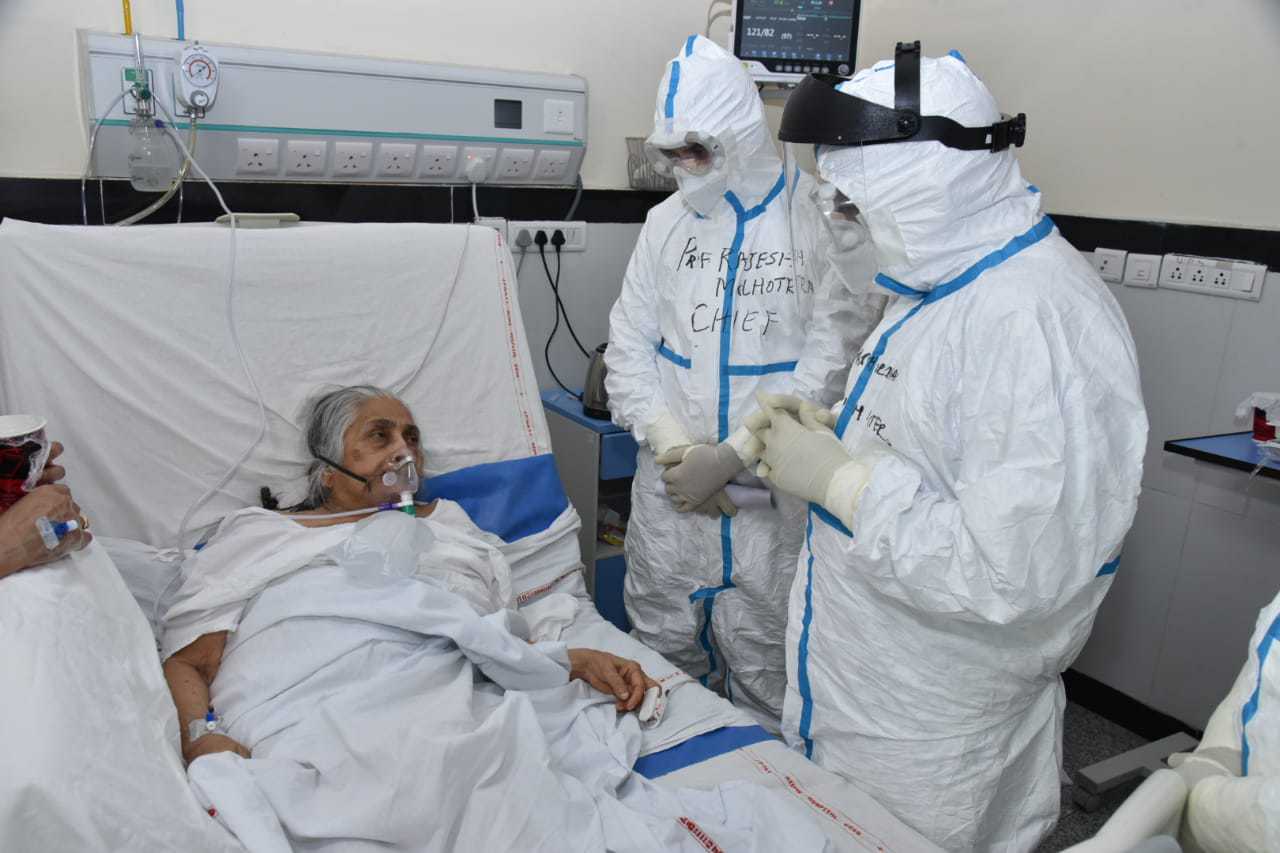
Add to this the fact that most cases are beginning with gastrointestinal disorder, and patients showing mild symptoms for just 5 to 7 days are slipping very fast into severe conditions, requiring hospitalisation with oxygen/ventilator support.
It has now come to light at NIV-Pune that 61% of Maharashtra active cases are ‘indigenous double-mutant’ driven (may avoid previous antibodies), while Punjab (80%) and Delhi are dominated by the UK variant. The Brazilian, South African, and yet unknown variants are also there in the mix. Worst of all, the new strains, although much faster spreading, have shown no signs of less virulence as hospitalisation and death rates are largely unaltered as a fraction of the new cases (deaths lag in steeply rising waves).
To stem this spread, besides aggressive precautions and protocol, “COVID-negative” and “Vaccination (in a month or two)” certificates should be made compulsory for any travel/commute and for going to places of work/study/exams ASAP. For the moment, centre-based exams have been deferred, but such certificates will be required until we have vaccinated most Indians.
Religious and political public gatherings have been the proverbial elephant in the room amidst this conundrum attracting attention only of late. The UP policy of quarantining and testing returning migrant labour should be made mandatory for all states and most importantly it should be also applied to all pilgrims returning from the ongoing Kumbh, which could well turn out to be an ultimate super-spreader event of astronomical proportions.
Over the last two weeks West Bengal has seen a 400%+ rise in active cases while Tamil Nadu registered 300%+ and Kerala 100%+. The Election Commission should immediately impose mandatory masking and numerical limits with social distancing at political rallies if they cannot be banned outright going forward. All gatherings must be immediately restricted, or we are staring at 4-6 lakh cases per day nationwide in May 2021, and more contagious/ virulent strains down the line, in the worst case!
The Centre should also do a sanity and quality check on the reported numbers from states, or we get UP-like whopping 54% hospitalization rates amidst 100,000 reported cases, a clear marker of underreporting by a factor of five, sending the entire testing-tracing-isolation efforts and benefits for a six. Amidst our population of 130 crore plus, a good 3.25 crore – 6.5 crore can get infected and the second wave can last up to 4-6 months or even more, courtesy our cavalier attitude and behaviour, cutting across state machinery and public.
The importance of vaccination
Under normal circumstances, most viruses mutate to more contagious but benign forms with time and deadly mutations are mostly far apart, but given such booming numbers, the virus gets many more substrates (people) and much more time and thus many more chances to multiply and mutate. The maximum multiplications of the virus take place in severe cases, and it is here that the value of vaccination truly kicks in. With a critical mass vaccinated, not only are a significant number of hospitalisations averted and lives saved, but the expected time of adverse mutations is also pushed back by years, if not decades.
Read more: How to organise a vaccination drive in your Bengaluru apartment
To achieve such vaccination volumes and ramp-up rates, let the private sector charge Rs. 1200-1500/- per jab of which Rs 300 cess be taken by the government to further fund and scale up free vaccination. This will also enable manufacturers with healthy operating profits to scale-up capacity and get more vaccine players in the game. Controlling the production and pricing (Rs150) is thwarting both vaccine production & proliferation big time and smacks of the failed socialist Soviet model.
In conclusion, I can only say that… “Those who don’t learn from history are doomed to repeat it!” and “We should make hay while the sun is still shining!” by acting proactively and getting ahead of the curve. Fighting a pandemic is like competing in a 5-day test match session by session and not going all guns blazing as in a 20-20/ODI match. We are currently on a sticky wicket under overcast conditions and cautious pre-emptive batting with resolve is the only way out for now.
It is also important to keep in mind the importance of teamwork for final victory, and thus avoid the kind of bickering we have seen recently between the Central and state governments!
Also read:
A well researched article. Very informative but sadly our people are not following the guidelines as mentioned in article. Kudos to author for master piece on all fronts. Very elaborative.
Truly said in the article sir precaution is the best way to avoid covid fully agreed with ur thoughts
Great article with exact information.
It’s time everyone acts responsible!
Comparison with test cricket is appropriate. We need to be patient and we should follow covid protocol strictly similar to discipline required to survive on a sticky wicket under overcast conditions. Moreover we should wear mask (helmet) to protect us from covid bouncers.
I agree, lots of facts, opinion and suggestions. Stated in a manner which is digestible and actionable by the government ?
Great reading Prof. Mohit Sinha…strong story fully relevant in current context and good clarity of thoughts…
Very nice reading…5 day test match and take it session by session approach is the KEY ????