School is where children learn, play and have their first encounter with the actual world. An informed teacher who encourages curiosity in children can do wonders for students with the proper guidance. A suggestion by a school teacher to attend a curated walk titled ‘ComplexCity’ for a school project led us to a resettlement colony in Mankhurd, Mumbai.
We got to know about the ComplexCity walk by YUVA for the first time through our school teacher, Ms. Deepti, at the Bombay International School. This was possible as she is in touch with various NGOs such as YUVA.
The walk’s theme, conducted at the Lallubhai Compound was ‘Growing up in a Resettlement Colony.’ Child leaders from the Bal Adhikar Sangharsh Sangathan (BASS) talked about their initiatives for social transformation.
Motivation for attending the Mankhurd Walk
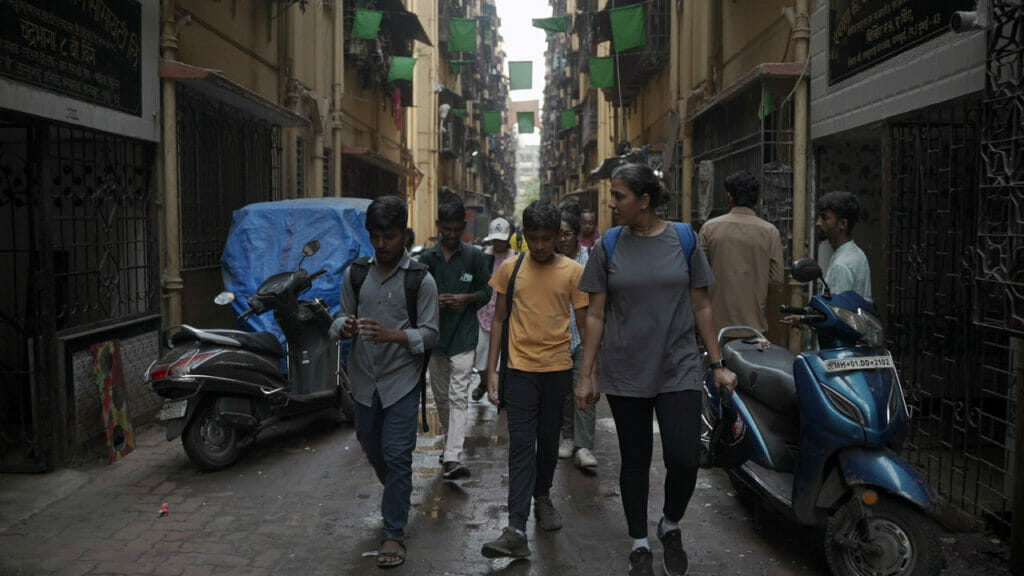
The primary motivation for us to attend the walk was to gain a broader perspective on the hardships faced by marginalised communities. When we visited the Lallubhai Compound, we got an opportunity to learn more about families living in resettlement colonies in Mumbai.
The walk exposed us to the vulnerabilities of these families, and how child labour initiates from these places. When talking about a resettlement colony, one thinks about the development that will benefit the people in these areas. However, the ground reality is quite different when one visits these places for themselves . This was the primary motive for us to participate in the walk.
Read More: A walk around Lallubhai Compound shows what authorities forget before rehabilitating families
Issues Covered at Lallubhai Compound
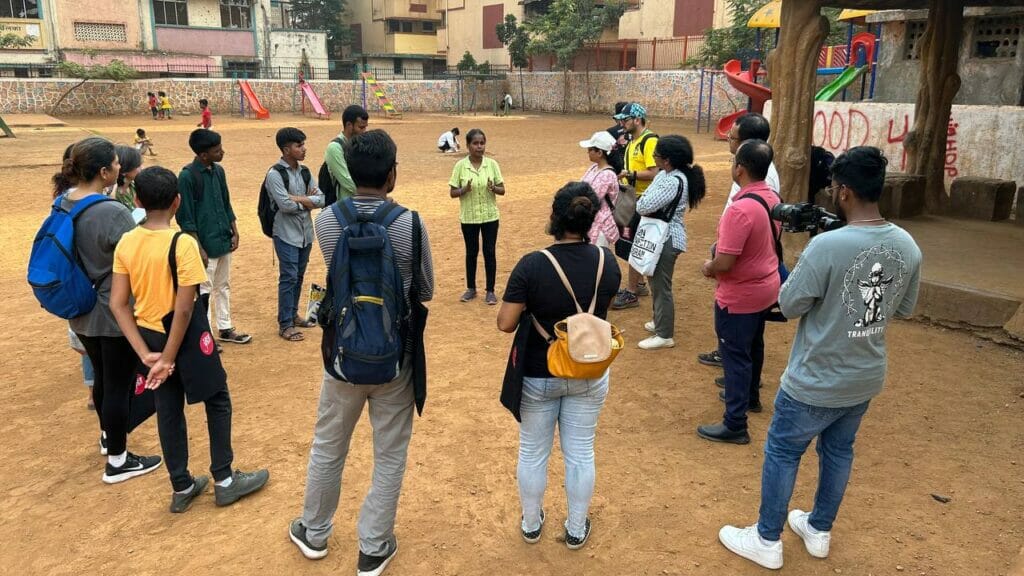
The child leaders addressed many key issues during the walk; however, the case of an open space topped the list. Compared to urban areas in the city, resettlement colonies lack basic amenities such as a school and park for children. Due to relocation, many children in the locality face the problem of school access, as there is only one public school at Lallubhai. Additionally, narrow alleyways pose several hazards to citizens, as no fire brigade or emergency vehicles can enter for rescue.
According to the child leaders, initially, there were instances of drunk people roaming near the Lallubhai Compound. The shards of glass lying around in the grounds posed a safety threat to children when they went to play. Due to this, girls in the area mostly had to stay home, leading to inequality. However, BASS members campaigned for equal rights for boys and girls, thereby establishing basic rules for inclusivity during tournaments.
Read More: Voices of women of slum resettlement in Mumbai
Regarding cleanliness, the volunteers pointed to a huge pile of garbage lying behind the vicinity, near the railway tracks. Elaborating further on the issue, they explained how this could lead to severe health hazards due to unhygienic conditions.
Impact of Issues on Lallubhai Residents
One issue that impacts the residents at Lallubhai the most is the access to education for children. We believe that every child deserves education, which is unfortunately very difficult for them. There is only one public school in the area, and it cannot accommodate all students. So, some children travel to faraway parts of the city, as they were relocated at Mankhurd. Since these families come from marginalized communities, sometimes children end up working simultaneously, preventing access to quality education.
In an area that is a resettlement colony and should be well-planned, the lack of basic recreational amenities is a big standout. One expects a rehabilitation area such as Mankhurd to be well-developed as there is adequate time for planning. However, sadly, this is not the scenario when we visit these places, and witness the living conditions of people.
Call for Collective Action
We need to put in collective effort for these people. Personally, we feel that these children should get their right to develop, play, and gain education. They deserve this as much as anyone else, which has urged us to take action.
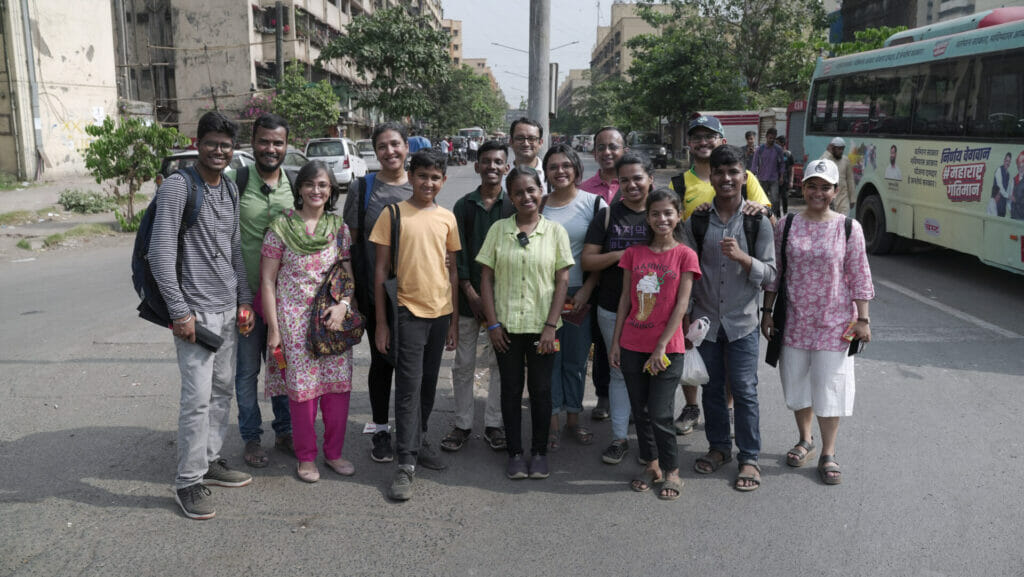
We organised an information session and collected contact details of people willing to help YUVA in their efforts. YUVA is a non-profit organisation that conducts sessions and activities in different parts of Mumbai to protect and uphold children’s rights. We feel that such initiatives are helpful, and encourage children.
Contribution of citizens
Witnessing the ground reality was an eye-opener for us, as we didn’t even know about these resettlement areas. Between the slums and urban areas, we tend to overlook resettlement colonies that are also an integral part of society.
Participation of citizens in these walks can be a huge positive contribution. Creating awareness will go a long way, as few people know about these colonies. This will further urge the authorities to take effective measures, and implement the desired changes. We have been recommending the ComplexCity walks to people around us, and also distributed brochures at the school exhibition stall.
Seeing youth leaders from the Bal Adhikar Sangharsh Sangathan work with commitment for community betterment at Lallubhai stayed with us. It was great to see them tell their own stories rather than someone else representing them. It was a big takeaway, as our conversations with youth leaders were food for thought, with insights into community development. Members of the BASS should be proud of themselves!
About YUVA and BASS
YUVA (Youth for Unity and Voluntary Action) is a non-profit development organisation committed to helping vulnerable people access their rights.
Bal Adhikar Sangharsh Sangathan (BASS) is a children’s collective in Mumbai, that works to help children understand and access their rights in different parts of the city.
(Writing assistance provided by Pooja Bhatia)