Janapada Suggi at Allalasandra Lake entrance

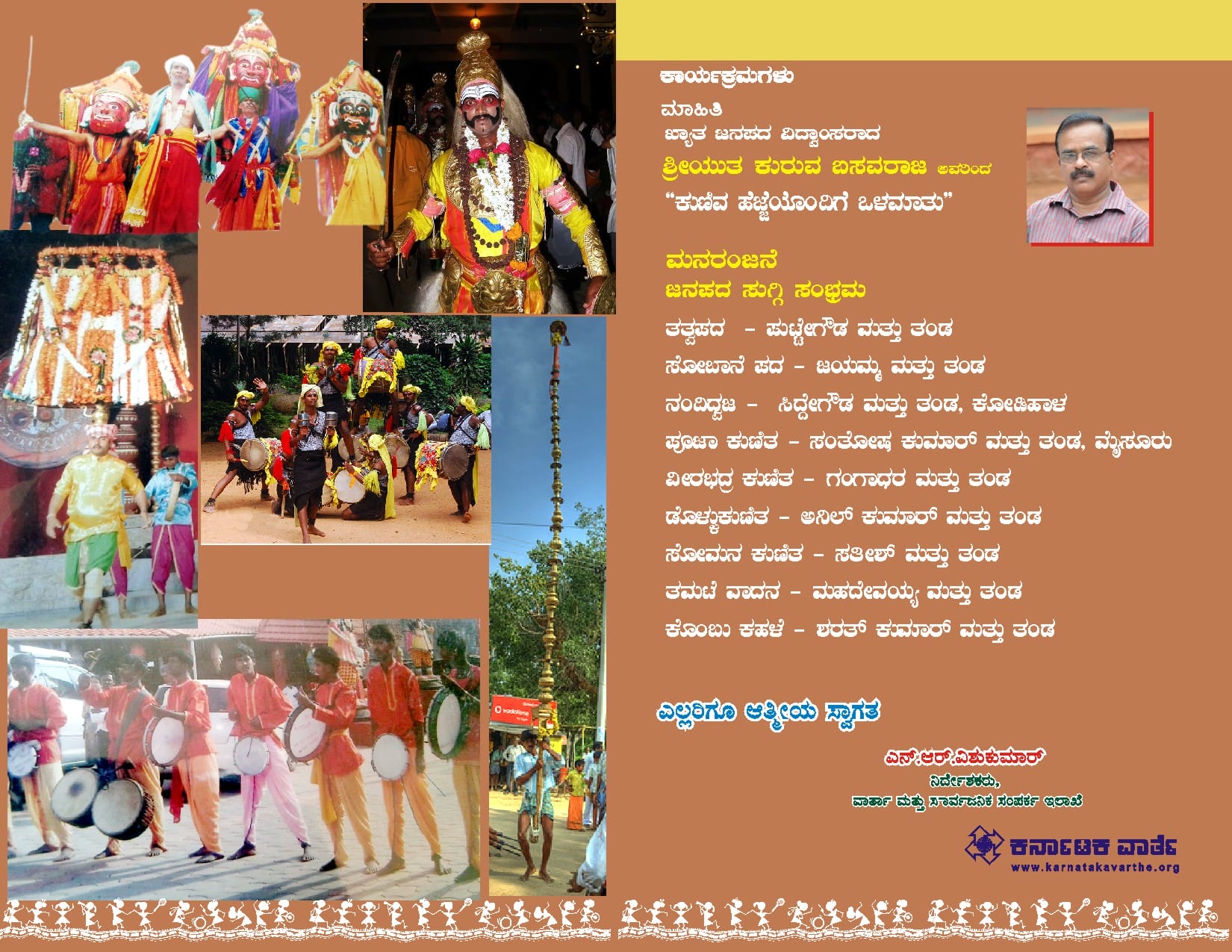
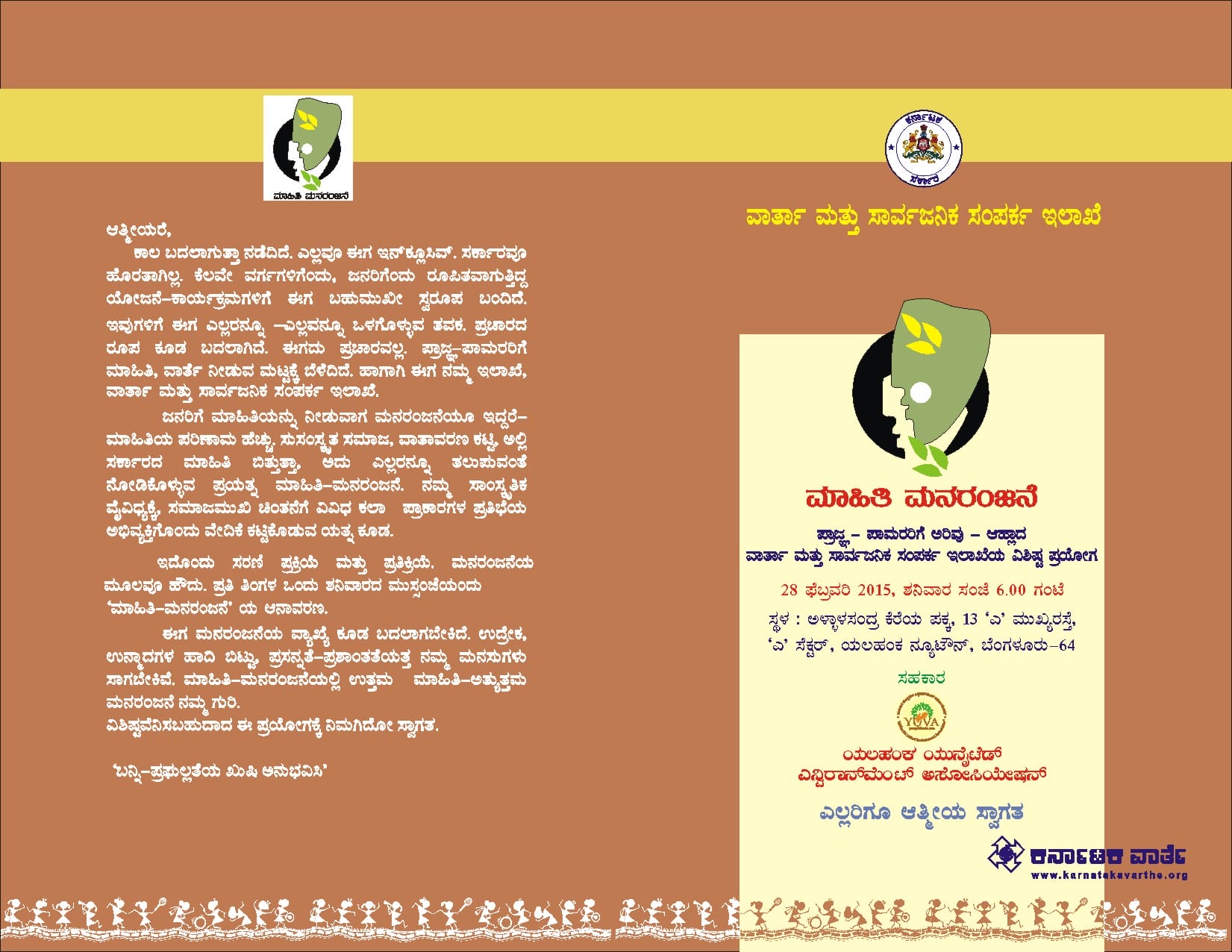
The Department of Information and Public Relations, Government of Karnataka along with Yelahanka United Environment Association (YUVA) is organizing ‘Janapada Suggi’  an initiative to promote the rural folk culture of Karnataka.
The program will take place at the Allalasandra Lake (Yelahanka) gate entrance on Saturday, 28th February, 6 p.m. onwards.
 
This is the first time that a program on this scale is being organised in Yelahanka. While urban folks will get to learn about folk art, the event will also provide an opportunity for rural artists and troupes to showcase their art.
 
Awesome entertainment is assured! Be there with your family and friends. More details in the pamphlet below. For any more information, Mr Jagadeesh Giri, Joint Secretary, YUVA can be reached at +91 9845171449.
 

Leave a Reply

Your email address will not be published. Required fields are marked *

Similar Story

Beyond the parks and gardens, Bengaluru’s ‘wasteland’ ecosystems call for protection

Open Natural Ecosystems in Bengaluru harbour rich biodiversity. Take a look at what they hold and what we risk losing to unchecked development.

When we discuss urban nature, we often forget about real natural habitats. In Bengaluru, widely called the Garden City, most talks about urban nature focus on landscaped parks, roadside trees, and manicured gardens; in other words, artificial ecosystems designed for looks and human comfort. As lay citizens, we usually notice only such nature as we see around our homes, workplaces or other areas we generally pass by. While these places do have some ecological value, they mostly support a few highly adaptable species. This has strong negative implications for native flora and fauna that depend on open scrublands, grasslands, rocky…

Similar Story

The wild in the city: What citizen scientists tell us about Bengaluru’s biodiversity

Spatial and temporal biodiversity patterns, as observed by citizen scientists in the city during 2016-2025, were studied at a datajam in December 2025.

Imagine you’re out on a morning walk, phone in hand, when you spot a butterfly you’ve never seen before. You snap a photo, log it into a citizen science app, and voila! You’ve just contributed to crucial biodiversity monitoring. This isn’t just a hobby; it’s part of a global movement where ordinary people collect, record, and sometimes analyse data about plants, animals, and ecosystems. Citizen science stretches the reach of ecological research. Every observation adds to unique longitudinal datasets that reveal phenology — periodic events in the life cycle of a species — along with species distribution shifts and population…