Nearly a kilometre of a busy road blocked for transport an entire day in Bengaluru! And there are thousands of people if not lakhs, who do not mind that – they look forward to it, in fact. Barring the residents of the said road, of course :-).
Sounds surprising? Not if you have been in Bengaluru during the first Sunday of January these past decade and half. This is the day reserved for the renowned Chitra Santhe organised by the Karnataka Chitrakala Parishath.
The 15th edition of the Chitra Santhe (Painting Fair) was held on Kumara Krupa road whose both ends (near Shivananda Circle and Windsor Manor respectively) were cordoned off with members from the police force manning them and the stretch in between. I shall of course not talk about the accompanying traffic jams in nearby areas. Every available bit of space was used to display art work, sometimes without thinking of what could happen in case of a fire or accident!
The Santhe was inaugurated by Prof. C N R Rao. Those of us who could not be near the dais could still hear the speeches which were thankfully short and to the point.
While the major items on sale were paintings of different sizes, styles and media, there were some other types of items on sale too in the periphery – jewellery and mini-drums primarily. On display were some installations too.
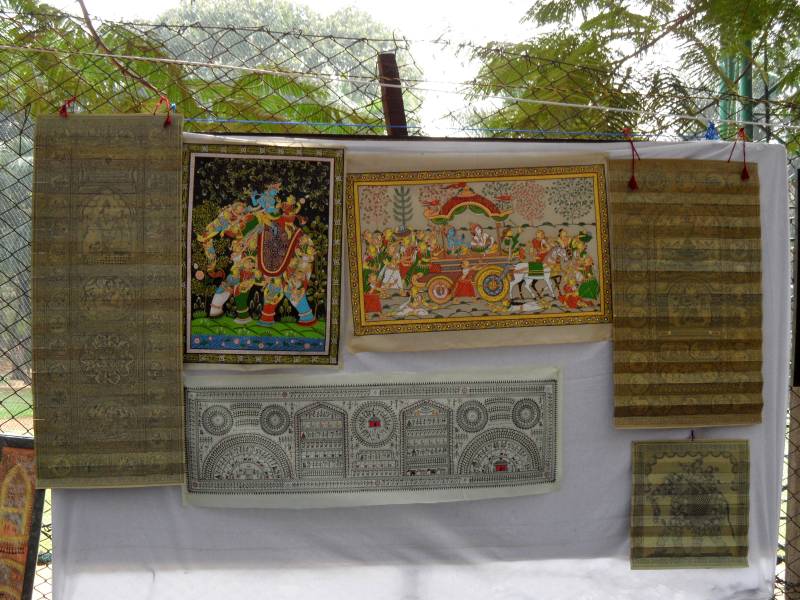
Patachitra and other art work from Odissa. Pic: Deepa Vaishnavi V M
Paper, wood, sand, water colours, oil paint, coffee, kaajal, metal, printed paper, leather, stone, and so many other items were used to create some really interesting and amazing pieces of art. Upcycled art and traditional art both found place at the Santhe.
There seemed to be something for everyone – paintings of gods and saints, modern art, nature, people, places…The artwork size too was varied – right from the size of a small stone to canvas’ that were 5 – 6 feet in length or height. The rates ranged from Rs. 30/- to lakhs. Bargaining was the name of the game and almost each person invariably walked away after a bout or ten of bargaining feeling he / she had achieved something great 😉 if an item was bought / sold.
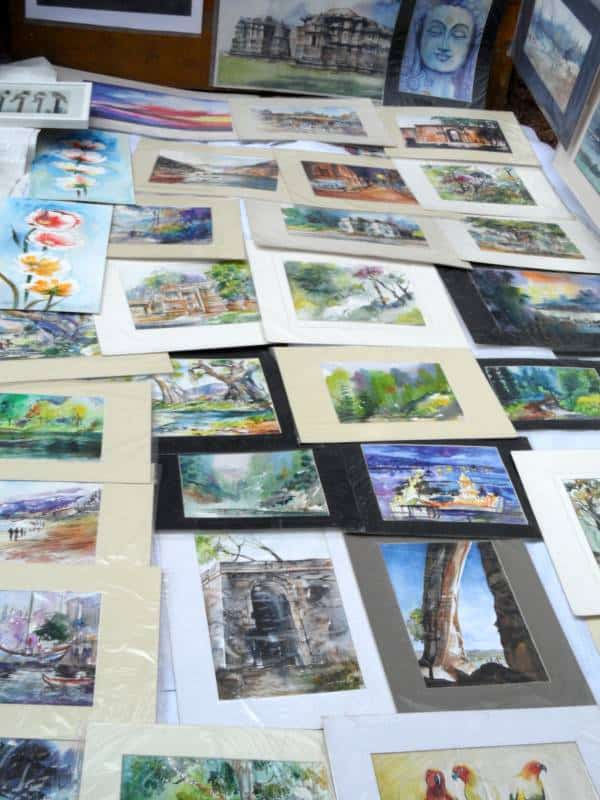
Display of art works at Chitra Santhe. Pic: Deepa Vaishnavi V M
Artists and vendors from different parts of the country were at the Santhe. Nomads from Gujarat – many of them selling metal and bead trinkets, Ravi from Hindupur (Leather puppets), Siddhi Rathod from Mumbai (Quilling in an interesting form), many patachitra artists from Odisha, Tanjore and Madhubani paintings, and so many others, not to mention various artists from KCP and from across Bengaluru. Also on sale were art works by special people.
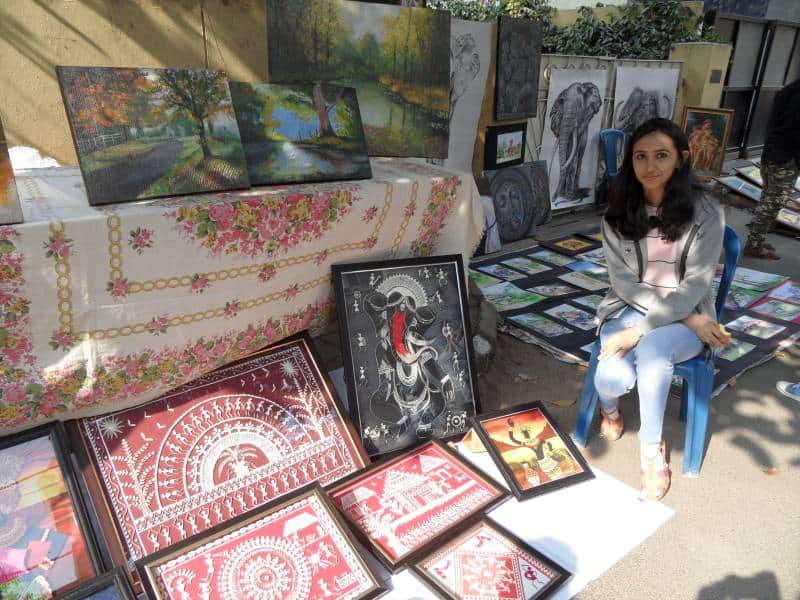
Siddhi from Mumbai, displaying warli art in quilling.
Pic: Deepa Vaishnavi V M
Most artists allowed their works to be photographed while some did not. When I asked Siddhi if I could take a picture, she gladly consented, adding that she was not worried about pictures of her work being taken as people could take pictures but could they copy the effort needed to create such works? And that is so true – the effort that an artist puts in to create a work of art cannot be measured merely in rupees or dollars. There is so much more that goes into creating.
There was a group trying to create awareness among the public about giving way to the Ambulance. They kept moving through the ever-increasing throng of people with a siren (not a loud one though).
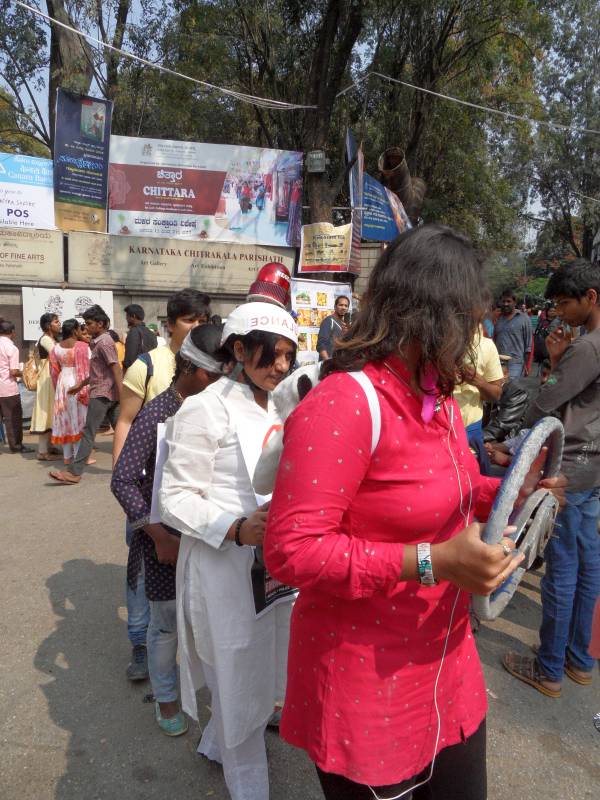
People spreading awareness on making way for ambulances. Pic: Deepa Vaishnavi V M
We had entered the Santhe from the Shivananda Circle end at around 9.45 am. It was 1.00 pm by the time we exited from the Windsor Manor end. Hunger drove us out else I’m sure we would have spent so much more time there.
The Santhe is one of those things that I love about namma ooru.