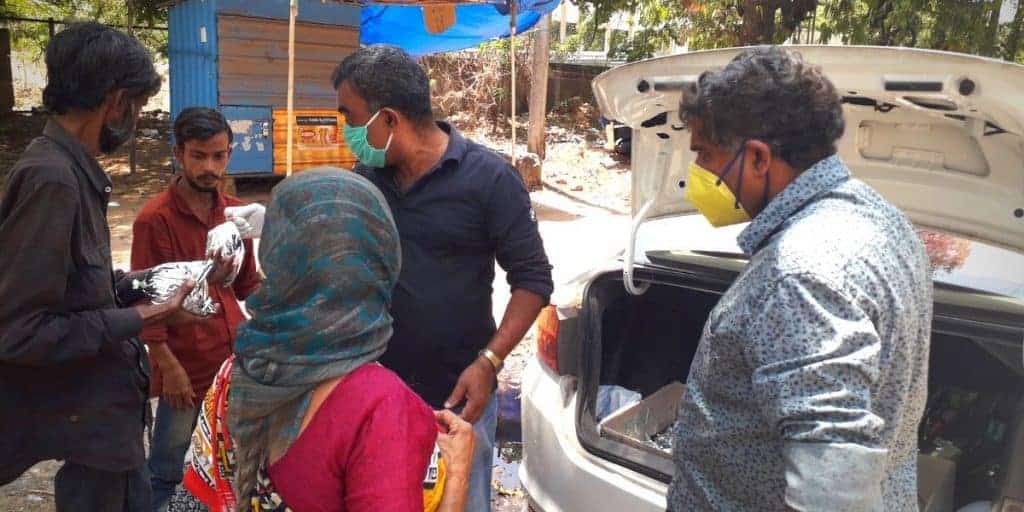
We met this thin man, sitting on a chair in front of a roadside shop in KR Puram on March 28. He was happy to receive the food packets and water bottles we gave him. We thought he was sitting in that chair to guard his valuable makeshift shop.
We kept watching this individual whenever we returned to the same road, after food distribution to needy people in KR Puram Railway station area.
He was with another man the first day. His friend didn’t accept food from us, but was happy to receive it on the second day, probably due to feedback from him about the good food prepared by our church member Mr Baby Varghese. It had become our routine to give him food packets everyday of the lockdown. He used to sleep on a trolley near the shop.
But during the last week of the lockdown, he stopped coming to collect the food packet from our car. So my friends Mr Alex Abraham and Mr Biju Koshy used to place the food packet and water pouches on his trolley-cum-bed.
We had noticed that his physical condition was deteriorating and we decided to know more about him. We stopped our car on May 16 in front of his trolley, and enquired about him. He told us that he is from Hoskote and was waiting for the lockdown to be lifted on May 18, so that he could return to his village once KSRTC bus services resumed. We offered him medical assistance, but he politely refused.
We went there again on May 17 with our daily bundle of around 125 food packets. He was sleeping. We didn’t disturb him. When we returned, he was sleeping in the same position.
I couldn’t rest in the afternoon. I googled all the NGOs working in K R Puram Railway station area and talked to a few of them. I also requested assistance from various WhatsApp Groups. They suggested calling the ambulance on 104.
So, I went there at 4 pm on May 18, but the trolley was empty. I enquired at the nearby puncture shop and was informed that he had died the previous day itself. I was speechless. I immediately called Alex and Biju, informed them that our friend for the past 49 days was no more. The person at the puncture shop then told me that this man had not been around in the area earlier and that he was stuck there due to the lockdown.
He didn’t have the energy to walk 50 km to his hometown and died on his makeshift trolley. Rest in peace, my unknown friend.