At the recently held BBMP – Work Orders, Budgets and Processes Datajam, a group of citizen volunteers analysed the data available in the public domain, here are their observations and suggestions on BBMP’s expenditure on street lights and surveillance and its links to road safety.
To:
Sri. Ravindra P N,
BBMP Special Commissioner (Projects)
Dear Sir,
We are a group of citizen volunteers. We would like to share our observations and suggestions on BBMP’s expenditure on street lights and surveillance. And examine its links to road safety.
Observations:
We looked at road accidents and the distribution of the funds (work orders) for streetlights and surveillance in the city. We found that peripheral areas, such as Yelahanka and Jakkur, had more accidents (based on 2022 traffic police data) and were more accident-prone due to hazardous roads.
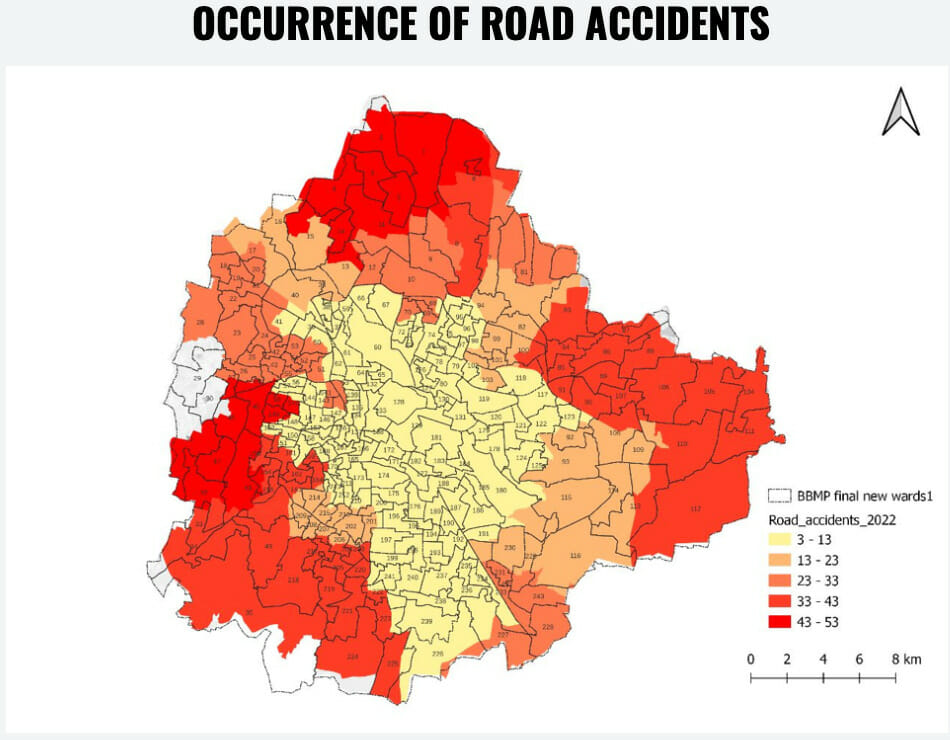
BBMP work orders for 2019-2022 show that much of the current spending for streetlights and CCTV cameras are also focused on peripheral areas. CCTV cameras are primarily installed by BBMP for garbage surveillance.
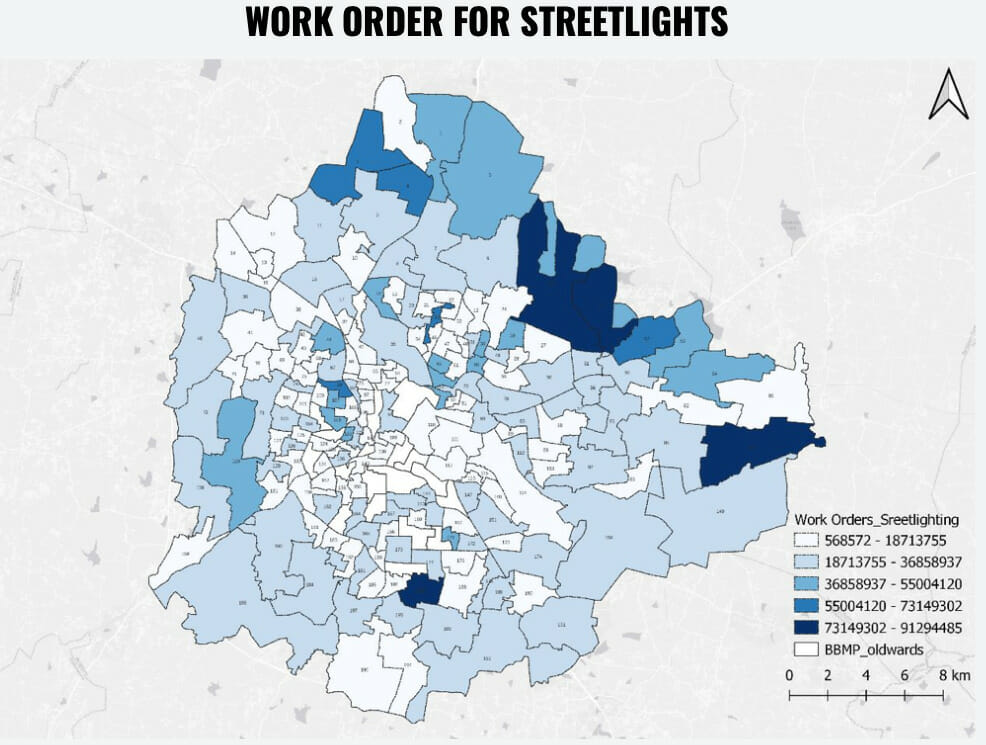
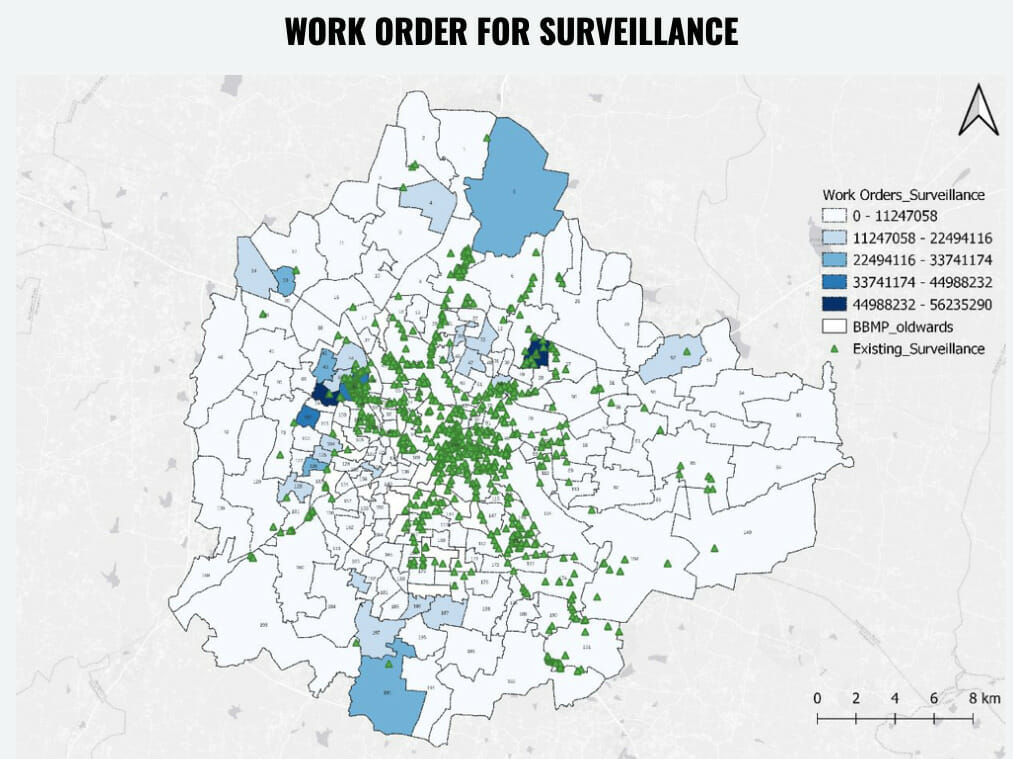
The central areas appear to have a better network of cctv cameras and fewer road accidents.
However, since the city police mainly uses CCTV for crime prevention and to prevent garbage littering by BBMP, it is unclear if surveillance data is used for traffic management and road safety. The team also wanted to look at crime in relation to street lights and CCTV cameras. However, police station wise crime data is not available for Bengaluru.
Suggestions:
- We need more studies on the efficacy of surveillance in improving safety, cleanliness and preventing crime
- Data on type of road accident should be made public
- Police station wise data on crime in the city should be available
- Data on streetlights – locations and number of street lights or number per street needs to be made public by BBMP
- Data on CCTV cameras – how many were procured each year, where these cameras are installed, needs to be made public by BBMP
About us:
We are volunteers who participated in a recent Open City data jam – civic solutions workshop. The datajam was organised by OpenCity, a civic tech project that helps make public data on cities accessible to all. Our goal is to enable citizens and civic groups to have a shared understanding of their city’s issues and use data as a basis for co-creating solutions. At the event on July 15th, we looked at BBMP work orders, budgets and processes.
More about the event can be found here.
Report compiled by Bhanu Sridharan