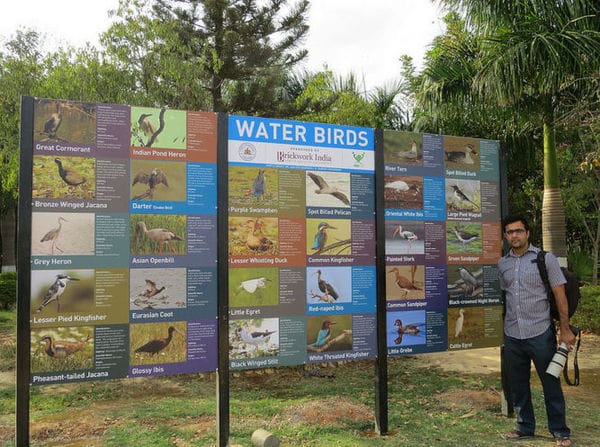
I enjoy taking groups of people on nature and bird walks. So, when my friend Vaibhav Chaudhury, who’s involved in many social initiatives, called me to help him guide the residents of a gated community on a bird walk in Madiwala kere, I was very happy to do so. So off we went to the kere at 4pm. I first got a photo of him with the bird board that Brickwork India had put up. The photos of the waterfowl are all by him and Dr Sanjeev Managoli, a paediatrician who manages to follow his passion for birds and contribute to the birding community, too.
We met up with an assorted group of adults and children.
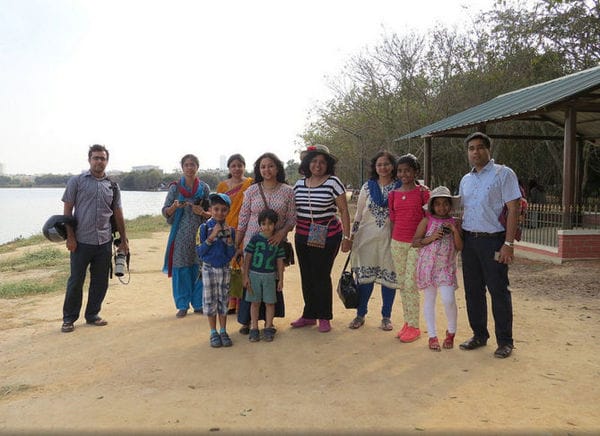
Sangeeta Kulkarni, who became a friend when we were neighbours several years ago, is fourth from right. She’s the CEO of Brickwork, and I’d definitely call this organisation the custodian of the lake. It was a very pleasant experience to see that the lake had generally been cleaned up, and was providing a pleasant outdoor venue for citizens of Bengaluru.
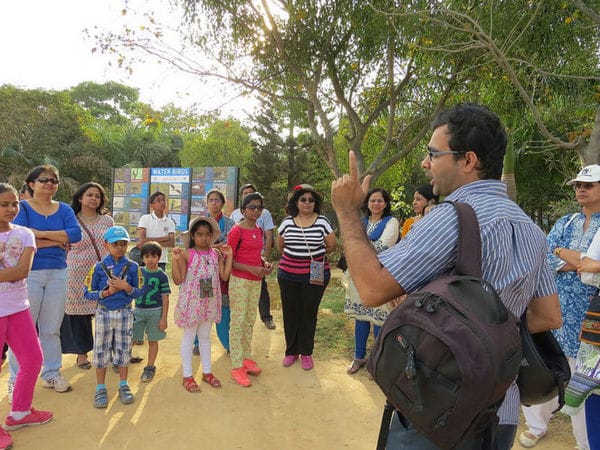
Here’s Vaibhav, explaining a few points about migratory birds.
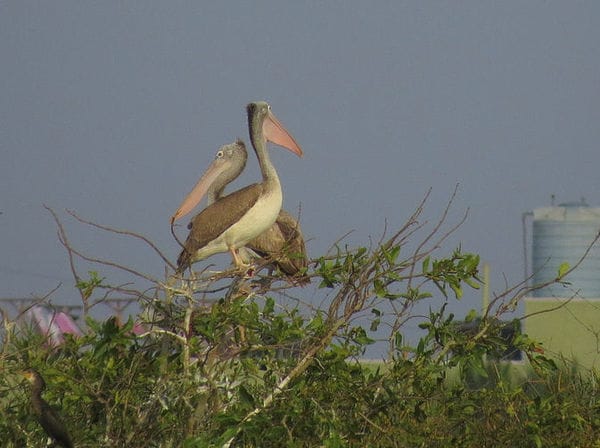
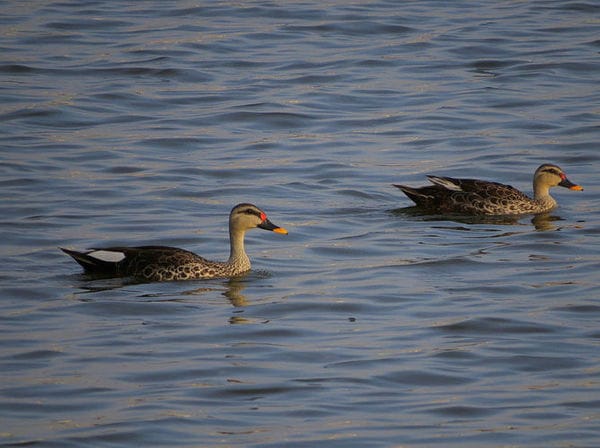
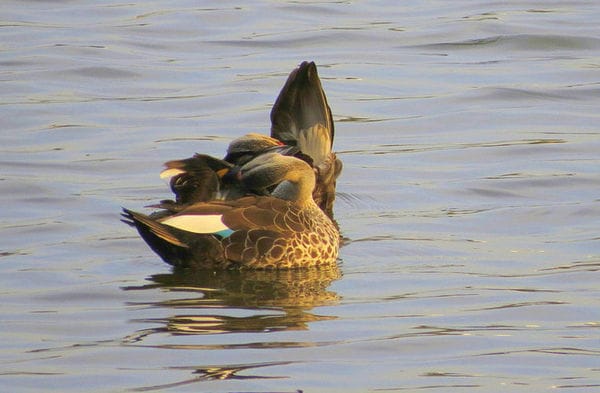
Here are some of the birds that we saw (very few… I was concentrating on answering questions and showing the birds, not clicking them!)
Spot-billed Pelican, migrant
Spot-billed Duck, resident
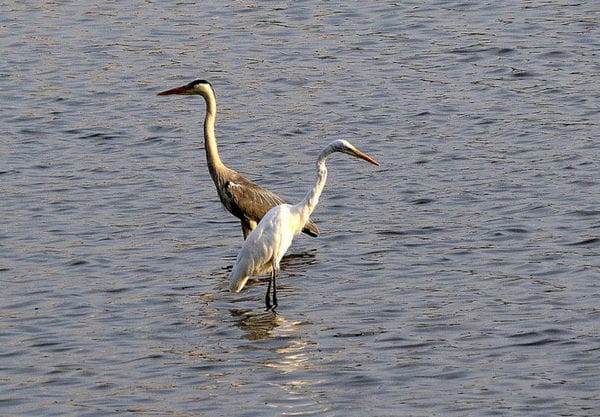
Grey Heron, looking to the left, and Great Egret, looking to the right
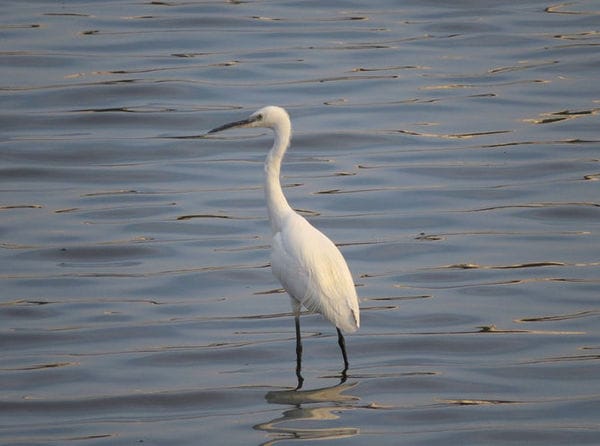
Little Egret
Here’s the bird doing a little ‘umbrella fishing’, a kind of feeding behaviour that I documented with Painted Storks in my write-up on Citizen Matters.
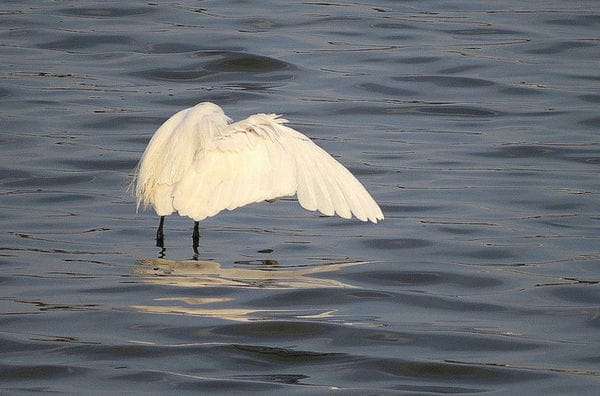
The children, as usual, were curious and full of questions, and they also seemed to know quite a bit about migratory birds. It was a delight to talk to children like Dipali, Sangeeta, Raga, Amoghavarsha and Nikhil, all from National Public School.
Of course, I also told them a little about the trees and plants around such as the beautiful seed pods on the Mahogany trees.
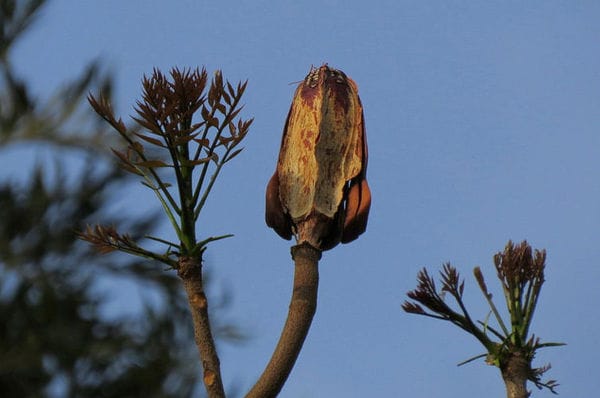
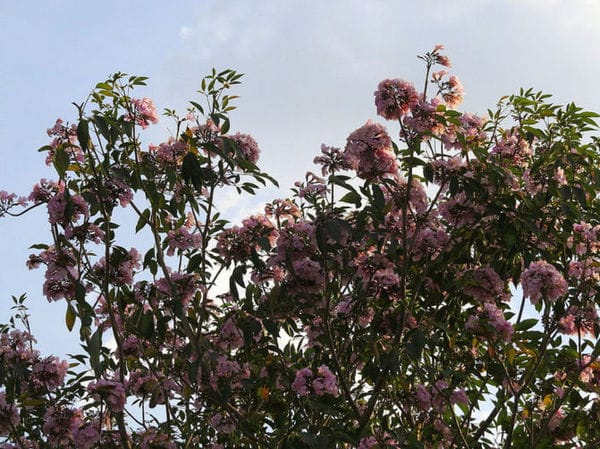
And the beauty of the Tabebuia avellenidae blooms, heralding the hot weather.
The Forest Department personnel came to keep an eye on us too.
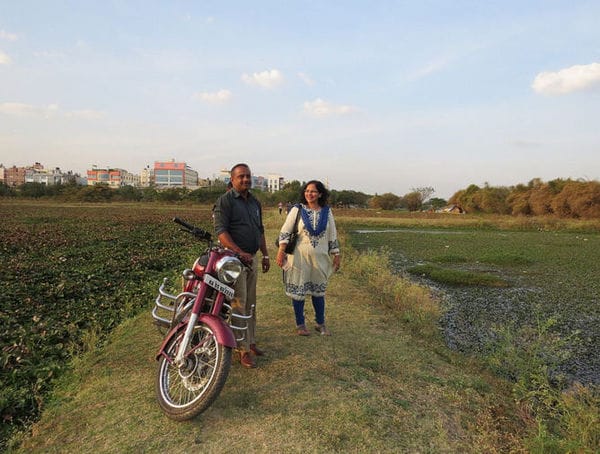
It was growing late, the last boatload of tourists was returning…
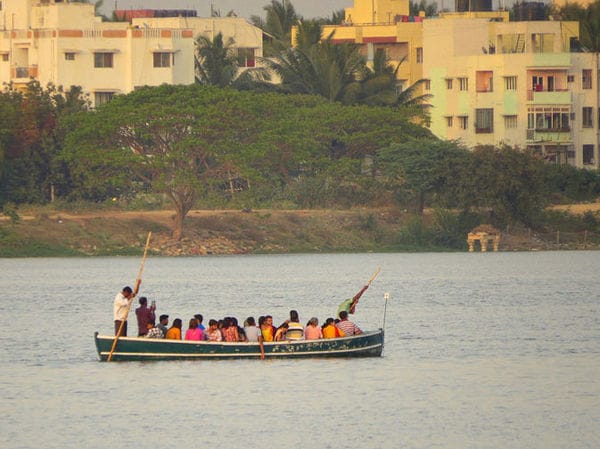
The sun was sinking low.
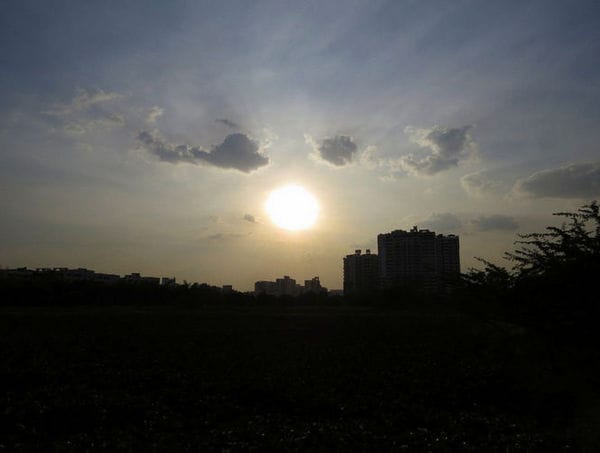
So we wound up the walk and dispersed, having enjoyed a pleasant evening upon one of the few remaining lakes that our city has. A salute to Brickwork, an organisation which is certainly contributing to the good health of this lake.
Related Articles
Thank you, good to note about the lakes in our neighbourhood. Sriram