Saving birds in distress

Deepa Mohan narrates her experience of saving a tiny bird in distress, and explains the care to be taken while doing so.

Tiny birds -be it anykind- are truly the creatures that melt one’s heart. It is always a delight to see baby birds in the nests, with parents diligently flying around to get them food. Flowerpeckers are among the smallest birds in India. Here’s the heart-warming story of a tiny bird that was rescued.

We -a group of like-minded people – were on a nature trail on the Bannerghatta-Kaggalipura Road, when we found a Pale-billed Flowerpecker, which had been either pushed out of its nest, or had fallen from it before we could fly. Two young boys had picked it up, saving it from the stray dogs that were looking to gobble it up.

The little one was looking quite lost, but was able to peck at the grains the boys were offering it. We, too, did not want to interfere with the bird more than was necessary, so we went our way.
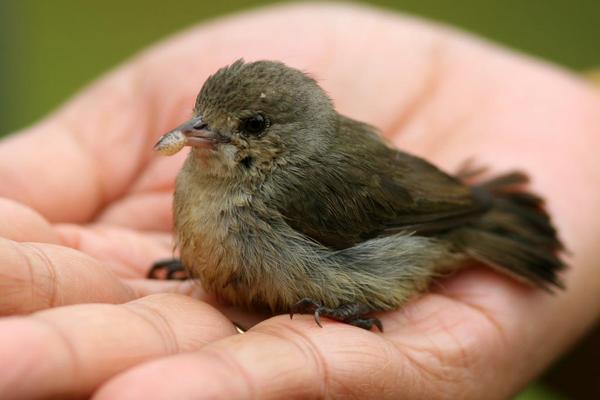
Pic: Deepa Mohan

One has to be very careful while picking up wild creatures; very often, the fear they have of humans overrides their distress, and they panic when approached. Sometimes, birds, whose heart-rates are much higher than ours, can literally die of the shock.

We hoped that this was a rescue story which would have a happy ending, as the bird seemed able to feed, and had been saved from the predators. But as in all true stories, we never did find out the ending!

For more information about this bird, click here

You can see them very often, especially in the Singapore Cherry trees which are planted near roadside restaurants on the outskirts of Bangalore.

Comments:

  1. Deepa Mohan says:

    Uma Kandasarma says that this is an adult bird, not a baby..but it did seem like a baby to us.

Leave a Reply

Your email address will not be published. Required fields are marked *

Similar Story

Pallikaranai’s 1-km buffer zone sparks debate on housing rights, encroachment and ecology

On World Wetland Day, Chennai's Pallikaranai marsh shows how decades of state‑sanctioned encroachment leave residents and ecology at risk.

Across Pallikaranai marshland, migratory birds can be spotted, searching for forage and water. Yet the wetland they depend on has steadily depleted. As Chennai has grown in an amoeba-like manner, ebbing with the promise of ‘development,’ the marsh has borne the brunt. In the 1990s, the marsh covered 2,450 hectares, nearly 70% of its original size. Today, barely 500 hectares remain. In recent years, the marshland has often entered public discourse. In September 2025, Chennai Metropolitan Development Authority (CMDA), acting on an order from the southern bench of the National Green Tribunal, halted planning permission for development within the Pallikaranai…

Similar Story

Commuters, vendors bear the brunt of rising air pollution in Chennai’s Ambattur

IIT-M’s Project Kaatru finds high PM2.5 levels at Ambattur Estate, Padi flyover and Dairy Road, exposing residents to dust and pollution daily.

Commuters passing through Ambattur Industrial Estate inevitably find a layer of dust coating their vehicles, faces, and hands. For Lalitha*, a domestic worker employed at a high-rise apartment near Padi flyover’s Saravana Stores, the last two weeks of December have been especially unbearable. "Dust, dust, dust everywhere," she says, coughing through a persistent cold. At 6 pm, when the rush hour begins, it takes her nearly 30 minutes by bus to cover the 5 km journey home. The ride to the Dunlop area is punctuated by pollution, blaring horns, and endless traffic snarls. “It should take 15 minutes usually, but…