A week has sped by but the story telling event we had on Sept. 6th in collaboration with The Storywallahs is so vivid in our minds as if it took place, well, today. The occasion for special too – celebrating International Literacy Day.
The day was murky from morning and when it began to rain at around 2 p.m., we were relieved. If it rains now surely it won’t during the story telling. We reached the lake well in advance, set out the registration counter and … it rained. We took the table to the gazebo, wiped it dry and cleaned the seats just as sky cleared and the first of the early birds began to come in from 4 p.m.
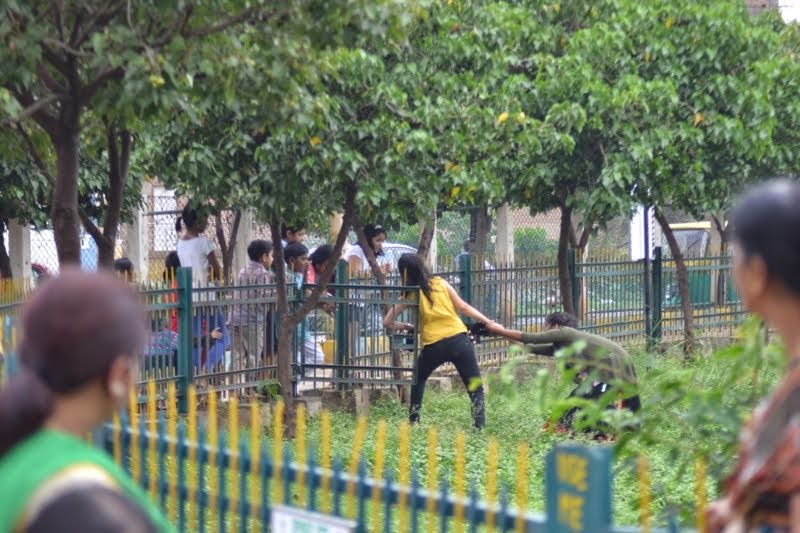
The programme began promptly AND with a full house. Kids, kids, kids everywhere but where were the story tellers? The children lined up and we set out to locate Nupur Aggarwal and Parvathi Om. The search was quick and the children “pulled” them out of the lake. Like Pied Pipers, Nupur and Parvathi led the kids to the Gazebo singing and coaxing the reluctant ones to sing along.

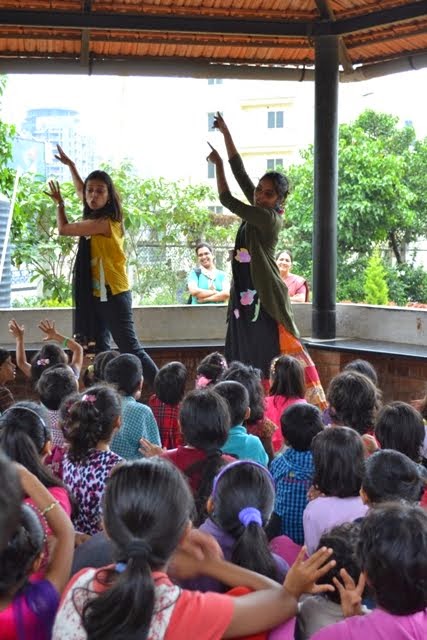
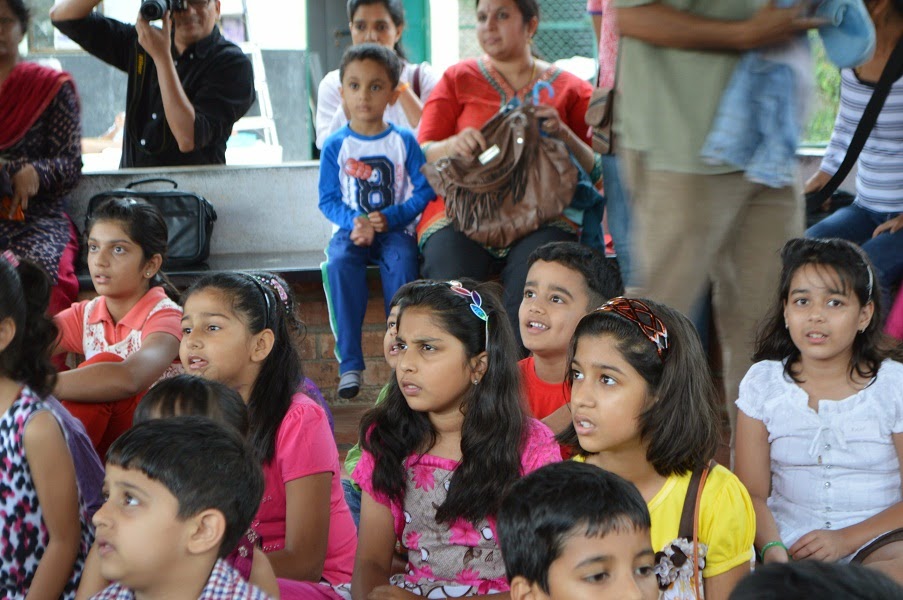
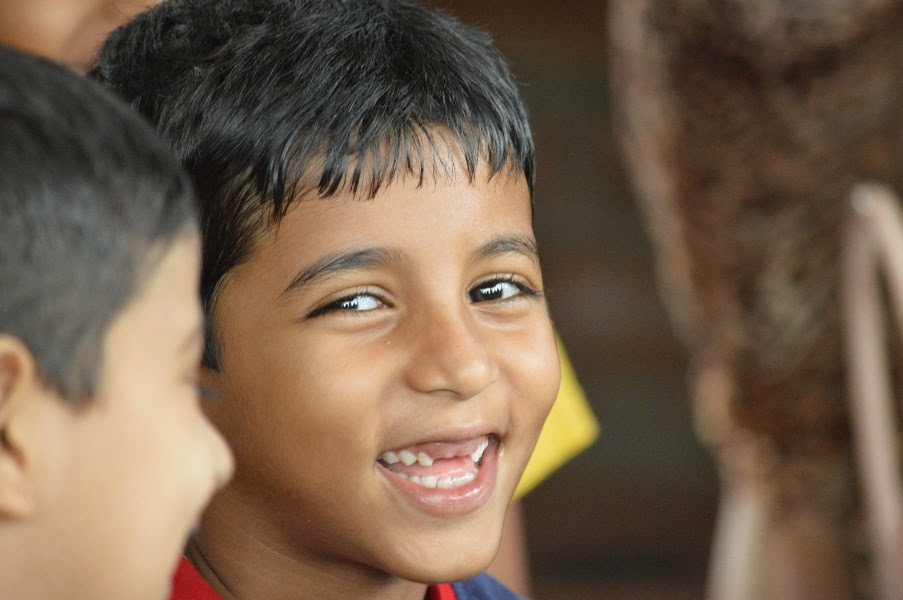
The children sat on the floor of the Gazebo, parents on the benches, others stood outside but all eyes were on the dynamic duo, Nupur and Parvathi. Then began the best part of such events – seeing the story tellers and listeners get swept into the narrative. The artists were in full form. The kids didn’t look here or there.
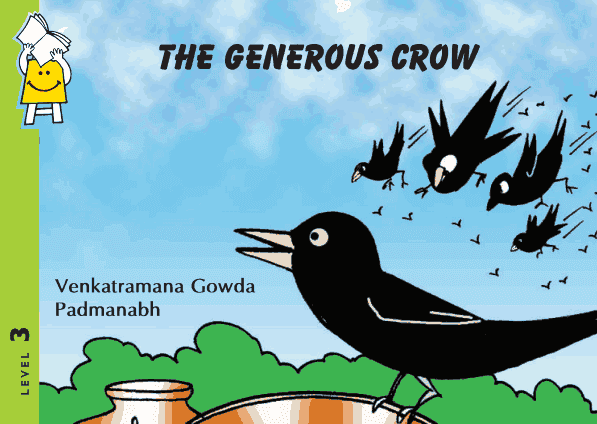
Suddenly a child burst into loud tears. He was so caught up with the action that he had bit his thumb a too hard! We swooped him away to our “office” to administer first aid. It was a small cut by the base of the nail but it was enough for a drop of blood and bigger drops of tears! We pacified him but his cries grew louder. He managed to blurt out why – he wanted to find out what happened to the Generous Crow!
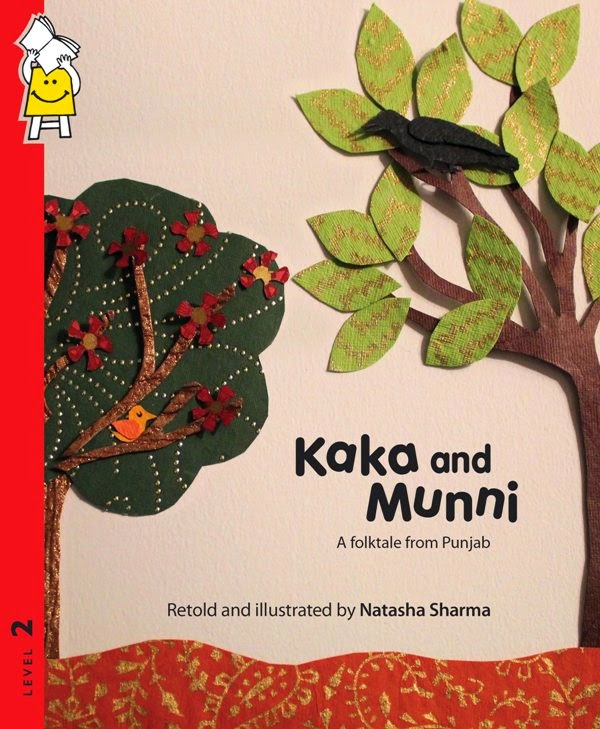
The next story was a Punjabi folktale, Kaka and Munni. Kaka was also a crow but such a wicked fellow! He was out to steal Munni, the sparrow’s eggs. Tension mounted in the kids and it seemed as if they held their breath even as their eyes grew wider.
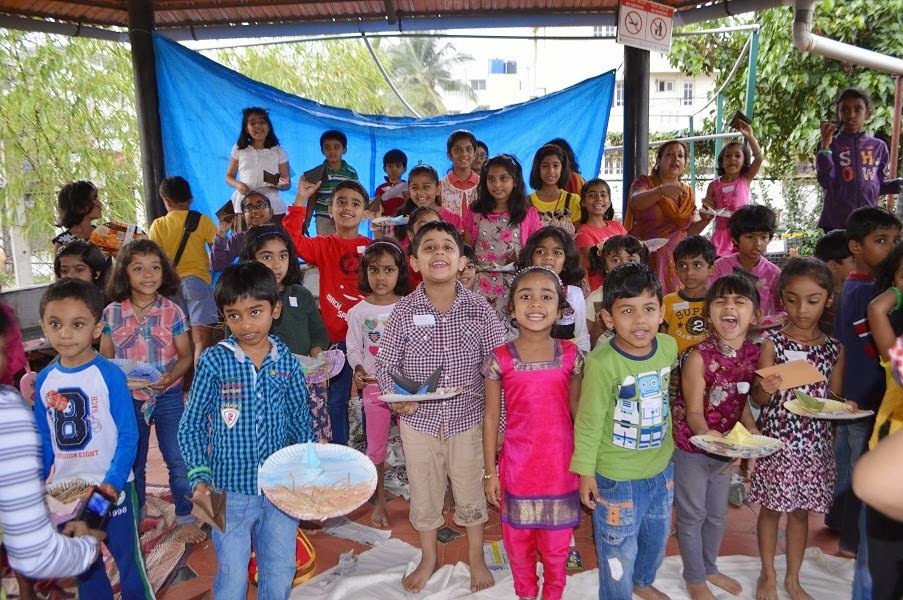
The story telling event was turning out to be exactly how we wanted – transporting the children into a world of imagination. It was time for the next segment – paper craft. All was well … or so we thought forgetting the biggest child of all – Rain God! He decided that it was time to make an appearance and how!
We tied a tarpaulin between two pillars. The story tellers didn’t stop, the children moved closer to them. Parents sitting on the benches got up and stood behind the kids, shielding them. Adults standing outside opened their umbrellas and blocked the rain further. It was magical, truly heart warming sight. No wonder it feels as if it happened just moments ago!
One of the parents, Mithun Prabhu took “126 photos, which i finally cut down to 81 as couldn’t cut it down further seeing innocent cute little ones photos and some of their enthusiastic parents.”
You can see more photos
here and
here.