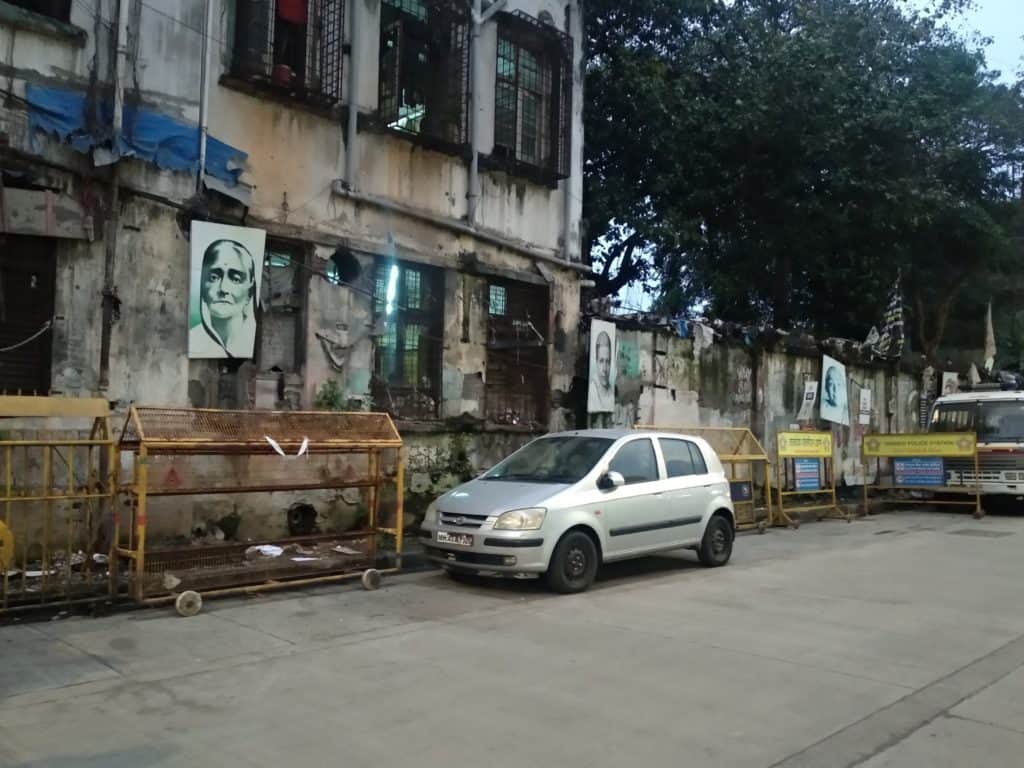
Drawing inspiration from protests in New Delhi’s Shaheen Bagh, hundreds of women sat in protest against anti-Muslim citizenship laws, on a road in South Mumbai’s Nagpada since the night of January 26 around 11 PM – in what came to be called Mumbai Bagh.
Although the protests were suspended in the wake of the COVID19 outbreak, they continued symbolically.
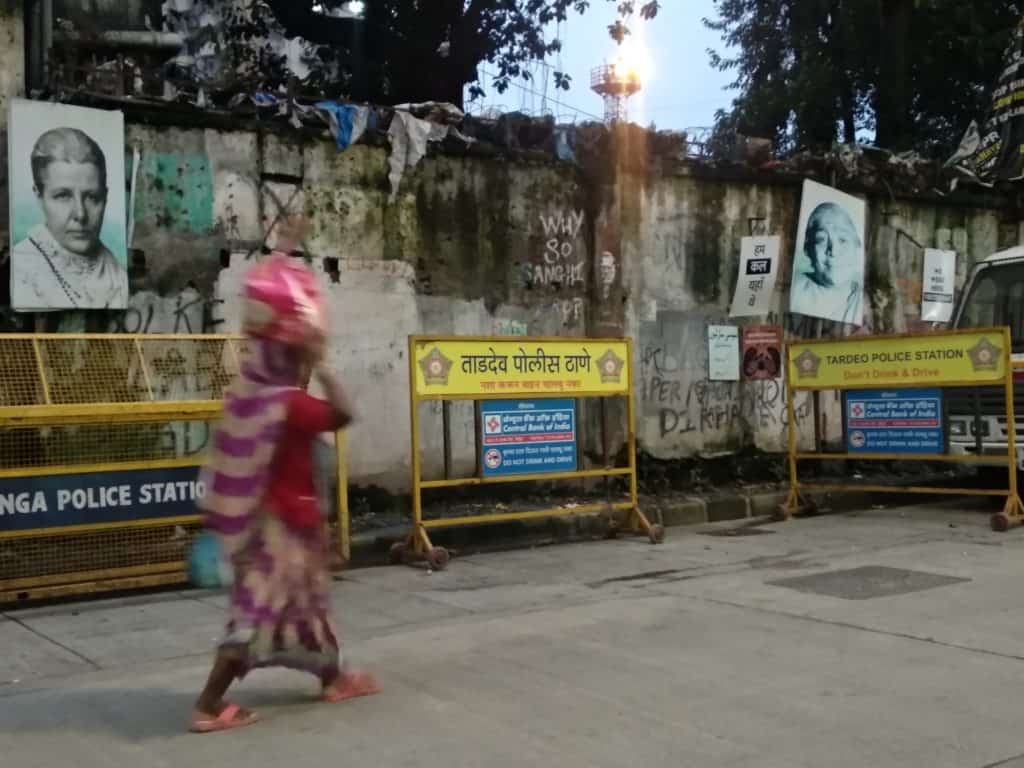
Today, the protest site on Morland Road near Hotel Arbia has pictures of women leaders and has only one slogan on placard “hum kal yaha the” (we were here yesterday).
Nadah Batliwala, who has resumed her graduation after a gap, says the protests sharpened her politics. “I am a new person today,” she says. She raised money to provide food-kits for about 200-families during the lockdown. “I made short flyers and reached out to people through social media platforms and raised donations. We reached out to people from Antop Hill, Kurla, Ghatkopar and Vikhroli. This would have not happened if I would have not been part of the Mumbai Bagh, ” she said.
Aqsa Khan student of Human Ecology says, thanks to the protests, she learnt to better articulate her views. Moreover, she also began to view the world holistically. “I thought we were being harassed by the police for no reason. But when I started attending agitation at nights I understood that just as we were fighting for our rights, the police deployed was also doing their duty.”
Aqsa and her friends have planned to start a free educational guidance center. “I learnt that Muslim women need to be educated to understand their rights in the society,” she says. “Most of the women blindly follow, patrichal rules laid for them either by their father or husband,” she adds. She very often journals the changes the protests brought about in her. She believes she has changed “360 degrees”.
Nilofar Shaikh, joined the agitation because of her grandmother, Fatima Shaikh, 77.
Fatima Shaikh Bi, who lives in Byculla, exhibits strength when she speaks. “I was born before Independence. No one can ask me to show my documents now,” she says. “This country is my motherland. I wanted my next generation to be part of this agitation as well,” she says.
In the past six months, Nilofar appeared in webinars on several social issues and mental health illness due to lockdown. She can now the work of a Corporator, MLA and Ministers, so she knows who to hold to account for what. “During heavy rains, when nallahs are overflowing and people are stuck, I know whom to contact for relief,” she says.
Kahkasha Shaikh is in her 20s and is pursuing optometry from Nair Hospital in Mumbai Central. “I had never seen so many Muslim women come out and be vocal about their issues. After first visit, I regularly attended the night protest with my mother. I am really sad that due Pandemic it is called off,” she says. Kahkasha, like Aqsa, has decided to have educational programmes for women of Darukhana near Mazgaon.
“The Quran says that almighty has blessed women with more of patience that does not mean she cannot stand for justice,” says septuagenarian Fatima.